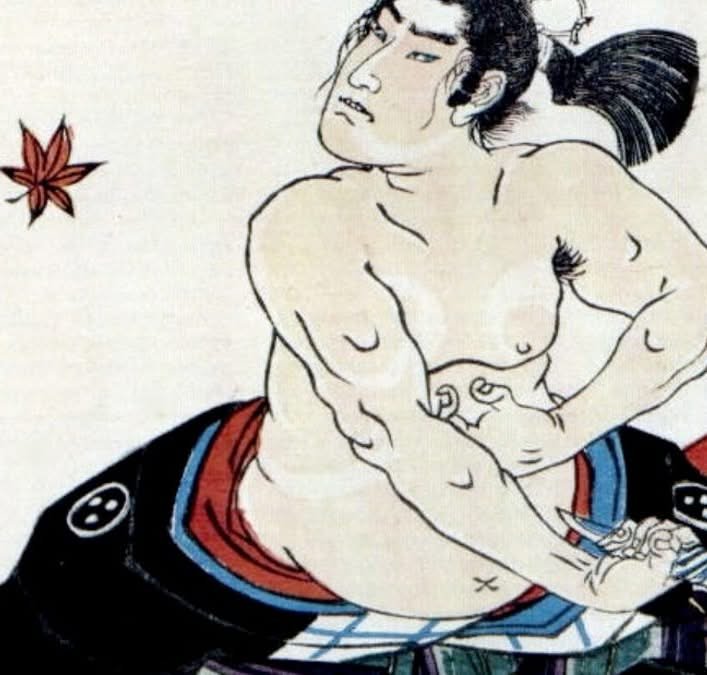
This article includes several paragraphs about the Shinpuren Rebellion (神風連の乱) of 1876. Here's one of those paragraphs:
"Kaya Harukata, a Shinto priest, and his former classmate Ōtagurō Tomō founded a new Shinto faction, called Keishin-tō, the Party of Divine Reverence. It became more commonly known, however, as Kumamoto Shinpūren, the Kumamoto League of the Divine Wind. Harukata and Tomō recruited the sons of samurai families and students from the Shinto schools, many of them teenagers. Others were men outraged by what they saw as the decline of Japanese culture. In the end, the force was less than 200 men strong, but they decided to attack Kumamoto, where an Imperial Japanese Army was stationed. It was 173 samurai against some 2000 armed troops. And, to make the odds even worse, the Shinpūren fought only with swords, a symbol of their commitment to the samurai way of life."
Along with the famous Satsuma Rebellion (西南戦争) that began just a few months later, the Shinpuren Rebellion was one of the last samurai rebellions. Samurai were angry about the decline in their status but also believed that the process of Westernization was a threat to Japanese culture. In that sense, Japanese nationalists continue to pay homage to what they see as their valiant attempt to preserve Japanese culture or the "Japanese spirit." Here for example, is a video (in Japanese) by Mizushima Satoru (水島総) of the ultra-conservative "Japanese Culture Channel Sakura" (日本文化チャンネル桜) praising the spirit of the Shinpuren:
https://www.youtube.com/watch?v=OTRFbyQQqRU
The Shinpuren Museum (資料館) is very close to Kumamoto University:
https://plus.google.com/111091052965827466630/about?gl=jp&hl=en
I've never been there but writing this has piqued my interest. Perhaps I'll stop by one of these days.
http://io9.com/why-did-japanese-people-stop-performing-seppuku-1678549063