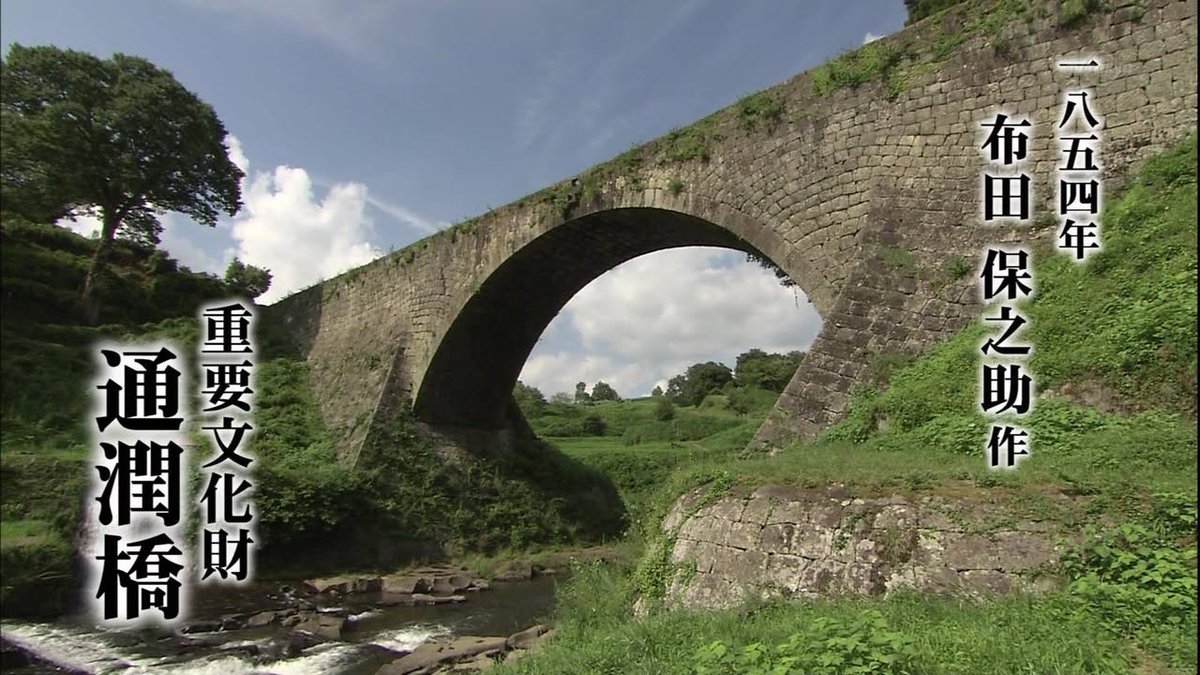
Here's a case where the old adage "no news is good news" applies. When you turned on the evening news, you probably didn't see anything about Tsujunkyo -- and that's because it's basically OK. An inspection conducted on the 16th did not reveal any structural damage to the bridge itself. Some leaking in the aqueduct was detected (Tsujunkyo was built to carry water used for irrigation from one plateau to another) so those leaks will need to be repaired but I trust the experts will figure out how to plug up those leaks and put the old bridge back to work:
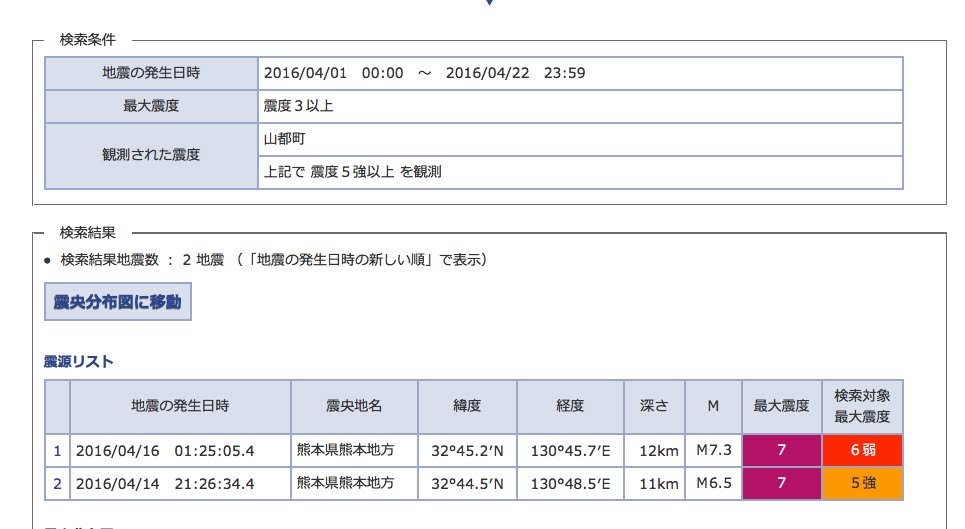
The fact that Tsujunkyo came through fairly well is not due to a lack of shaking, though the shaking was somewhat less violent than what hit Kumamoto Castle. The screenshot you see shows that Yamato-machi, where the aqueduct is located, was rocked by a 6 lower and a 5 upper quake. (For information on the shaking in specific areas see the following post:
https://www.facebook.com/Kumamotoi/posts/1024502414289857)
Tsujunkyo was built toward the end of the Edo period using the same techniques and expertise that went into the building of the Kumamoto Castle walls. Many castle walls didn't fare as well perhaps due to the more intense 6 upper shaking and also, in the case of the walls supporting the main castle building, the increased weight placed on them by the use of concrete in the 1960 rebuilding of the castle.
Hats off to the engineering skill of Yasunosuke Futa and the people who worked under him to complete Tsujunkyo in 1854!
P.S. A major quake hit Kumamoto on July 28, 1889 so Tsujunkyo has withstood that as well!
--- Kirk