When it comes to expressions of pride in Kumamoto and determination to rebuild, Kumamoto dialect has become the language of choice. In this post I'd like to introduce three such expressions. I hope that this post might help non-Japanese people who are not yet fluent in Kumamoto-ben learn a little dialect and then actually use these expressions in conversation to express solidarity with friends who were born and raised here. If my explanations about Kumamoto-ben are not quite right, I hope the experts reading this will correct me.
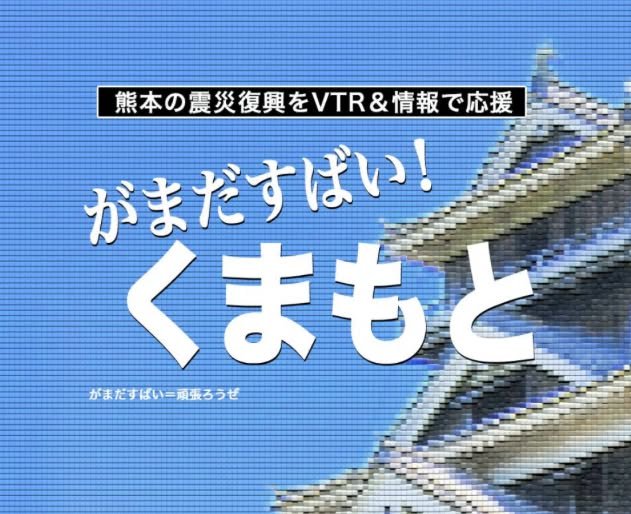
1. がまだすばい!くまもと (Gamadasu bai Kumamoto)
がまだす(gamadasu)is basically the same as がんばる (gambaru) -- "do your best," "work hard," etc.
ばい (bai) is similar to "よ" (yo) or "ぞ" (zo) in standard Japanese, a suffix that is a little like a verbal exclamation mark, indicating emphasis or, in this case, determination. So, がまだすばい! is
close to がんばるぞ!in standard Japanese -- "I'll do my best!" or "We will do our best!"
https://www.facebook.com/55kumamoto/
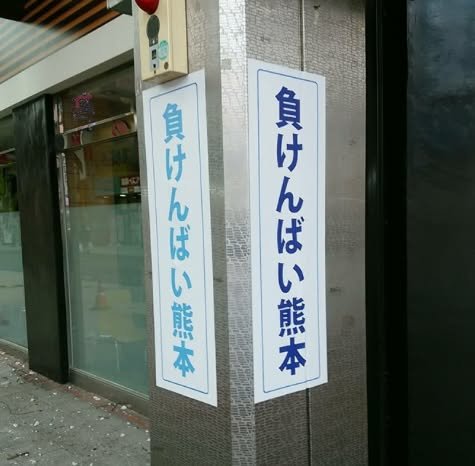
2. 負けんばい熊本(Makenbai Kumamoto)
負ける (makeru) is the verb for losing or being defeated. 負けん would be 負けない (makenai -- "will not be defeated") in standard Japanese. As I explained in regard to "がまだすばい!" , "ばい" (bai) indicates determination. So, all together, 負けんばい is a strong expression of determination not to be defeated, not to let this get us down.
https://www.facebook.com/kumamotokankoushinzentaishi/posts/850782261715378
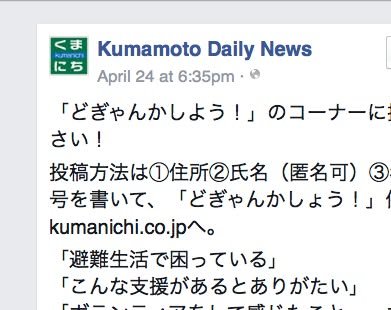
3. どぎゃんかしよう!(Dogyanka shiyo)
どぎゃん (dogyan) is Kumamoto-ben for どう (doh) in standard Japanese. So, for example, "どぎゃん言うと" (dogyan iu to)" means "どう言うの?" (do iu no -- "How do you say it?") in standard Japanese. In this case, I think that "どぎゃんかしよう!" means about the same as "どうにかしよう" ("Let's find a way!") in standard Japanese. (If I'm wrong, I hope someone will correct me.) This column in the Kumanichi (the local Japanese paper) is soliciting messages about problems to be solved or insights gained through volunteer work, etc. so the theme "Let's find a way!" fits the problem solving thrust of the column.
By the way, if you understand the words "こう" "そう" ああ" and "どう" in standard Japanese, the following should make sense to you:
こう --> こぎゃん
そう --> そぎゃん
ああ --> あぎゃん
どう --> どぎゃん
So, all together now, がまだすばい!! :)
-- Kirk