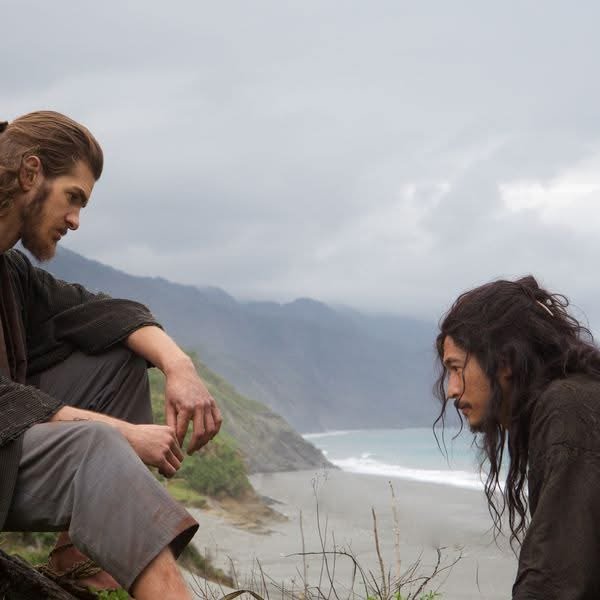
The Tokugawa Shogunate was not fond of the religion Europeans introduced along with their technology and learning, so various shoguns tried to stamp it out - literally, by a practice known as "fumie" (踏み絵), in which a suspected believer was required to absolve himself by trampling on a religious article such as a cross or statue. As a result, many Christians went underground, blending their beliefs with the traipse of indigenous religions - these were known as "hidden Christians" (kakure Christian - 隠れキリシタン).
But what of those early missionaries who somehow ended up on these shores? Shūsaku Endō’s novel 沈黙 (Chinmoku - English title "Silence"), published in 1966, addresses this issue in a very unique way. The novel has recently been adapted to film by director Martin Scorsese. An eye-opening review can be read at the link.
Of course, the connection with Kumamoto is the large number of 隠れキリシタン who lived in Amakusa and were instrumental in the Shimabara Rebellion (though the movie is set in Nagasaki). - William