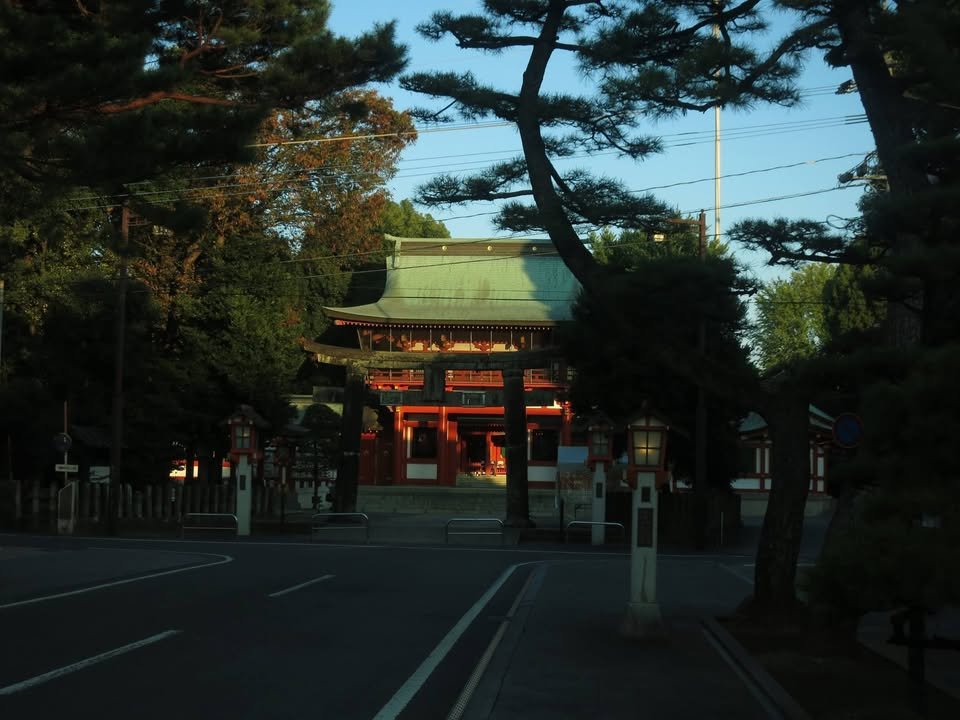
A long time ago (936, to be precise), there was a war between the nascent Japanese state and pirates that stretched along the Seto Inland Sea through pretty much all land points adjoining, from Kyoto to Fukuoka.The nascent Japanese state won this war (called the Fujiwara no Sumitomo no Ran 藤原純友の乱 ーGoogle it; kinda interesting as the location of the seat of government - Fukuoka? Kyoto? - was still unsettled) and then set about building a bunch of shrines to glorify their victory.
This war's glorification is the origin of Kumamoto's main shrine, Fujiskai Hachuman Gu (藤崎八旛宮).Kagoshima's Shimizu clan were of course vital to the victory, and the clan used an emblem "Fujisaki" ("wisteria point") to indicate a horse's whip which from which buds, branches and leaves grew (or it might refer to a place - sources differ, but this explanation is cooler). There are several such shrines throughout Japan, and they tend to deify militaristic gods that oversaw the unification of Japan.
The current location of the shrine dates only from 1877, when its previous iteration behind what is now the baseball stadium was obliterated during the Seinan War. So now you know more about Fujisaki Hachiman Gu than your average Kumamotoite. Our friend Frank Lamosa has provided us with this lovely photo of the shrine. - William