Long ago, Japan, Korea, and China (Oxford comma) were sorting out who was who, and that sorting often resulted in men with pointy metal things sent to settle arguments. So castles were built as counterarguments. One such counterargument was built in today's Kikuchi, called "Kikuchijyou" or "Kikuchinoki" (both in Japanese 「鞠智城」, but the latter reflecting that it was a wooden fort rather than an actual castle). It was built around 670, according to the Syokunihonki (「続日本紀」, the go-to written in the Heian Era - around 700 - for everything that happened before) and is a predecessor kanji to today's 菊池, which refers both to the clan that dominated the region before the Edo Era and the region itself. The combination of a robust counterargument and a bunch of determined men with pointy metal things who called themselves 「和」(peace - yeah, irony, but you try to combine "peace" and "survival" in that era ) were instrumental in making Japan Japan, particularly as the capital at the time was in Fukuoka's Daizaifu, not so far away.
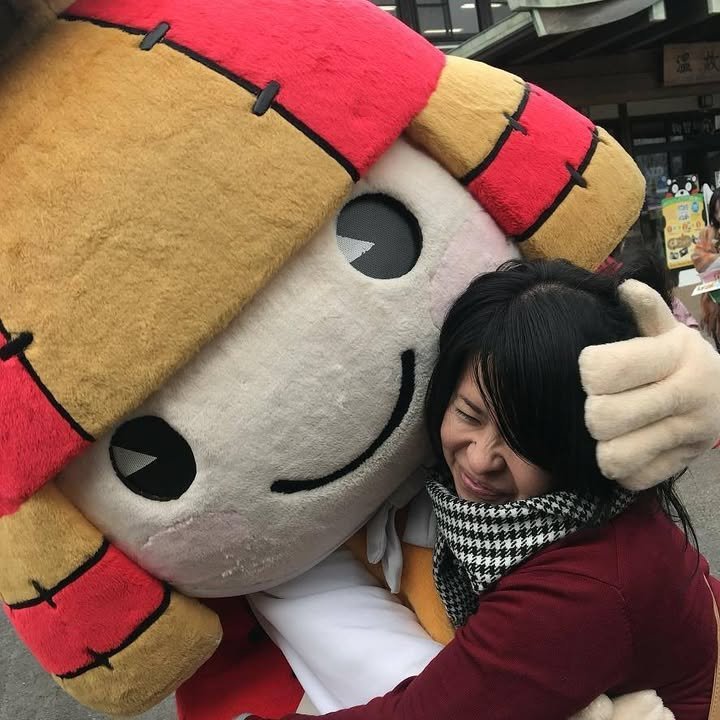
Anyway, remnants of the fort are long gone, but a building in the contemporary Tang Dynasty style has been erected, which few people visit, so they created a signature character, ころうくん (probably a disassociated form of 古老, meaning "ancient wisdom"), which was enough to draw our friend Michiko-san. The location is a desolate windswept plain barely worth visiting, but if you do go, remember that it is the birthplace of Japan. - William