The other day I saw an NHK program about increasing reliance in Japan on foreign workers. The show mentioned a web site so I checked it out:
https://www.nhk.or.jp/d-navi/izon/prologue.html
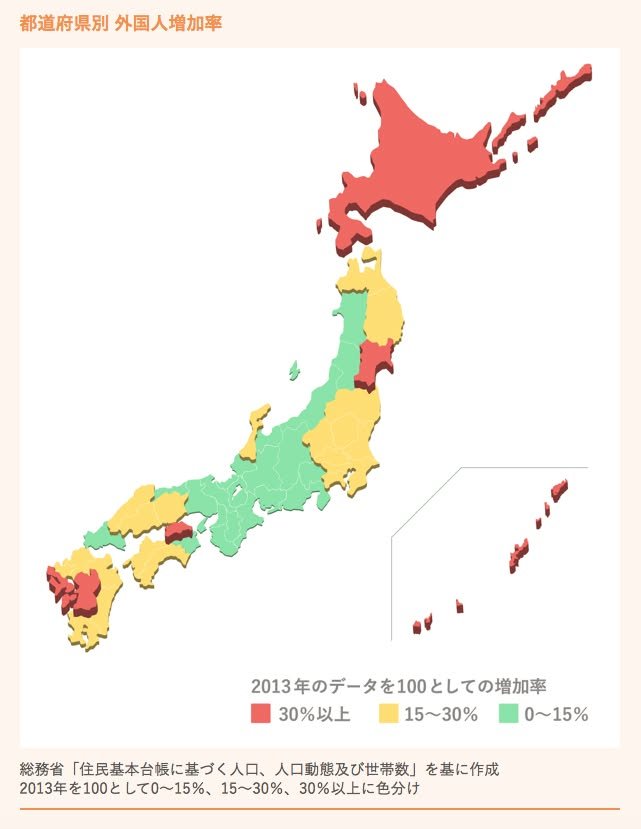
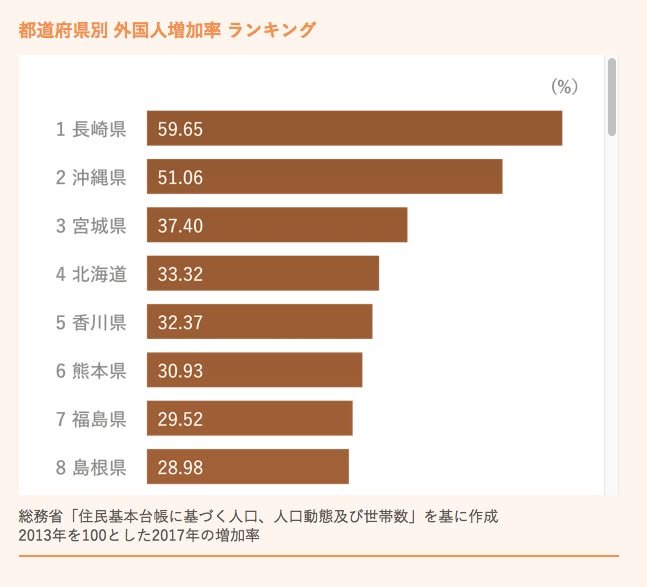
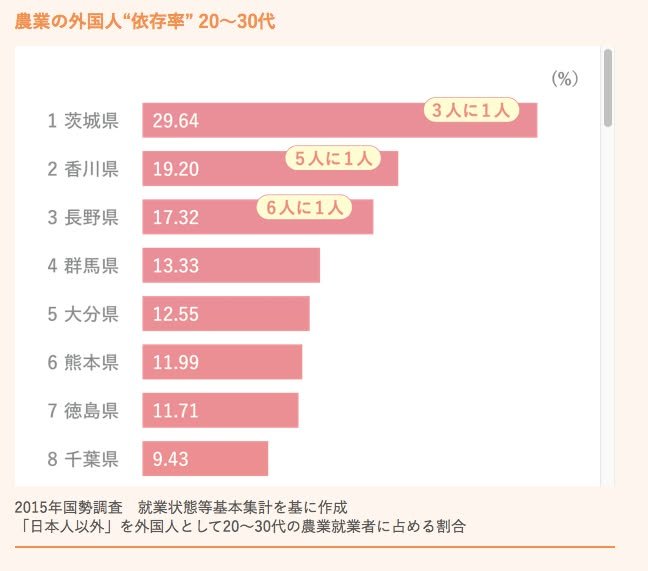
I was particularly interested, naturally, in the statistics about Kumamoto. The first map of Japan show that Kumamoto is one of a few prefectures in which the rise in foreign works has been over 30% since 2013. The brown graph provides the details, indicating that Kumamoto is ranked 6th with a 30.93 percent increase. The pink graph show that Kumamoto is also ranked 6th in terms of the percentage of the agricultural workforce that is made up of foreigners (11.99%).
The NHK website doesn't explain properly that most of these people are "trainees" (gino jisshusei; 技能実習生). The "trainee" system is controversial because Japan is essentially using it as a work around for its prohibition on manual labor. People come from Asian countries to do low-pay work, but that's OK, supposedly, because they are "trainees" not laborers. The gap between this fiction and the reality of the lives led by the trainees is quite problematic.
In 2009, a "trainee" murdered his "employers" in Kumamoto:
https://www.japantimes.co.jp/news/2009/11/10/national/murder-suicide-in-three-deaths/
In 2010, "trainees" won a lawsuit against their employers / abusers:
https://www.japantimes.co.jp/news/2010/01/30/news/foreigners-win-17-million-for-trainee-abuses/
Just today, an article was published about how the laws are being changed so that these foreign trainees/workers can train/work in Japan for a total of 10 years:
http://www.asahi.com/ajw/articles/AJ201804180052.html
-- Kirk