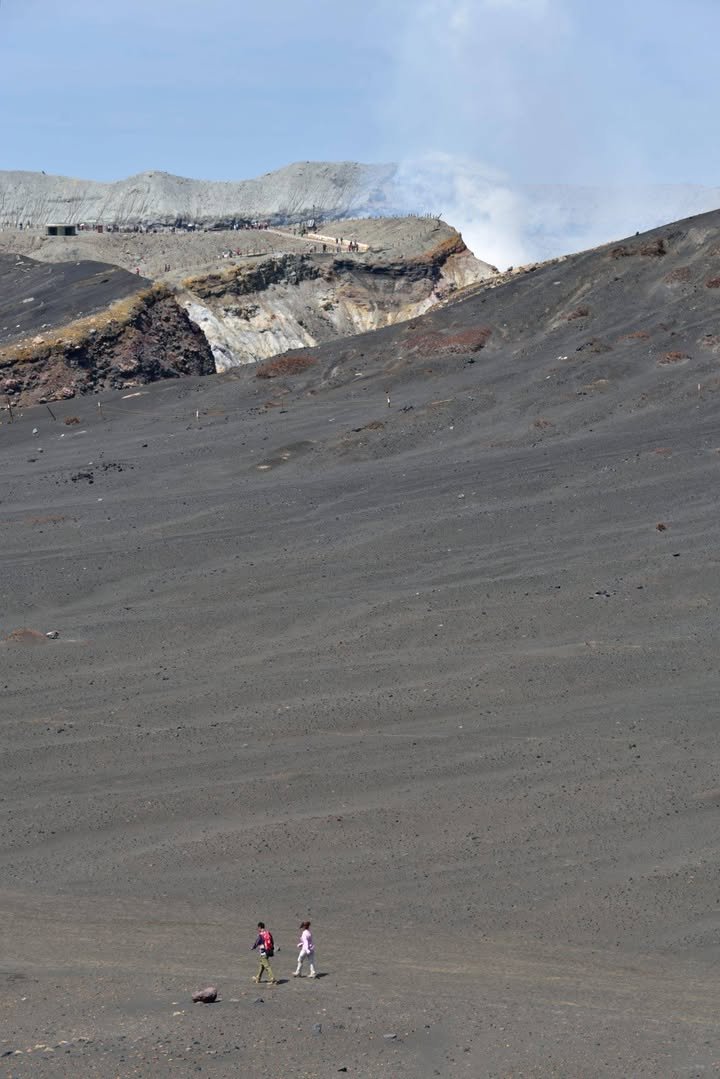
Our friend Yoshiko Toyama is back with a photo of the black sand produced by Mt. Aso. Wikipedia's introductory sentence to the subject is (seriously), "Black sand is sand that is black in color," a type of sentence that causes my students to scribble furiously in their notebooks and my dog to give me a blank stare. Fortuitously, the entry grows more specific: "(A) type of black sand, found on beaches near a volcano, consists of tiny fragments of basalt." Basalt is a common igneous rock formed from the rapid cooling of basaltic lava (generally, a 50/50 mixture of silica and feldspar) exposed at or very near the surface. When formed in the presence of water, the crystalline basalt lava fractures into tiny pieces - sand; and the sand, being highly mobile in geologic terms, quickly relocates itself to a beach (Google "leisure class, Martha's Vineyard " for another example). You'll see the lil' granular guys on their journey creating the black sandbanks along Shirakawa.
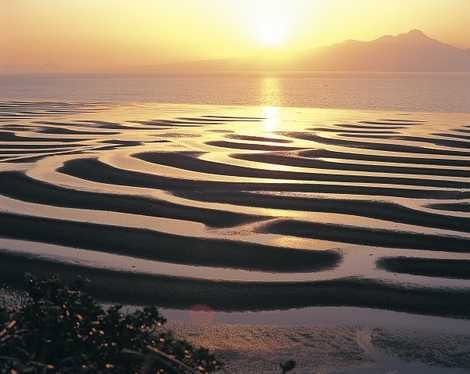
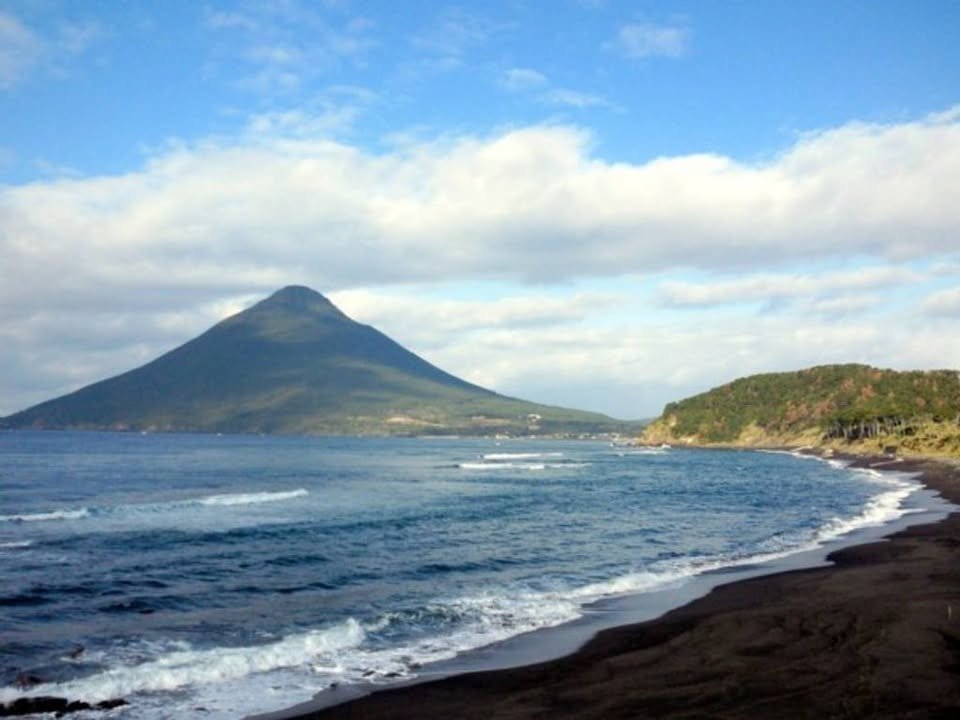
The banks of the Ariake Sea are formed from black sand mixed with a large percentage of mud (which makes bathing icky), as seen below. My favorite black sand beach in Kyushu is around Mt. Kaimon (開聞岳、かいもんだけ) at the southern tip of Kagoshima's Satsuma peninsula (also shown below). The area makes for a wonderful summer vacation. If you'd like more details, please let us know. - William