The Edo-era Shogunate realized an effective system to maintain control over their numerous daimyo (lords) by requiring either close family members or the lord himself in Edo (Tokyo) as a sort of hostage. This was known as "sankin-kōtai" - "alternative attendance" (参勤交代). Generally, every year or so, the family members swapped, so much travel was required, particularly for fiefs far from Edo.
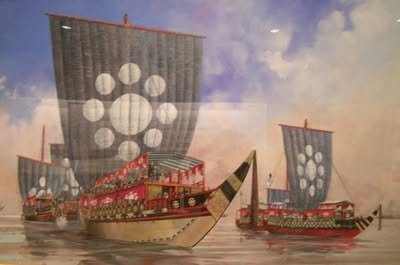
The Hosokawa clan used a purpose-built road to present-day Beppu in Oita Prefecture called the "Bungo Gaidō" (豊後街道), portions of which still exist, and then took a ship. But daimyo didn't travel steerage, so an elaborate type of ship was constructed called a "gozabune" (御座船). These were pretty well decked out (ha ha!). The last of the Hosokawa gozabune was constructed in 1839 and called "Naminashimaru" (波奈之丸", which could be translated as "Wave Shrine Tree Ship". An image of how the flotilla appeared is below (note the Hosokawa crests on the sail, though the prohibition on ocean-going ships meant they were primarily powered by rowers).
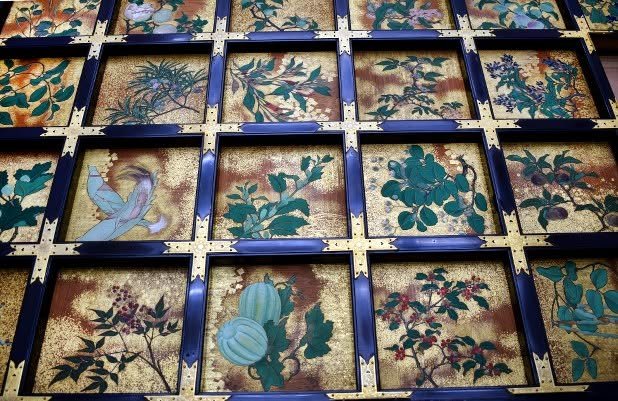
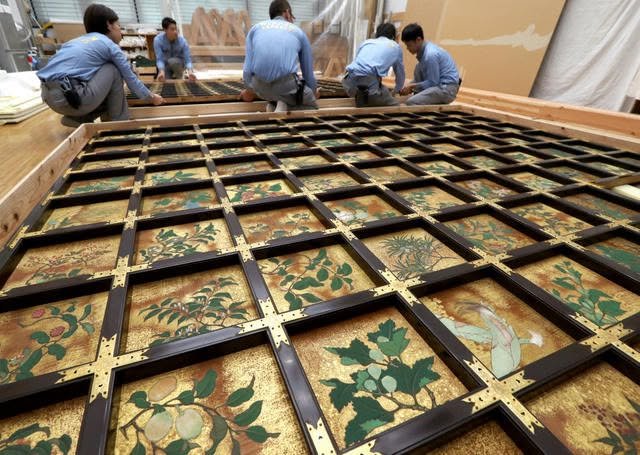
Parts of the Naminashimaru remain, including the decorative ceiling. Until the quakes, they had been displayed within the castle but were then dismantled and underwent restoration. The decorative ceiling portion, called tenjō-ga (天井画) - a National Cultural Treasure - has now been fully restored (the interesting method involved no paint application, so the colors are original, and is explained in Japanese at the attached Kumanichi article) and has been put on display at the Daizaifu Museum in Fukuoka until December 1, when it will return to Kumamoto for display at the art museum while it awaits its return to the castle. The tenjō-ga apparently depicts 171 types of plants and flowers. I suppose in pre-karaoke days, they'd play games by gazing up and identifying them. - William