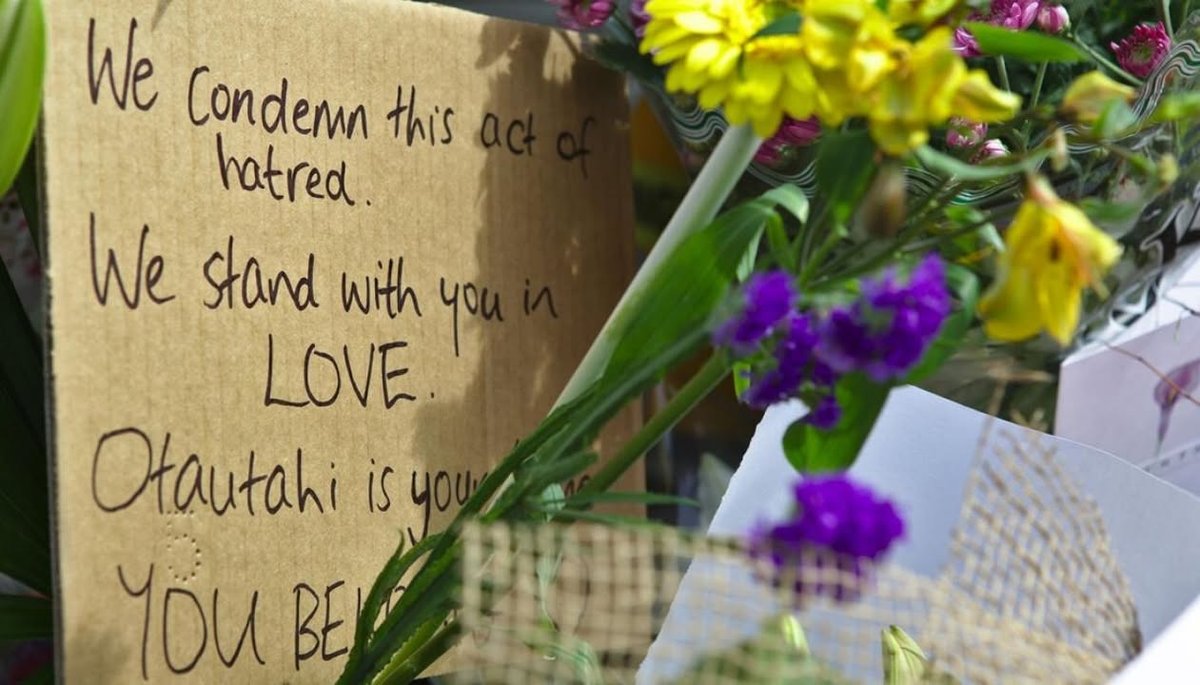
I'd like to say a few words about recent events in Christchurch, New Zealand. The murder of 50 people and the wounding of many more, merely for practicing their religion, doesn't have an obvious Kumamoto connection but I know that such senseless violence is deeply troubling to many of our readers. I'd like to extend a special message of support and condolence to our readers of the Muslim faith and to our Kiwi readers. Personally, I have visited the downtown section of Christchurch, which is located between the two Mosques, and that has made the violence all the more shocking for me. Fortunately, I have received word that all of the Japanese students from my university who were studying in Christchurch are OK.
Another indirect connection to the page is the attacker's use of Facebook. I tend to listen to more news than I read and one of the audio reports I thought was relevant was this one from NPR, in the U.S.:
https://www.npr.org/2019/03/16/704039029/the-efforts-to-misdirect-in-shooters-screed
The term "scatposting," which seems to be a substitute for some other term that can't be used on American radio, comes up in the article. It seems to refer to a kind of troll-like behavior that is intended to sow division and anger. And, of course, the accused is reported to have video-streamed his rampage via Facebook. Sadly, the digital tool we are using to share information about Kumamoto also has the potential to spread hate.
On a more positive note, I did find a couple of comments that lifted my spirits in the NPR reports I listened to. One was this comment by Imam Johari Abdul-Malik:
"I am clear that every tragedy has in it an opportunity - the opportunity for the community to engage with one another, to reach out to their neighbors, not to become securitized and become victims but to become victors and going out and saying, since you're joining us in solidarity, let's look at all of the phobias and those people who are afraid - and, as our brother Christian said earlier, to reach out to those who are afraid and join their hearts with ours."
https://www.npr.org/2019/03/16/704137576/barbershop-muslim-group-reacts-to-new-zealand-shootings
I was impressed by the idea that the thing to do at a time like this is not to respond to hate with hate, but to reach out to people who, out of fear and/or ignorance, might otherwise be tempted to embrace the kind of hate that the shooter in Christchurch has embraced.
The power of such reaching out was expressed by former neo-Nazi Christian Picciolini:
"MARTIN: And what did make you get out? Or what - how were you able to get out?
PICCIOLINI: You know, I always had doubts about what I believed in. And, of course, I could never vocalize them because I didn't want to seem weak or anything like that. But ultimately, you know, it was interactions with people of color who, you know, showed me compassion when I had least deserved it. And those moments of clarity added up."
As I write this, I'm reminded of something Robert Kennedy said after the assassination of Martin Luther King, Jr.:
"My favorite poet was Aeschylus. He wrote: 'In our sleep, pain which cannot forget falls drop by drop upon the heart until, in our own despair, against our will, comes wisdom through the awful grace of God.'"
I hope humankind can find the wisdom to reduce the hatred and ignorance that fuel the sorts of acts of violence that have been occurring all too often lately.
-- Kirk