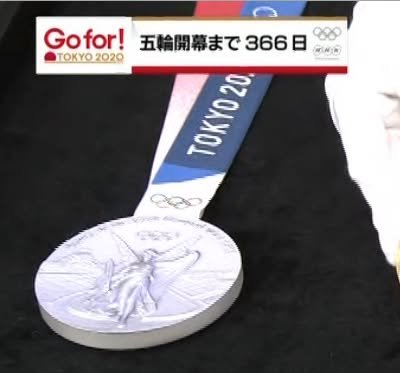
Kirk here with a little note on how people in positions of influence sow confusion among students of English by using English as a decoration without checking to see if it's correct.
Apparently, NHK's evening news program has decided to use
"Go for!
Tokyo 2020"
as a sort of logo in all of its segments about the upcoming Olympics. Perhaps they are under the impression that "Go for!" means "目指せ!" (mezase -- the imperative form of the verb mezasu which means to aim for something or strive for something). In Japanese, "mezase" doesn't require an object but in English "go for" does. In other words, in English you have to indicate what you are striving for with some word. So, "Go for it!", "Go for the gold!" etc. would be fine. But, as English, "Go for!" alone is basically gibberish.
It's often said that students of English in Japan should not be so concerned about making mistakes and should just relax and talk. I can agree with that sentiment for people who, in the moment, need to communicate verbally with someone. When you're a big, influential organization like NHK, however, perhaps you should check with a native speaker or two. Otherwise, how are the many students of English who will see "Go for!" on their TV screens to know that it's not proper English and they shouldn't imitate it?
P.S. I hereby acknowledge that I have been guilty of many typos and other errors in my posts on this page. One of the reasons that I try to reread and double-check what I write is that I don't want to confuse people who read the page in order to improve their English. We all make mistakes, so in that regard I'm in no position to criticize NHK for typos or other occasional errors. But, in this case, they are showing this to people almost every night. I would think that they could have expended a little effort to check to see if "Go for" made sense as English.