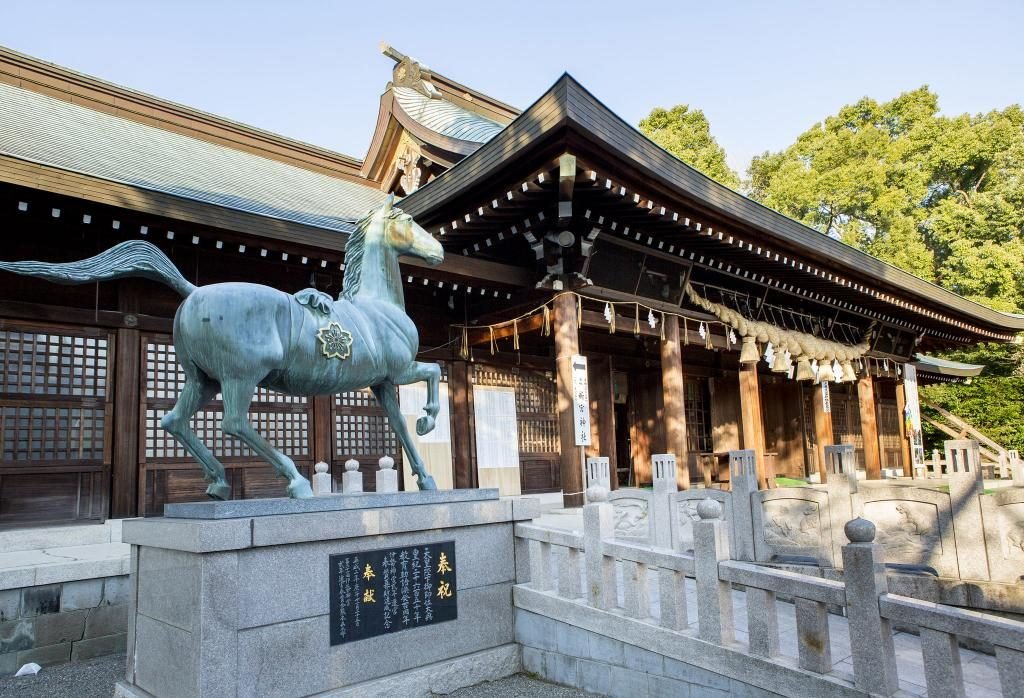
William Shinto shrines are nebulous places for non-Japanese. From my experience living adjacent to one, they offer superficial welcome to those from abroad to pray and attend festivals but generally do not allow deeper participation in shrine affairs. This is truer still for Kumamoto Gokoku Shrine(護國神社、ごこくじんじゃ), nestled between Ninomaru Park and the baseball stadium. (This is a rather difficult topic; if any have corrections or additions, please share them in the comments.)
Gokoku Shrine history is complicated, but in a nutshell, a "shōkonsha" shrine (招魂社, しょうこんしゃ) was established in 1875 in Kyoto by the Meiji government to enshrine victims who died for the country (Meiji Restoration war dead were an impetus; remains are not enshrined but names inscribed in the shrine registry) and another in Tokyo the same year; soon, one had been established in each prefecture. In 1939, they were renamed Gokoku Shrine, and after World War II, they became independent of the government but maintained an ambiguous "official" status akin to Yasukuni Shrine, which was originally a shōkonsha. Kumamoto's Gokoku Shrine enshrines some 65,000 war dead from Kumamoto prefecture from the Meiji Restoration to the Pacific War. Its atmosphere is solemn; there are few visitors.
For those who would like to visit, the shrine is currently holding a display of flags from many world countries to mark the war in Ukraine, so non-Japanese may feel a tad more welcome. TKU has the story along with a short video:
https://www.tku.co.jp/news/?news_id=20220527-00000016