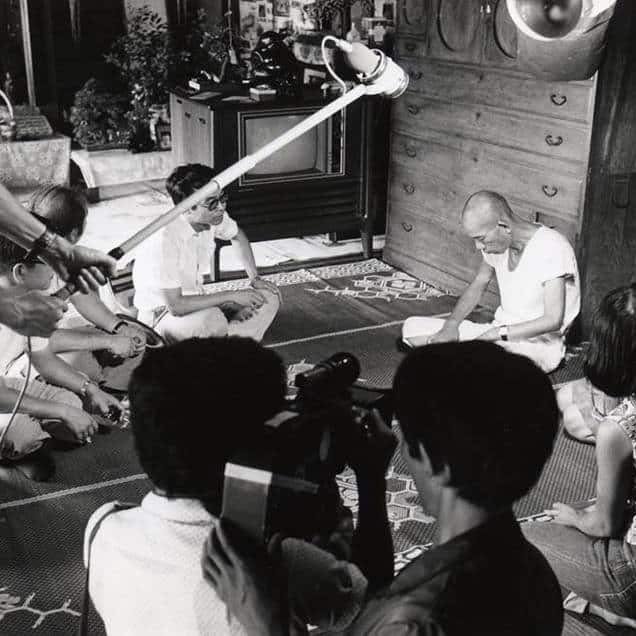
Kirk here with news about the director Noriaki Tsuchimoto, whose "Minamata: The Victims and their World" is reviewed on the following website:
Here's a blurb about an event being held now at the Museum of the Moving Image in Astoria, New York:
--- start quote ---
One of the most unjustly overlooked of all documentary filmmakers, Noriaki Tsuchimoto made films that are revelatory in their patient pursuit of humanity. Emerging on the world cinema scene in 1964 with the subversive tour de force On the Road: A Document, which marked him as a strident formal innovator and firebrand leftist, Tsuchimoto gradually pared down his personal style and ceded his works to their surroundings, as evinced in his masterful trilogy of 1970s films that grapple with the outbreak of Minamata disease in the eponymous town of Minamata (Minamata: The Victims and Their World, Minamata Revolt: A People’s Quest for Life, and The Shiranui Sea). Tsuchimoto, a perennial Marxist, was distinctly mindful of the “original sin” at the heart of his vocation—that films almost always benefit filmmakers more than their subjects—and a keen awareness of this imbalance fueled much of Tsuchimoto’s work. He was never satisfied if his films didn’t also function as chronicles of their own making or question the ultimate efficacy of art and communication, and these preoccupations guided Tsuchimoto toward a rarefied grace in the face of an often-brutal reality. He was greatly admired by his contemporaries Claude Lanzmann and Shinsuke Ogawa, and was considered to be, along with Ogawa, one of the two most important figures in the history of Japanese documentary. This is the first major stateside retrospective of Tsuchimoto’s work.
--- end quote ---
https://www.jfny.org/event/the-trailblazing-documentary-cinema-of-noriaki-tsuchimoto/