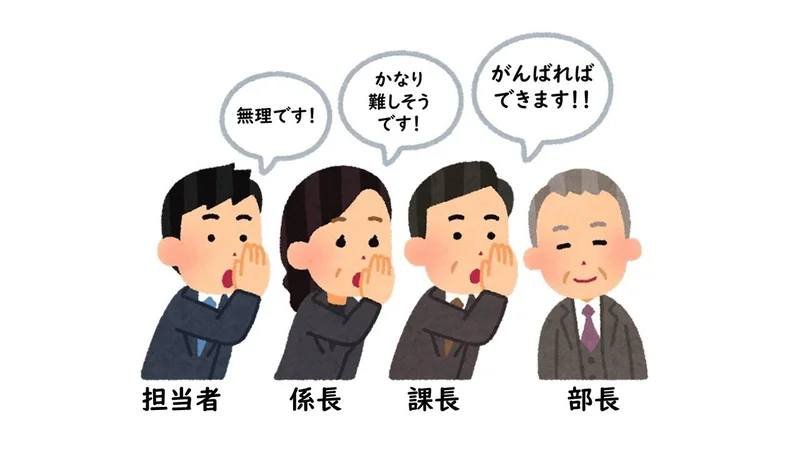
Kirk here posting about the much-ado-about-nothing regarding the meeting between Mayor Onishi and local foreigners. The illustration is one I found searching with "伝言ゲーム" (dengon game). Dengon means "message" and "dengon game" is the Japanese equivalent of "telephone game" in English.
The major and/or the foreign participants got lots of criticism for the "unreasonable demands" made at the meeting. In this post I'll present my own take on how what transpired in the media is an example of a telephone-game-like phenomenon and then I'll present an English translation of an X (Twitter) message from the mayor that confirms my suspicions.
First, how is this like a "telephone game"?
1. The major invites 15 people to come to a meeting and asks if there's anything about life in Kumamoto that they find difficult or confusing.
2. Presented with the invitation to talk about such things one person mentions that gengo (Reiwa, Heisei, Showa, etc.) add complexity to the task of deciphering documents.
3. Of the many comments made in the meeting, certain journalists find this to be interesting and make it, of all the comments presented, the headline.
4. People who read the news reports get upset about foreigners coming to Japan and demanding that Japanese people abandon traditional culture and adopt the ways of foreign lands.
5. People reading angry posts about this topic get even angrier and connect the incident with previous incidents of "unreasonable demands by foreigners" which in most cases are equally baseless.
And, here's the mayor's reaction to how this has blown up in the media:
--- start ChatGPT translation of message from mayor ---
It seems that some people have misunderstood the situation based on the headlines of news articles about our dialogue with foreign residents. I would like to add some clarification. It's a bit lengthy, but I hope you will read it.
The majority of foreign residents living in Kumamoto have expressed that Kumamoto is very livable, with good public safety, and the people of Kumamoto are kind, leading to a high level of satisfaction with their lives here.
However, there are certain points of confusion, such as administrative procedures. For instance, administrative documents that only display the Japanese era name or tax payment slips can be difficult for foreigners who are new to Japan, due to the language barrier. Suggestions have been made to make these more understandable, such as by adding QR codes that link to explanations.
Regarding school lunches, people from Islamic regions cannot eat pork, so it was suggested that, similar to allergy accommodations, they could be informed on days when pork is on the menu so they could bring their own food from home. This is an opinion expressed for consideration, not a demand.
I want to clarify that no one has suggested that Japanese people should adapt to the rules of their countries. It's important not to misunderstand this point.
--- end translation ---
https://twitter.com/K_Onishi/status/1720599573801189530