William The history of the Buddhist temple (and former Shinto shrine) Honmyoji is complex. It got its start in 1585 - in Osaka, actually - to pray for the repose of the soul of Kato Kiyomasa's father, Kiyotada. In 1600, after Kiyomasa became the lord of Kumamoto Castle, it was moved to within Kumamoto Castle grounds. Kiyomasa died in 1611, and according to his will, a statue of himself was enshrined at Jochi-byo Mausoleum on Mt. Nakao, to which the temple and shrine were relocated and co-occupied from 1614. Due to the Separation of Shinto and Buddhism ordinance during the Meiji period, the temple and shrine were separated, with the shrine moved to Kumamoto Castle to become Kato Jinja and the temple remaining as we know it today.
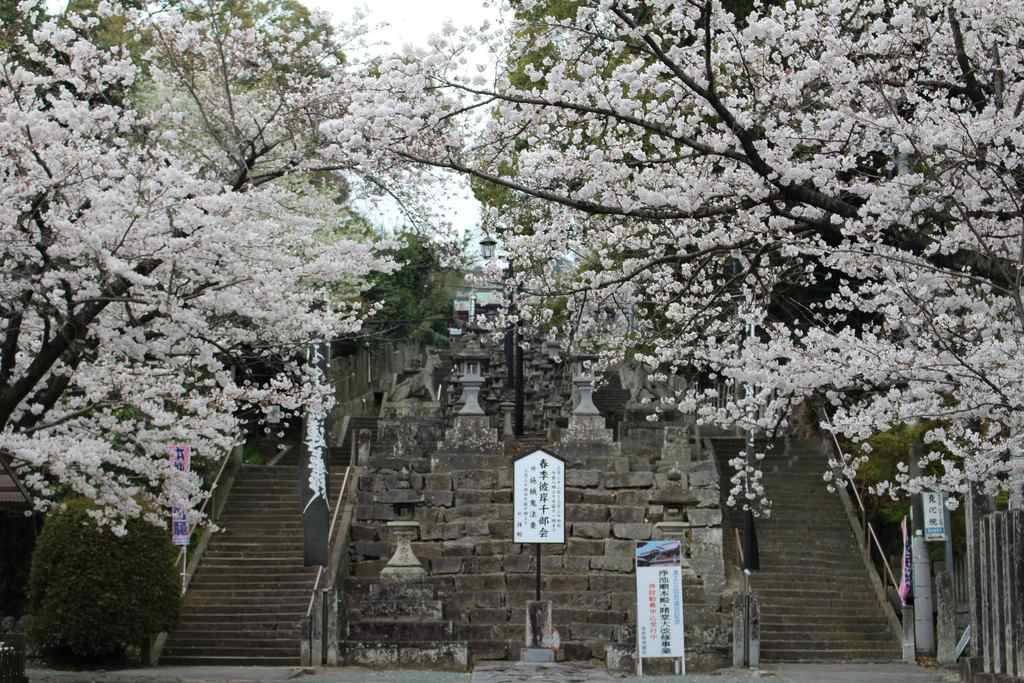
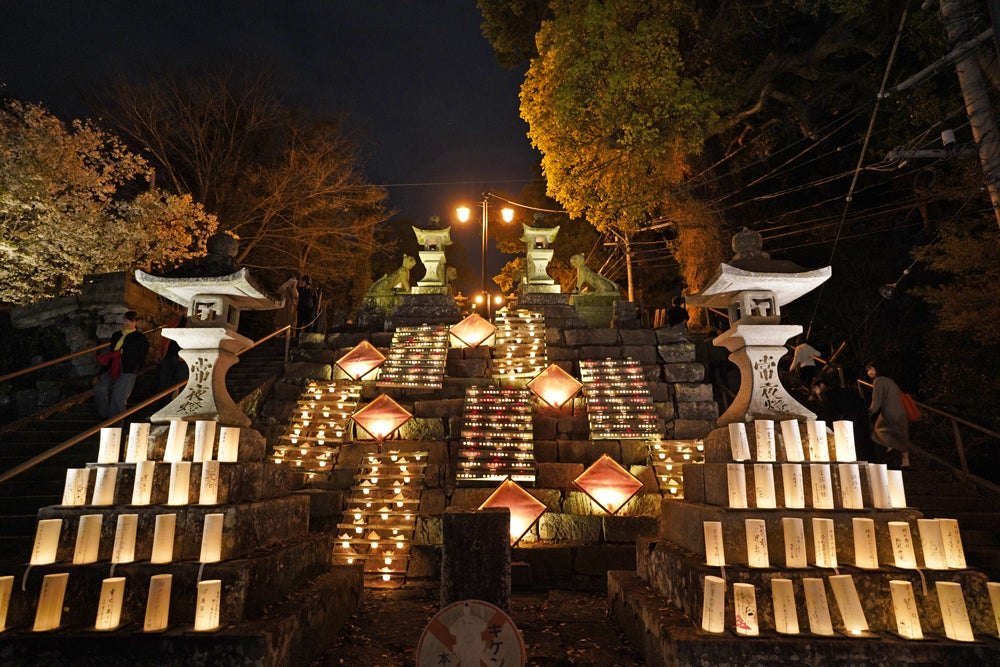
Leprosy (or "Hansen Byo," as it's known in Japanese) affected the temple greatly. Afflicted beggars lined its steps, and inns were created along the slope to accomodate both beggars and pilgrims alike. Devote pilgrims donated stone lanterns which proceed up the center of the double steps, and many cherry trees were planted.
It is the cherries that will catch your attention at this time of year. Rather than a sit-and-drink hanami, consider a mobile (and rather strenuous) one, drinking in the fragrance of the cherries and the historical ambience (as well as a beer or two) while you enjoy what really should be a World Heritage Site. During this season, the stairs are illuminated at night, when it's also less crowded. It's a very long walk from the tram stop Honmyoji to the top and back. Your legs may hate you the next morning, but your memories (and camera) will not. (Photos ripped from Web.)