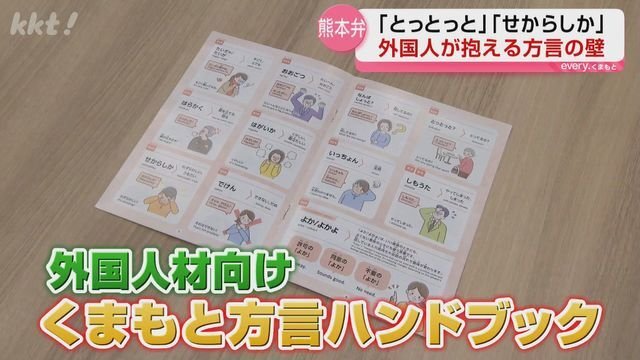
Kirk here. I enjoyed watching this fun little segment about KKT about foreigners struggling with Kumamoto dialect and the pamphlet picture (which has come up on this page several times). I made the mistake of calling KKT to tell them that they had a misspelled word in one of the titles in the video and I'm afraid that that is why the video is no longer accessible. :(
Personally, I'm not sure how valuable the English on the pamphlet is, particularly when not all of the people using the pamphlet understand English. Rather, I suspect that the most valuable aspects are
1. listing words/expressions that are good to know
2. connecting them to standard Japanese equivalents (most have such equivalents, though a few, like atozeki [あとぜき] are more unique)
You can read or download a PDF of the pamphlet here:
https://www.pref.kumamoto.jp/uploaded/life/258611_794494_misc.pdf
One other thing I would like to see on it is some sort of rating, by word or expression, of the usefulness. For example, I would guess that ごら or ごーら for "head" and かんげ for hair are probably in the nearly obsolete category but these are included in the "let's learn the names of body parts" section. Conversely, words like "-ken" (meaning から or だがら, placed at the end of a sentence or phrase) are very common. The pamphlet indicates regions and perhaps a generational indication would be good too; I doubt that younger people say かんげ (for hair), but perhaps you need to learn this word if you are working with the elderly.
https://news.yahoo.co.jp/articles/e3f8005c8dd2bea75bdcd6f0a762295b4e1280dd/images/001