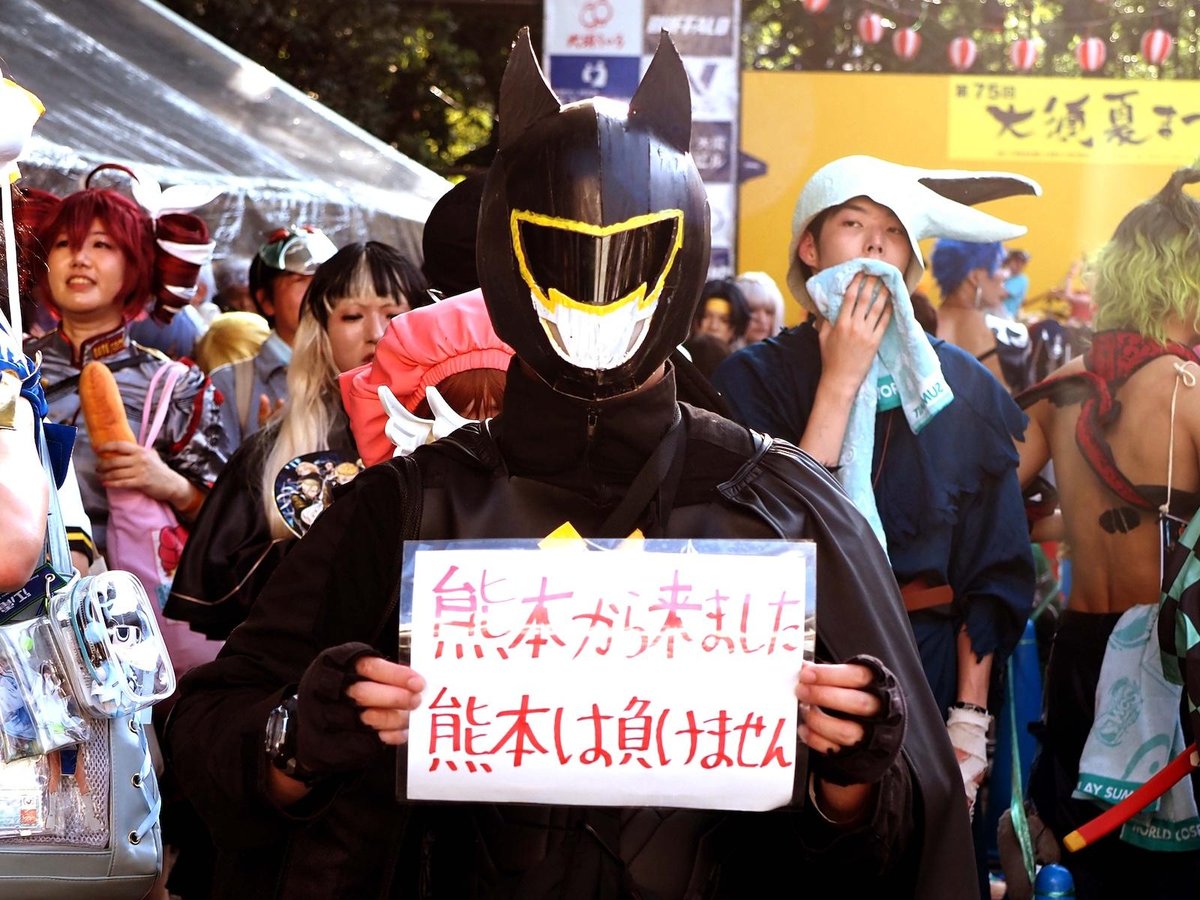
Kirk here. Translation is not a simple matter. 負けません (makemasen) is translated as "will not lose." But this usage of "makeru" is not the win/loss record of a sports team; it's about being "beaten" or "defeated" by the quakes, either of which sound a bit more natural in English. Or, you could say "Kumamoto will never give up." I imagine there are lots of other free translations that might work.
Earlier, I asked if people were using AI in the quake and most of the responses were negative. My own sense, however, is that the more powerful paid-for models (not what you get for free) have improved tremendously. ChatGPT 5.6 Sol (High) offered this analysis:
--- start quote ---
“Kumamoto won’t lose” is a close literal translation and works as a slogan, but in English it can prompt the question “lose what?” Here, 負けません means something closer to “will not be defeated,” “will not be beaten,” or “will not give in.”
For a caption, I might write:
As earthquakes continue to strike Kumamoto Prefecture, a cosplayer at the World Cosplay Summit in Nagoya over the weekend holds a sign reading, “I came from Kumamoto. Kumamoto won’t give in.”
--- end quote ---
Which brings me to my take on AI and translation in the media:
Simply throwing something at AI and then publishing it without reviewing it is irresponsible. But, now that we have AI, assuming that your linguistic skill is adequate (when it isn't) and not taking the time to run a translation by AI to check for problems (e.g. "lose" vs. "be defeated") before publishing is also irresponsible.
https://japantoday.com/category/picture-of-the-day/kumamoto's-unbreakable-spirit
P.S. If you're interested, my previous post about AI and the comments I received are here: