Posts
A contributor did what contributors do, which is to contribute, and contributed the following query. If you're skilled in the area, please reply. - William
Hi! I'm a producer w. Travel Channel USA. We're filming a couple of segments in the Kumamoto Region-- at Oono Keikoku & Yougan Pools near Mt. Aso at the end of May-- and we are looking for English Speaking Adventurers to appear in the segments. An adventure guide I was speaking with suggested i contact you about making a posting. Please let me know if that would be possible. Thanks!
I was quite lonely when I first moved to Kumamoto, knowing nobody and not speaking the language, but the call of the mourning dove (a plaintive cooOOoo-woo-woo-woooo) comforted me as it recalled my California youth.
"Hato" (鳩) refers to both pigeons and doves, but the mourning dove is often referred to as "yabato" (野鳩, or "wild pigeon"), which is interesting as they appear to have originally been brought to Japan from their native North America as pets. They are more slender than the pigeon and sport a tan plumage. They mate for life, so if you see one, look around and you'll see the other (they never flock). Delightfully, their chicks (always two) are known as "squabs." Two pairs are nesting at my house in trees front and rear, and now, as they raise their squabs, their calls to each other brighten the morning. You can read more about them at the below Wikipedia link. - William
https://en.wikipedia.org/wiki/Mourning_dove
Hi! I'm sharing this for those who may not have seen it yet. The event is coming up on the 21st of this month (October). -- Kirk
An interesting article about “Sento” (Japanese Public Bathhouses) with its historical background.
Apparently today is “Sento day”
Sento = “Sen” (=1000) and “to” (=10)
https://www.nippon.com/en/views/b07302/
Considering Kumamoto is blessed with many natural hot springs, one may wonder the difference between “Sento”
and “Onsen”
Found this explanation in Google;
The difference between the two may be confusing for foreigners. “Onsen” means a hot spring. At an “onsen” spot, a hot water is always taken from a natural hot spring. Most of “sento”, on the other hand, use tap water heated by boilers.
So if you are really the curious ones, the next trip you go the public bathhouses , you can try asking if the water is from natural hot springs or tap. 😃
-Olivia-
What’s your biggest pet peeve in the Assistant Language Teacher world?My biggest pet peeve is over translating. You are in the classroom and you are going through greetings,weather or whatever at the beginning of the lesson.And thank god that the T1 has joined in the lesson but is translating every single word you say into Japanese. Soon you see the student’s eyes shift from you to the T1. The T1 is providing all the answers and you in a sense will slowly disappear. Later when it comes to you asking a student a question they will search frantically for the T1 for the answer. After all the T1 provided it before,before and before.Solution...You can politely tell them not to translate in class. You can tell them English as much as possible in class please. But working in public school you and the teacher might have not had that meeting. Or you made the whole lesson plan and the T1 decided to run up and translate everything right there on the spot.As for me, I would shut them down because the basis of the lesson is communication not translating everything verbatim. Hopefully maybe they learned how to communicate to you on how they want things for next time. Jay Onyskin
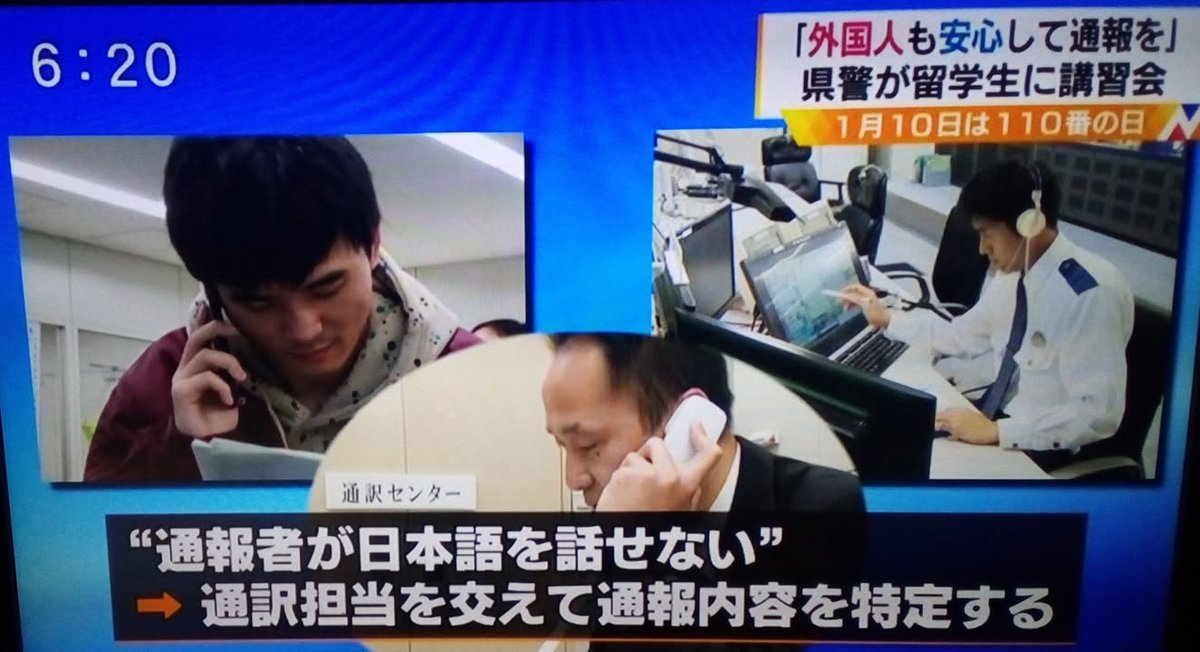
These images are from an NHK report on tattoo-friendly hot springs in nearby Oita. The NHK report introduced the following web page:
https://enjoyonsen.city.beppu.oita.jp/100tattoo-friendly_beppuonsen_japan/
If you are considering going to OIta and you or someone who will be with has tattoos, I recommend that you check it out. According the the pie chart in the NHK report, 65.6% of the onsen (hot springs) in Beppu allow folks with tattoos to use the facilities. The third image is of a color coded map showing where different types of tattoo friendly facilities are located.
The address of the NHK page (in Japanese) is:
https://www3.nhk.or.jp/news/html/20180925/k10011643191000.html
Actually, I'm a bit disappointed in the NHK folks because they didn't include a link or enough information for me to find the English page on my own. I had to write to B-biz LINK (the organization cited in the NHK report) to ask about the site. Fortunately, Mr. Kawamura from B-biz LINK responded right away.
By the way, in regard to Kumamoto, "Onsen Magazine" has the following page:
https://en.unknownjapan.net/tattoo-friendly-onsens
It's good but I think the Enjoy Onsen site (for Beppu) is better.
-- Kirk
"Unkai" (「雲海」, literally "sea of clouds") is a phenomenon which occurs when a cold upper atmosphere inputting downward pressure meets a damp, warmer lower atmosphere which wants to rise in a basin, causing immense condensation. The Aso caldera is quite famous for this. Our friend Yoshiko Toyama captured this gorgeous photo of the phenomenon. I don't know how to advise our photographer readers on timing to capture this, but perhaps you should consult an elderly photographer - they seem to know when it will appear (not saying that Yoshiko-san is elderly, mind). - William
Hi-I have been asked by some one else on Kumamoto I to share my ALT and other Eikaiwa experiences. Well here goes something positive.....I worked at one school in Southern Kumamoto City where all the Japanese teachers were required to teach English. So every morning I got the lesson plan handed to me or placed on my desk(Amazing). Also bonus refreshments like snacks galore and bottomless cups of coffee made it a place I wanted to go to.They also taught English as a class for grades 1st through 6th at least bi-weekly. The main T1 had a nickname for the 1st grade classes which was “The Zoo”. So every week we would do 7 20 minutes classes of basic English drills with “The Zoo”.Any other school that would be insane but here at this school they followed the rules as best as they could. These lessons though sweaty were rewarding which showed through the students level of communication with me(total awesomeness ).I know we all have are own ways but in the end we need the Japanese T1 teachers. Don’t be afraid to push them a little up front and forward. Jay Onyskin
If you notice the world smells like bubble gum, you're not insane (probably - I don't know you): it's the blossoming season for Osmanthus fragrans, also known as "fragrant olive." There are two subspecies distinguishable by flower type, silver (ginmokusei 「銀木犀」) and gold (kinmokusei, 「金木犀」) . The latter is much more common. Their flowers are very small but pack a fragrant punch and are sometimes used in Chinese cuisine. The fragrance is a harbinger of autumn. Wikipedia has more info. - William
Osmanthus fragrans - Wikipedia
Osmanthus fragrans (lit. "fragrant osmanthus"; Chinese: 桂花, guìhuā, and 木樨, mùxī; Cantonese Yale: gwai fā; Japanese: 木犀, mokusei; Hindi: सिलंग, silang), variously known as sweet osmanthus, sweet olive, tea olive, and fragrant olive, is a species native to Asia from the Hi...
Joe Tomei here. We've gotten a request to locate an qualified English speaking physiotherapist in Kumamoto city for a couple of hours a day from the 28th/29th November to the 10th December to work with the NZ women's handball team. It is not volunteer, but compensation would need to be negotiated. If you know of something (or are that person), please either drop a line in the comments, or write to me at [email protected]
A note from the Kumamoto International Desk of Really Scary Things:
Rescue work for victims of the recent Indonesian quake continue, but due to liquefaction, as one put it, "Nugroho said it was difficult to pinpoint the exact number of missing as many of them are believed to have been in buildings that were swallowed up ― some of them whole ― into the earth because of a process known as soil liquefaction."
Sheesh. Whole buildings swallowed up. Our thoughts go out to the victims and hopes that a similar disaster does not strike Kumamoto.
Gorgeous clouds resembling a flock of sheep hovered over Kumamoto this evening (photo below). My wife remarked they're called いわし雲 (iwashigumo, or "sardine clouds." I have no idea why they're called such as they look like sheep, not sardines, but then, Japan doesn't do sheep.)
Anyway, I checked it out and incidentally found that cloud types all have their own symbol, probably because meteorologists are all nerds.This type of cloud is called "cirrocumulus" and is represented by the below symbol, probably because all nerds love boobs.
If you're a nerd, you can find a full list here. - William
https://ja.wikipedia.org/wiki/%E5%9C%B0%E4%B8%8A%E5%A4%A9%E6%B0%97%E5%9B%B3#%E9%9B%B2%E5%BD%A2
Last one for the day..One former Kumamoto native that will be referred to as “The Glove” plays in this awesome trio The XL Fits. They just opened for The Hard Ons for the extreme music fest in Fukuoka. And next month they will go to the USA!! So give “The Glove” a pat on the back and check out a YouTube video of them playing at Navarro. Navarro is a cool shin dig up in the Shimotori area that also has live music gigs along with DJ events. Jay Onyskin
XL Fits 8/20 Navarro Kumamoto
Soulcraft which is probably Kumamoto’s most prolific hardcore band is playing with the UK’s own Disorder next week on Sunday 10/14 at Kieth Flack in Fukuoka(North Tenjin area). Disorder is D-beat which is a mixture of hardcore and metal with a decidedly left wing bent on lyrics(Thank you Thatcher!). The order of things goes Crass,Discharge and then Disorder. Also on the bill is “Ai”...And they are Kitakyushu street punk. I worked in Kitakyushu for 3 years and it wasn’t easy. As Kitakyushu people say,”We got steel in our blood...”. The show starts at 5 pm and I am sure the crowd will be more than lively. Don’t forget the last night bus for Kumamoto is 2030 yen and leaves at 11:40pm.Kieth Flack is about a 15 minute walk from Tenjin Station. I will be in the future posting more music items of all genres and styles that encompasses Kumamoto, Fukuoka and other parts of Kyushu. Jay
S.A(Samurai Attack)Oi! Influenced Japanese punk @Django on November 11th in Central Kumamoto. I saw them last year and they reminded me a bit of early 80’s punk/new wave like 999/Adam Ant.They opened for Rancid on one of their Japanese tours.Tickets are a bit pricy at 3800 yen advanced and 4300 on the day. I assuming the drink ticket is included. Django is a nice club with a professional loud sound system. So I suggest ear plugs. The local scene though small can be rather welcoming seeing a foreigner at the shows. It’s a great event to see something unique and maybe talk about something different. Hell, You might be band member of an unknown Kumamoto punk after the end of night. That’s what happened on me. Jay Onyskin Here is Wikipedia link to SA in English. https://en.wikipedia.org/wiki/SA_(Samurai_Attack)and here is a YouTube video. https://youtu.be/B4x3MGNjjOc
SA (Samurai Attack) - Wikipedia
SA (also known outside Japan as Samurai Attack) is a Japanese punk rock band. Their style of music has been described (in the liner notes of their own releases) as Oi! punk.
Here's a message from Mr. Itoh for the International Center. I'll add English translations for the "comic" images. -- Kirk
-----------------------------
Zenjido Yamada exhibition
6 Oct - 21 Oct 2018 (Close: 9 Oct)
9:00-22:00
Kumamoto International Center Entrance Hall
Free
Real Name: Takayuki Yamada
Born in: Saga Pref.
Live in: Fukuoka Pref.
Mr. Yamada sets himself as Zenjido Yamada lived from the end of Edo to Meiji period and he wrote what he felt at the time. Mr. Yamada is a web designer and he shows his art works on SNS such as Instagram or Twitter. Amazingly, more than 350, 000 people have followed his Instagram account. He uses iPad and Apple Pencil, Procreate for iPad app for his art works.
Have you heard Japanese word ARU ARU(あるある) before? ‘’ARU ARU’’ may just happen to everyone and forced them to get embarrassed. For example, when you get lost somewhere in Japan and try to ask the way in Japanese, but the person is actually Chinese. Can you relate to that? We say ARU ARU at that time.
Zenjido Yamada tells us a lot of ARU ARU situations in his works. You may find our Japanese interesting, little bit strange way of feeling but these are actual our one of points of views.
We hope you will find your favorite work and please tell us your ARU ARU story.
Royal Caribbean Cruises (RCL), an American global cruise company based in Miami (good place to base a cruise company!) is the world's second-largest cruise line. And they are coming to a location near you. This is big news.
Kumanichi reports that RCL will invest a tad over $100 million dollars (U.S. type) to create a welcome portal for international cruise ships in Yatsushiro slated to open in 2020, coinciding with the Olympics. Clearly, the clientele is expected to be from nearby countries. In cooperation with governmental authorities, the area to be jointly developed will be 8 hectares in the southwestern Yatsushiro Port area with a passenger terminal encompassing functions of customs and immigration (and duty-free shops!). RCL will be responsible for approximately 3 hectares to create hospitality zones with Kumamon-related facilities planned such as "Kumamon Park," lawn space, and eating and drinking establishments.
Yatsushiro is moving up in the world. - William
八代港に「くまモン公園」整備へ 熊本県、クルーズ船拠点化で | 熊本日日新聞 - This kiji is
国際クルーズ船の拠点を目指す八代港の整備イメージ。手前には旅客ターミナル(四角の建物)と、くまモンをテーマにしたおもてなしゾーンが広がる(県提供) 国際クルーズ船の拠点を目指して八代港(熊本県八代市)...
It's a pretty windy day in Kumamoto.
This website helps us understand how the typhoon near Korea is causing the weather we're experiencing.
-- Kirk
https://www.windy.com/?35.934,135.703,6
I hope those of you who are tired of this story will forgive me for posting again about lozengate, but, if you are an English speaker and you're still interested, you really should know about this interview with Yuka Ogata on Canadian radio.
https://www.cbc.ca/radio/podcasts/current-affairs-information/as-it-happens/
Thanks to Tim Curnew for the heads up!
The relevant interview can be heard at
https://podcast-a.akamaihd.net/mp3/podcasts/asithappens-sl8Lt76J-20181003.mp3
beginning about about 50:30.
I learned some new things from the interview. I found it to be much more informative (at least regarding Ms. Ogata's perspective) than local coverage in Japanese. Local coverage seems to be focused primarily on building up support for the idea that all of the blame rests with Ms. Ogata. Ironically, it seems like local coverage is the worst, national coverage is a good deal better, and international coverage is the best in this case. More "distance" (both physical and emotional) seems to be conducive to better journalism in this kind of situation.
-- Kirk