1150

Kirk here with a little footnote regarding an issue that really bothered me as the recent typhoon approached: giving people (especially foreigners) the impression that EVERYONE was required to evacuate (go to a shelter) when, if fact, that wasn't the official policy. I was mainly concerned about how such messages might waste people's time (cause them to spend unproductive time in a shelter unnecessarily) or lead to a "boy crying wolf" effect (it's just a** covering on the part of the officials -- ignore them). This newspaper article (Asahi) from the Monday the 19th made me realize that another issue was involved. In Miyazaki City (which was under greater threat and sustained more damage than Kumamoto City) many shelters filled up completely. The article says that some people who would have preferred to be in a shelter had to remain at home. So, giving people who don't need to evacuate the impression that they are required to do so may lead to centers filling up and preventing people who really need a place to shelter from doing so. This is just one more reason why NHK WORLD-Japan's clear but factually incorrect "Lever 4 means every must evacuate" explanation needs to be corrected. Actually, I have an acquaintance at NHK WORLD-Japan and am planning to put my argument together in a tight package eventually and present it to him. I'm not sure but perhaps I can get them to make some adjustments in how they explain this stuff.

2022-09-22 11:17 JST
1850

(Douglas) After posting a few screen captured videos in conjunction with typhoon 14 posts, I was not pleased to see how Facebook treated them. Instead of giving up, I decided to try a completely different approach. The video I will now attempt to post has been created by a different workflow and I have chosen to answer a question that was asked by Paul Arenson about the typhoon as it passed Fukuoka. Here goes . . . . . .
https://youtu.be/_AGmb6GeNKs
Kumamotoi Typhoon 14
We made this very short and very basic animation to answer a question that was asked about Typhoon 14 that hit Japan in 2022.

2022-09-21 17:37 JST
1020

Kirk here with a share from Kuma Visit. I know that many readers of Kumamoto International also read Kuma Visit but for those of you who don't, I highly recommend it. We may post about similar topics but the specific information is often quite different. For example, I posted a lot about how to figure out whether or not evacuation orders actually apply to you but I didn't introduce anything for people with pets who might need to move to a safer location. If there's anyone out there who may actually need to evacuate with a pet in the future, you might want to save this bit of information for future reference. And, be sure to "like" Kuma Visit!
P.S. I think my share from Kuma Visit is actual a share of a share. So, clicking on the image will probably take you to the original post which is in Japanese. To see the Kuma Visit post, with explanations in English, please click on the following URL:
https://www.facebook.com/kumavisit/posts/pfbid02VF4RcRcLcbrC9FKMnCBVf1wHvbceugAkBTUFhZiBWNwzN7BjdqabtKXur5SzVXZRl

2022-09-21 10:52 JST
200

Kirk here with land price news (an unusual topic on this page):
"Among 21,431 surveyed locations, an industrial area in southwestern Kumamoto prefecture enjoyed the biggest land price increase, 31.6%, thanks to factory construction in the neighbourhood by Taiwan Semiconductor Manufacturing Co (TSMC) (2330.TW)."
https://www.reuters.com/world/asia-pacific/japans-average-land-prices-rise-first-since-pre-pandemic-govt-2022-09-20/
Japan's average land prices rise for the first time since pre-pandemic
Japanese land prices rose in the 12 months to July 1 for the first time since before the pandemic, thanks to easing of measures to control COVID-19, an annual land ministry survey showed on Tuesday.

2022-09-21 10:16 JST
800

Kirk here with an announcement from my friend and colleague, Joe Tomei:
=====
The Sinfonietta, an amateur orchestra in Kumamoto, will be giving its 34th annual concert on 27 Nov at the Kumamoto Prefectural Gekijo, next to Kumamoto Gakuen University. We'll be playing Rossini's Overture to Il Signor Bruscino, Schubert's 1st and Beethoven's 8th. Our guest conductor is Akitoku Nakai, who has an opera background, so please join us. If you'd like tickets, please contact Joe Tomei.

2022-09-20 17:46 JST
310

William Nothing to mention about this except the delight of driving on remote Kumamoto roads. Slowness and caution are not just necessities but the point. I was once with my wife, our dog in the rear with the windows open, when I noticed in my back-mirror a dog chasing us, and I mentioned to her how it resembled ours. (He'd jumped out; we recovered him safely.) Hint: go mapless.
熊本県内の停電なお1980戸 台風14号の影響残る 五木村と山都町で12校が休校|熊本日日新聞社
 九州電力は20日午前10時現在、台風14号による熊本県内の停電が約1980戸で続いていると発表した。総戸数に占める割合は0・2%。全域が一時停電した五木村は7割が復旧し、残り約280戸となっている。

2022-09-20 16:43 JST
2741

William The Kyushu Shinkansen connects Hakata and Kagoshima in 1 hour and 17 minutes at speeds as fast as 260-280 kph.
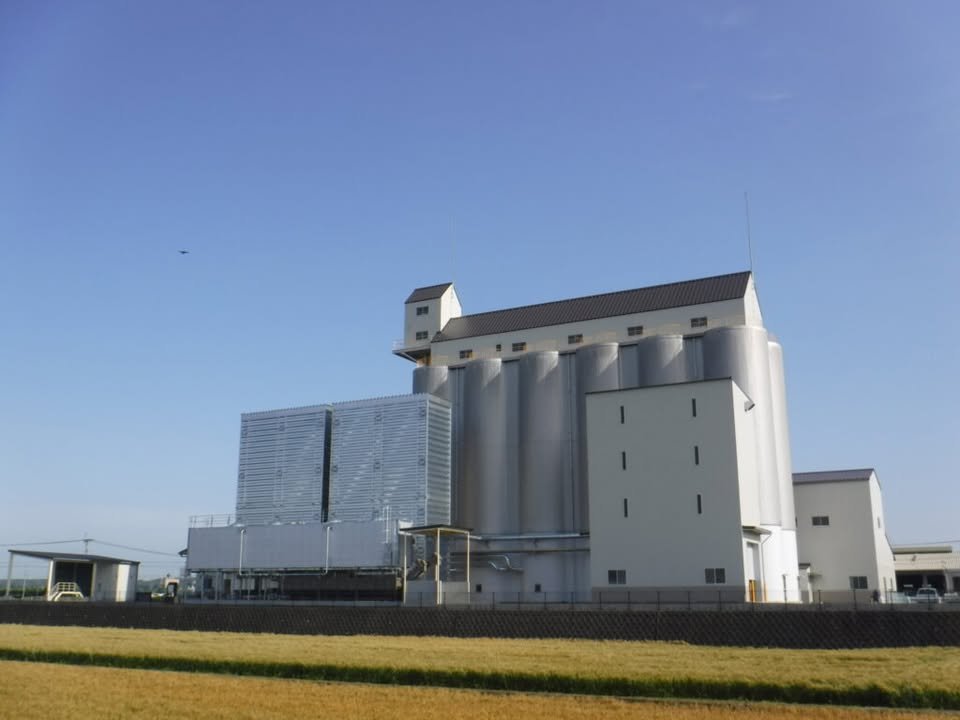
The trains need maintenance and a place to "sleep" when not in use. One is JR Kyushu's Kumamoto General Depot in Uto City. Having often travelled by the depot, its scale and complexity has never failed to impress. With a total area of 200,000 square meters, it's three times the size of Fukuoka Dome and contains 23 tracks.
Tours are available. To apply, dial 096 (357) 7272, a number dedicated to tour applications.
https://www.nishinippon.co.jp/item/n/323436/

2022-09-19 17:12 JST
15104

Kirk here with some thoughts on a linguistic issue that was driving me nuts until I figured it out (I think) a minute ago. In the image you see below, level 4 is listed as "All must evacuate." In the video on this page (URL below) the announcer says "everyone must evacuate" with no qualifications:
https://www3.nhk.or.jp/nhkworld/en/news/tags/93/
Of course, we all know that's crazy. There's no way that everyone in a Level 4 area (most of the prefecture) could have gone to a shelter.
I looked for better explanations in Japanese and found this:
https://www.gov-online.go.jp/useful/article/201906/2.html
Under the main category of "避難の方法" (How to "evacuate") it shows a family checking a hazard map and deciding that they can stay where they are (at home). I was somewhat surprised that this information would be listed under "How to "避難/hinan" (evacuate) because I assumed that 避難/hinan, like the English "evacuate," meant to leave one's home. I thought they should have said "How to decide IF you need to 避難." But, come to think of it, the characters in the word 避難 (hinan/evacuate) don't say anything about "leaving." The first character (避) means "avoid" and the second character (難) means "difficulties" or "disaster." So, it's possible to "avoid disaster" by staying at home. In point of fact, some Japanese talk about "避難-ing" at home (自宅で避難):
https://www.o-uccino.jp/article/posts/93932
専門家に聞く"家庭で準備しておきたいもの”在宅避難も視野に入れて
But, of course, in English it's absolute nonsense to say "evacuate at home." One might "shelter" at home but not "evacuate."
So, I think I may have identified the crux of the confusion. In Japanese, people generally associate 避難 with leaving to go to a shelter but it can also mean "ride the storm out at home, if your home is safe." In English, however, "evacuate" definitely means "leave to go to another place."
I'll be curious to see what others of you, especially native speakers of Japanese, think about my hypothesis. If I'm right, I think this is an interesting example of how ambiguity in a Japanese word can cause confusion when translated into an English word that doesn't permit the same sort of ambiguity.

2022-09-19 14:21 JST
30124

Kirk here with a slightly premature (?) post-mortem on the typhoon. I just happened to watch part of a live press conference with officials at the JMA (Japan Meteorological Agency) where they were explaining why the typhoon wasn't quite as bad as feared. I was watching with NHK's app on my phone but I found the same content (recorded, not live) on YouTube here:
https://www.youtube.com/watch?v=Uv_eIKNZrvg
At about 45:00 into the video, they're talking about why it wasn't quite as terrible as predicted. One point was that the path of the typhoon took it directly over land in Kyushu. Going directly over land sounds bad but, actually, that weakened it. If the path had been a little more to the west, as they had expected, the storm would have remained much stronger and the effect on Kumamoto would have been much greater. In response to a question about why the path was slightly different from what was expected the answer was that it was within the range of possibilities that they were looking at but that they just weren't sure exactly how it would behave.
There has been damage in many parts of Kyushu, including Kumamoto, but so far the damage in Kumamoto has not been as great as was feared. The Kumagawa River is very high and there is still a chance of flooding (or perhaps some flooding actually occurred in some spots -- not sure) but I suspect that it will wind up being a close call that didn't cause major damage.
My impression from this storm and previous storms is that the folks at the JMA are professionals who really know what they are doing. Typhoons are chaotic systems that still can't be predicted with complete accuracy, though prediction is much better now than in recent decades. For that reason, sometimes things aren't quite as bad as feared (this time seems to be such a case) and sometimes they are worse and people who aren't prepared or don't take warnings seriously get hurt. I have complaints regarding communication issues (particularly regarding the question of who needs to evacuate and how to make that decision) but not about the basic 5-level warning system itself or the expertise of the people in the JMA.
So, I hope people don't conclude from their experience with this typhoon that future warnings can be ignored. There are low-probability high-impact issues that need to be taken seriously even if warnings are not always followed by cataclysmic events.

2022-09-19 11:19 JST
2096

Kirk again. I think this English-language video report from NHK WORLD-Japan is very good:
Typhoon Nanmadol moving north after making landfall in Kagoshima Prefecture | NHK WORLD-JAPAN News
Japanese weather officials say powerful Typhoon Nanmadol made landfall in the southern prefecture of Kagoshima on Sunday night. Authorities have issued an emergency warning in southern prefectures. They say there's an increasing risk of large-scale disasters. They urge people in Japan's southern reg...

2022-09-18 22:20 JST
2152

Kirk here with some more about the typhoon:
--- start quote ---
The Cabinet Office said that seven prefectures in the Kyushu region have decided to apply the disaster relief act to all municipalities in each prefecture as fears grow that Nanmadol could wreak havoc there.
The seven prefectures are Fukuoka, Saga, Nagasaki, Kumamoto, Oita, Miyazaki and Kagoshima.
This was the first case in which the disaster relief act had been applied before damage was actually caused since the law was revised in 2021 to enable such an in-advance application.
--- end quote ---
In case you want to talk about this "disaster relief act" in Japanese, it's the 災害救助法 (saigai kyuujo hou).
I like the advice about evacuation in this article: "7 million people had been told to move to shelters or take refuge in sturdy buildings to ride out the storm." Exactly. It's not that 7 million people have been told to go to the nearest shelter; rather, only people who live in rickety-old houses or who live in areas prone to flooding (or landslides which can be caused by heavy rain) need to do so. Otherwise, you should be able to ride it out wherever you are right now.
Stay safe!
Thousands in shelters as southwestern Japan braces for dangerous typhoon
The weather agency issued rare "special warnings" for Kagoshima and Miyazaki prefectures — alerts that are issued only when dangerous conditions seen once in several decades are forecast.

2022-09-18 22:14 JST
1562

Kirk here posting again about how to interpret evacuation levels. For those of us in Kumamoto City (which currently at Level 4), Level 4 does NOT mean that we all have to evacuate, regardless of our housing circumstances. If everyone attempted to do so, that would itself be a sort of disaster. To determine whether or not you need to evacuate, you need to look at the flowchart in the following post:
https://www.facebook.com/Kumamotoi/posts/pfbid0DdVLZRKzVF3HXGFrxqDnHV63KYwbF327noiad5QeVScyJvVwS2vegbZVGdJXCiB3l
If you are in a strong building that is not in a flood plain, stay put.
The flowchart starts with reference to a "hazard map." Hazard maps are maps that show areas that are vulnerable to certain kinds of disasters: flooding, landslides, costal storm surges, etc. So, unless you're sure than none of those apply to your, you should really look at a hazard map to check to see whether you need to be concerned. I've posted a couple of times about hazard maps:
For Kumamoto City:
https://www.facebook.com/Kumamotoi/posts/pfbid0LBDJa6YNRoQdXPAkaaDMjNgURTnuVYZDrBp8yhg2KKWDyXoxxKecYDahSk27w2gul
For the whole country, including Kumamoto City, check out NHK's hazard map referenced in the following post of mine:
https://www.facebook.com/Kumamotoi/posts/pfbid0zSoJh7mtcX9FmpxnA5DxL2i3bVhpNkKT6BHSUWMgXJdNYVkdAxqX5ZSWkAeBjgKzl
My complaint: There are many things I like about Japan but I've found public communication on issues like this to be terrible. In fact, I was just looking at a video on the NHK WORLD-Japan site and the announcer said, in English, that Level 4 means that EVERYONE needs to evacuate. If the announcer at NHK gets it wrong, and the director doesn't tell him to do it over, how can they expect ordinary people to understand?
I think poor communication like this probably leads most people to ignore warnings and do whatever they would do anyway. The whole point of such warning systems is to save the lives of the few people who might actually get trapped and require rescue! Causing people to throw up their hands in frustration and just do what they would do anyway defeats the whole purpose of the warning system. :(

2022-09-18 17:43 JST
200

William If you desire a diversion while we're hunkering (and as long as electricity and Internet access hold up), enjoy Windfinder: https://www.windfinder.com If our luck holds, the majority of the winds will be concentrated on Kyushu's east coast and blunted by the mountains.
Windfinder - wind, wave & weather reports, forecasts & statistics worldwide
Wind and weather reports & forecasts for kitesurfers, windsurfers, surfers, sailors and paragliders for over 160,000 locations worldwide.

2022-09-18 15:54 JST
500

Kirk here. This link came to me in an e-mail from the Kumamoto International Foundation:
--- start quote ---
NHK WORLD-JAPAN will keep you up to date with the latest information in 21 languages
「Links for Multilingual News & BOSAI Info 」
https://www3.nhk.or.jp/nhkworld/en/multilingual_links/?cid=wohk-doml-org_site_emergency_gs
--- end quote ---
I think it's a good resource but one thing that makes me scratch my head is the use of the word BOSAI without any indication of what it means in English: disaster prevention. I would think that if the idea is to present information about disasters to people who aren't necessarily fluent in Japanese that they would want to put some English words on their top page that clearly indicate what the topic is. 😕 If they want to use the word BOSAI, they could put "disaster information" in smaller type somewhere nearby.

2022-09-18 15:31 JST
600

Kirk here with an Aljazeera article. The image is similar to one in an NHK article I posted but the content is somewhat different.
For links to previous posts of mine regarding how to decide if you, in your specific circumstances, should shelter at home or go to a shelter, see the following:
https://www.facebook.com/Kumamotoi/posts/pfbid0zSoJh7mtcX9FmpxnA5DxL2i3bVhpNkKT6BHSUWMgXJdNYVkdAxqX5ZSWkAeBjgKzl
If you are in Kumamoto City and need to look for a shelter, I recommend the following page:
https://city-kumamoto.secure.force.com
It's in Japanese but it has a Google translating function built in (Good job! Kumamoto City!). It also has a link that uses your GPS information to give you a list of the closest shelters. Pretty cool. Even if you don't need to go to a shelter, I think it's interesting to see what shelters have opened up in your neighborhood and how many people are there.
https://www.aljazeera.com/news/2022/9/17/typhoon-nanmadol-japan-urges-nearly-2-million-to-seek-shelter
Nearly 2 million urged to evacuate as Japan braces for typhoon
Japan Meteorological Agency warns of ‘a very dangerous typhoon’ that was classed as ‘violent’.

2022-09-18 10:40 JST
1140

Kirk here. Directives to evacuate (hinan shiji) have already been issued for Amakusa and Minami Oguni:
https://crisis.yahoo.co.jp/evacuation/43/
If you live in those areas, you need to either evacuate or make sure that your circumstances don't require evacuation. As I wrote a week or so ago (which now feels like a rehearsal for today), there are exceptions to evacuation directives. That post, which includes screenshots and a link to an officially sanctioned explanation, is here:
https://www.facebook.com/Kumamotoi/posts/pfbid02Hf643EXZA78LtKXerQb6F5tx9geBpBH9xjfaU4NhTLKbXALEMnHkcTECe4S9cXMLl
Flooding is one risk but landslides are a concern in mountainous areas so high elevation doesn't necessarily mean you have nothing to worry about. I suspect the call for evacuation in Minami Oguni is primarily intended for people who live in areas where landslide risk is an issue.
I posted earlier today about Kumamoto City's hazard map:
https://www.facebook.com/Kumamotoi/posts/pfbid02PirVVGAjGyXzBVNF9ZzBWmwYH48oFbRoGd3h7cATG46d5WhhNeoCfGqQnKWQ7rLdl
Since then, I learned that NHK offers a hazard map that covers the entire country and also includes landslide risk. If you're not sure about whether or not you need to evacuate, you might want to check that out:
https://www.nhk.or.jp/kishou-saigai/hazardmap/
I should also say that loss of power and disruption of water service are possibilities. So, I'll be storing some extra drinking water and I already have provisions that will allow my wife and me to hunker down until the storm passes. I recommend similar preparations -- just in case.
I'm not planning to post many updates during the storm. I hope I've provided the basic information that residents need to decide how they want to deal with this. If I've missed something you think is important. Please write a note in a comment or message the page. I'll try to respond promptly.

2022-09-17 21:57 JST
802

Kirk here with a video from NHK WORLD-Japan. They say that the bullet train (Shinkansen) will not run between Kumamoto and Hakata tomorrow afternoon.
Southwestern Japan braces for typhoon Nanmadol | NHK WORLD-JAPAN News
People across southwestern Japan are bracing for a typhoon with enormous destructive power.

2022-09-17 21:25 JST
13103

Kirk here with more about the approaching typhoon. According to TropicalStormRisk.com it is currently a category 4 cyclone. That's the category just below a so-call super typhoon. A category 4 storm has "1 Minute Maximum Sustained Winds" of 209-251 kilometers per hour -- more than double typical highway speed. By the time the typhoon gets to Kumamoto it should have settled down a bit but TropicalStormRisk.com is predicting that we have a better than 50-50 chance of experiencing category 1 or above winds. Category 1 winds are between 119 and 153 kph -- highway speed and above.
As I have written before, the greatest danger may come from torrential rain.
I'll post a video from NHK WORLD-Japan after this.

2022-09-17 21:24 JST
1420

Kirk here with a little screen capture video of gust speeds (in kilometers per hour) that are projected for tomorrow starting at 11:00 AM. These images are from Ventusky.
P.S. I've already posted this video as a comment in another thread but I thought I'd post it separately so that more people could see it.

2022-09-17 12:37 JST
1010

Kirk again. I just posted about checking out your area to see how prone to flooding it is:
https://www.facebook.com/Kumamotoi/posts/pfbid0KsQnJbEuRY4Rsia3tZLKwKcBqRDuKAiTgzpNp6tcQtY2wTQ9WutiwVWMHUiqHLe5l
In that post, I explained that the peak flooding levels shown on the map are "once in 1000 years." But, in my experience, flooding in Kumamoto is something that happens every few decades or so. The picture of the upturned car you see is one I took just 10 years ago when the Shirakawa flooded and much of the Tatsuda-Jinai (Tatsuta-Jinai?) area was hit.
https://www.facebook.com/Kumamotoi/photos/a.357665327640239/357665407640231
At that time, the problem was not too many false alarm evacuation notices but a failure on the part of the city to issue a notice early enough:
https://www.facebook.com/Kumamotoi/photos/a.359561604117278/359561624117276/
Fortunately, no one died but it was necessary to evacuate some stranded people by helicopter:
https://www.facebook.com/Kumamotoi/photos/a.359561604117278/359572174116221/
So, even though warnings often seem to be "much ado about nothing" sometimes bad things really do happen. It's best to try to be aware of your circumstances and prepare -- just in case.

2022-09-17 09:41 JST