Archive of the Kumamoto International Facebook group, 2011–present.

It's interesting that an image of Kumamon is no good but that commercial advertisements, such as for Hakutake (a brand of shochu), are still OK. By the way, I checked the new uniforms and, yup, Kumamon is gone but Hakutake is still there.
https://qoly.jp/2019/01/25/roasso-kumamoto-2019-puma-home-away-kits-lfb-1
So, let me get this straight -- advertisements for an area in Japan are no good because they're "political" but advertisements for a strong form of alcohol that young sports fans are not allowed to drink and that can cause fatal accidents if adult fans consume before driving are just fine because they're not political. Hmmmm.
-- Kirk
http://www.asahi.com/ajw/articles/AJ201901260029.html

Soccer team drops ‘political’ Kumamon image from uniforms:The Asahi Shimbun
KUMAMOTO--Kumamon may be the most popular prefectural mascot in Japan, but the cuddly creature is ap

2019-01-30 17:59 JST

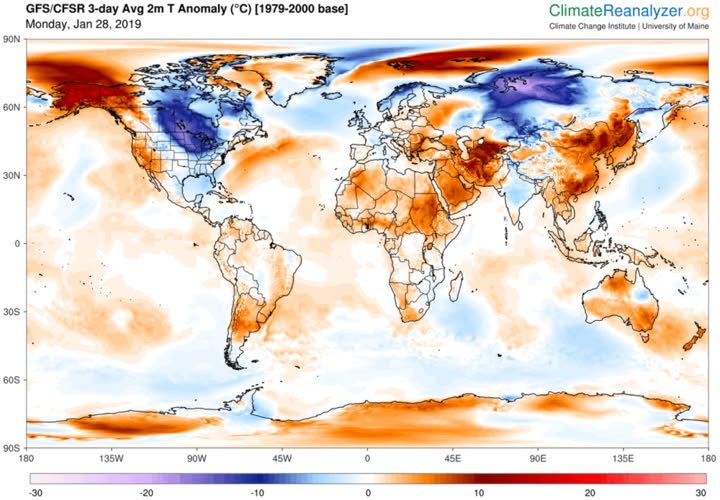
The polar vortex is consists of two layers: one, the polar jet stream flowing at the height of an airplane and normally contained at the pole by the second layer, a higher frigid system called the stratospheric polar vortex. But when the stratospheric polar vortex is warmer than usual, the polar jet stream may go nuts, hurling frigid weather in random directions.
The image below shows global temperatures relative to the past four decades for this time. The warm winter we're enjoying explains why plums are blossoming so early here and why now is not a good time to visit North America. (Though my California surfing friends tell me the water is toasty and the air balmy.) - William

2019-01-30 10:15 JST

This Japanese language post has a link to information (again, in Japanese) about renting a sea kayak in the Amakusa area. A phone number is listed so if you or a friend can speak Japanese and are interested in sea kayaking in the Amakusa area, you might want to give them a call.
https://www.facebook.com/permalink.php?story_fbid=1919257411457407&id=212870155429483&__tn__=-R
-- Kirk

2019-01-30 07:23 JST

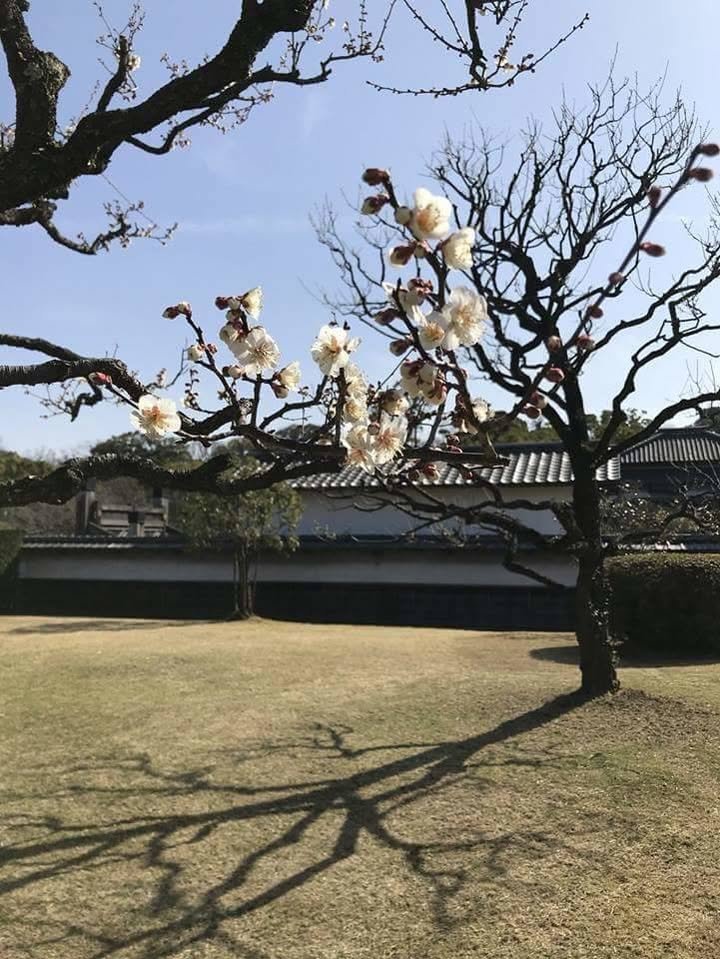
Spring is creeping in, as always shy but resolute and inevitable. She whispers her advent with the honey fragrance of plum blossoms. Kumanichi reports that plums (technically not plums but the Japanese apricot, or Prunus mume - "ume" ~ 梅) are blossoming 25 days earlier than usual. Feisty flowers, ume are more compact than the cherry and far more fragrant, and their trees tend to be stunted and gnarled. They are the national flower of Taiwan.
Many private gardens host ume to enjoy. The castle has a magnificent orchard in Sukiyamaru (数寄屋丸 from which Kumamoto International's banner photo was taken), but it is sadly still off limits. Instead, the plum blossoms at the Hosokawa Mansion (Hosokawa gyōbutei 細川刑部邸), located within the walls next to the science museum, give reason for visit. Also boasting sublime ume is Suizenji Shrine. The Kumanichi article suggests Taniosaki Bairin Kōen (谷尾崎梅林公園), on the eastern flank of Mt. Kimpo across from Hanaokayama. Respective photos snatched from the Net are below. Other suggestions are welcomed. - William
https://kumanichi.com/news/819685/

2019-01-29 11:04 JST

If you speak Spanish, you likely are well-versed in Portuguese. A Website I stumbled across, Portal Mie (as in the prefecture), provides Portuguese- and Spanish-language news regarding Japan. For those who want to read about Japan in either of those languages or who enjoy reading humorous headlines such as "Viaje do Aeroporto de Kansai em Osaka a Quioto em um vagão de trem colorido da Hello Kitty," this site is where to go. - William
Portal Mie - para o Japão e para o Mundo
O melhor conteúdo para os brasileiros no Mundo! Notícias, cobertura de eventos, fotos, vídeos, informações e mais. Simplesmente sua melhor fonte de informações.

2019-01-28 14:23 JST

This article cites research on the decline in the proportion of boys born after the 2016 earthquakes. It says that, even when such measurable changes in birth ratios occur, they don't last long.
I posted about this research once before:
https://www.facebook.com/Kumamotoi/posts/2336449343095151
-- Kirk

Climate change will affect how many boys are born worldwide, scientists say
Worldwide, the sex ratio at birth averages between 103 to 106 males born for every 100 females; however, climate change and its effects on the environment in which pregnant women live will alter this ratio, research suggests.

2019-01-27 19:58 JST

Today is January 27, meaning sans severe orbital disruption, next Sunday will be February 3. The next day, 2/4, is officially known as "the beginning of spring" (risshun, 立春), a remnant of when Japan followed the lunar calendar and the Asian New Year.
Seasonal changes were thought to bring the netherworld closer to the temporal, for good or bad, and were termed "Setsubun" (節分 - recently, the term refers only to the day before risshun), so driving off evil spirits and beckoning benign is important on that day. This is done in two ways: by scattering roasted soybeans in front of one's abode while crying, "Evil, out!" (onni ha soto, 鬼は外 - sort of like shouting "Squirrel!" at the devils) and "Fortune, in!" (fuku ha uchi, 福は内). Results may vary.
Most major shrines will hold events next Sunday. The main venue would be at Kato Shrine in the castle (photo below), supposed to be where the tradition first appeared in Kumamoto via Kanto and Kansai in 1871. If you desire to partake in the tradition, I recommend a trip to Daiso. There, you can buy beans and the two types of masks representing evil and prosperity (photo below - wear the red one leaving and the white entering; your neighbors will understand). If you're hardcore, place a garland of holly and sardine heads outside your door - the sharp edges of the holly will deter demons, and dried sardine heads are kind of yucky (known as "hiiragisasu" ひいらぎさす、this is more of a Honshu tradition and is uncommon in Kumamaoto). For Japanese readers, more is here: http://kumamototeshigoto-labo.jp/feature.php?id=6 - William

2019-01-27 13:53 JST

Here's something about an event (Jan 29, 8 PM, which would be Tuesday). The announcement says "Absolutely No Japanese の1月の開催です," which strikes me as a bit of an oxymoron. But then again, come to think of it, I never end an English sentence with Japanese だもんね。So, I think I understand where they're coming from. ;) Some rules are meant to be broken.
-- Kirk
https://www.facebook.com/permalink.php?story_fbid=927909500748929&id=480509432155607&__tn__=-R

2019-01-27 07:46 JST

Here's some information from Kuma Visit about traffic in Kumamoto City and on the route to the airport tomorrow morning:
https://www.facebook.com/kumavisit/posts/2217923788459255?__tn__=-R
-- Kirk

2019-01-26 20:10 JST

"“Kumamoto’s efforts to preserve groundwater are evaluated highly globally,” Kumamoto Mayor Kazufumi Onishi said at a news conference, adding that he hopes the two-day meeting will be an opportunity to show local efforts to restore the region in the aftermath of big earthquakes that hit the city in April 2016."
https://www.japantimes.co.jp/news/2019/01/22/national/kumamoto-host-asia-pacific-water-security-meeting-2020/#.XEviuS2B3Sw
-- copied and pasted by Kirk

Kumamoto to showcase recovery as host of Asia-Pacific water security meeting in 2020 | The Japan Times
The city of Kumamoto will host an international meeting in 2020 to discuss water security issues in the Asia-Pacific region, the city's mayor said Monday.

2019-01-26 18:44 JST

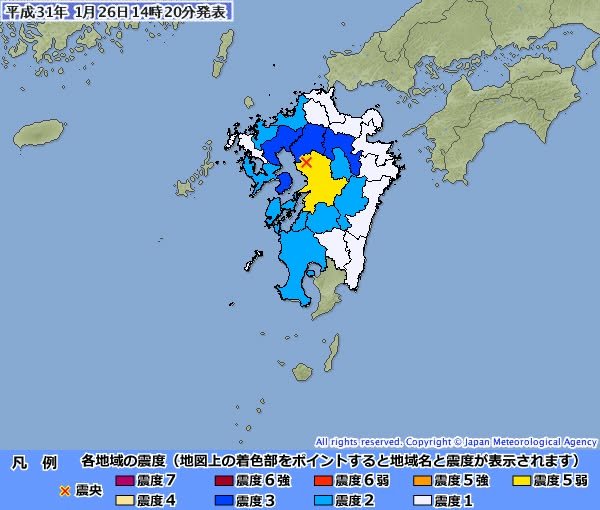
An earthquake of M4.4 registering 5 on the Japanese scale occurred today, 1/26, centered in the northern Kumamoto Prefecture town of Nagomi. This follows a M5 which occurred there on 1/3. Apparently, it rattled pretty much everything but didn't cause anything to fall off shelves. I suspect unknown faults exist in the area. - William

2019-01-26 14:31 JST

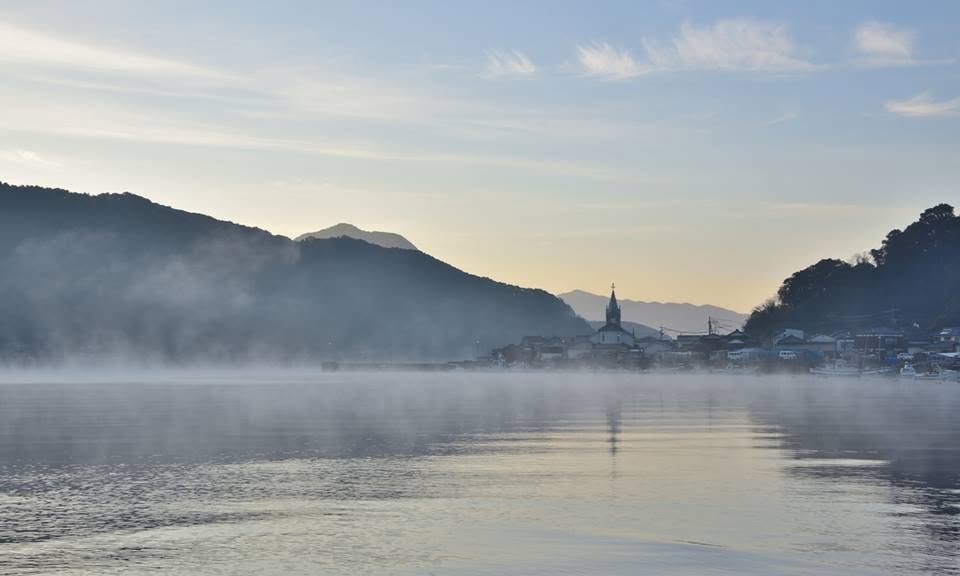
Our friend Yoshiko Toyama has contributed this breathtaking photo of the Sakitsu Catholic Church (崎津教会), built by French priests in 1934.
The church is situated on a complex series of bays in southern Amakusa, the outer of which has the unusual name Youkakuwan (羊角湾 - "goat horn bay"), and the inner, Hayaura (早浦). "Ura" might be best translated as "estuary." In the 1970s, a plan to dam Hayaura and convert it to farmland was killed by incensed fisherman. The plan was similar to that which befell Nagasaki's Isahayawan (諫早湾), but with 400 years experience concealing their Christianity, these are not people to mess with.
The warm Kuroshio Current interacts with cold northern winds to create fog. A park on the opposite side of Youkakuwan provides an excellent photography site. If you have a car and a tent, a few days poking around the area is highly recommended. (You probably won't need the tent; some local will invite you inside.) Below: Toyama-san's photo and a satellite view. - William

2019-01-26 12:15 JST

This article about Men no ishi, which fell as a result of the 2016 quakes, can also be read in Japanese. (There's a link at the end of the article.)
-- KIrk

The Story of Kumamoto Mountains' Lucky Cat | JAPAN Forward
The Escape Stone may have fallen, but this fortune-bringing "Lucky Cat" is now looked upon as a talisman bringing good fortune to the local area.

2019-01-25 17:34 JST

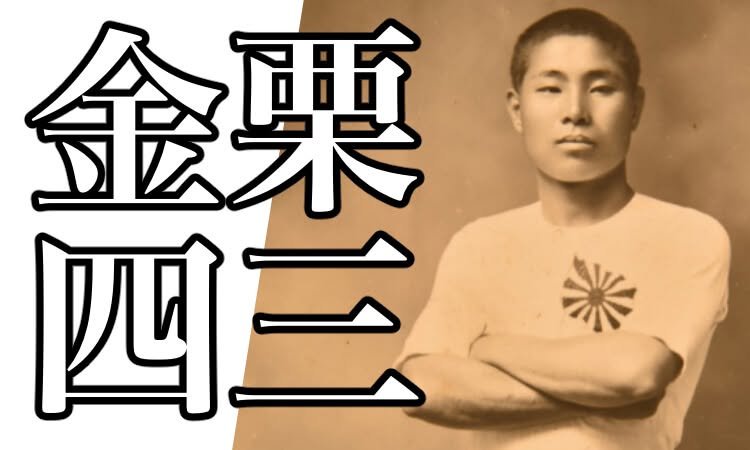
The Sunday night 8:00 PM NHK drama regarding Higokko (肥後っ子、scion of Kumamoto) and pioneering marathoner Kanakuri Shisou (金栗 四三) has me thinking of the Higo dialect.
My wife, who lived in Kyoto for a decade, speaks beautiful Kyoto dialect, which is considered the standard in Japan, but she is also a Higokko and can rock that dialect with the best of them. When I hear her on the phone, what type of person she's talking to (business? local friend?) is immediately apparent. As such, she's enjoying the TV show for its use of the Higo dialect.
The dialect differs by northern (more akin to Hakata) and southern (more akin to Satsuma) and is marked by pronunciation, vocabulary, and grammatical characteristics. I've picked up a few phrases and use them to the delight of the locals. If you can read Japanese or have a friend who can instruct you, a primer is here: https://ja.wikipedia.org/wiki/%E7%86%8A%E6%9C%AC%E5%BC%81 - William

2019-01-25 10:12 JST

Here's some agricultural news. Since the article says that truffles grow wild in Japan, I was curious to find out what they are called here. The only Japanese name I could find was the katakana for truffle: トリュフ
https://academist-cf.com/journal/?p=2717
I found a couple of other academic articles
https://www.jstor.org/stable/23055170?seq=1#page_scan_tab_contents
https://www.jstage.jst.go.jp/article/msj7abst/61/0/61_19/_pdf
but as far as I can tell, truffles of this type have not been part of traditional Japanese cuisine.
-- Kirk
http://www.asahi.com/ajw/articles/AJ201901140004.html

Researchers look for ways to bring Japanese truffles to luxury market:The Asahi Shimbun
KUMAMOTO--It's a little-known fact that truffles grow wild in Japan.But at least one researcher here

2019-01-24 17:30 JST

Japan has a pro basketball league. Kumamoto's team is called the Volters (disclaimer: my daughter once served on their cheer squad). They're not ... good in the sense that they tend to pass the ball through the hoop less frequently than their opponents. But they are good in the sense that they're nice guys and try hard. As such, they're a perfect Kumamoto team.
One non-Japanese team member, Australian Josh Duinker, recently spoke before a group of high school students at a seminar on human rights. He said that many shy away from speaking to him in English as they're worried about their language skills, and that sometimes hurts his feelings, and that Japanese should approach communication with non-Japanese speakers to the best of their ability without concern of mistakes.
What a sweet guy. And he's tall. - William
(Note: It's been pointed out that Josh is from Australia, not America, and the post has been corrected. Perhaps that's one reason for his inability to be understood; I've had several Australian friends and could only understand about half of what they were saying.)

外国人と恥ずかしがらず話そう 熊本市で人権教室 - 熊本日日新聞 | This Kiji
長嶺中の生徒に「恥ずかしがらないで」と訴えるジョシュ・ドゥインカー選手(左)=熊本市東区 外国人の実体験を聞く人権教室が23日、熊本市東区の長嶺中であり、男子プロバスケットボール・熊本ヴォルターズのジ...

2019-01-24 13:55 JST

A notice from the Kumamoto International Students Network. Please inquire if you are interested -- even if you are not a university student.
-- Kirk
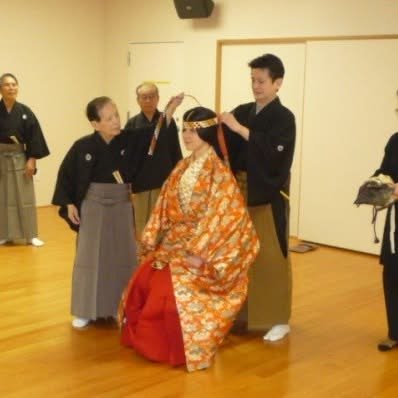
http://consortium-kumamoto.jp/rn/en/2019/01/11/[kumamoto-unesco-association]looking-for-noh-workshop-participants-on-feb-11th-2019/

[Kumamoto UNESCO Association]Looking for “Noh” Workshop Participants on Feb 11th, 2019
  Try and enjoy the "Noh" performance at the workshop       Noh is a traditional Japanese …

2019-01-24 08:40 JST

When I saw this headline, I was hoping that Kumamoto might be in the "where to go instead" category but no such luck. If the castle is a traveler's main interest then, granted, this is may not be the best time. But I think there's a lot to enjoy here besides the castle.
-- Kirk

Ten destinations to avoid in 2019, and where to go instead
If you're planning a trip for 2019, these are the places to consider avoiding…

2019-01-23 17:13 JST

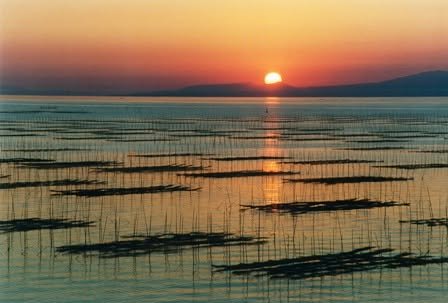
Kawachi (河内) is a small port on Ariake Sea nestled north-east of Mt. Kimpo which is Japan's second-largest nori producer. Nori and nice views are the reason it deserves a visit. The north side of the port contains several processing plants which remind me of the tortillerias of my hometown: raw nori is captured in square frames of 19x21cm, sent by conveyor through an oven, gathered by hand, and packaged.
The resulting product is sold by auction. Kumanichi reports that this year's bid was 15 yen 40 sen per sheet (15円40銭). "Sen" is a currency unit equivalent to an American cent - 1/100th of a yen - commonly used pre-war but obliterated in post-war hyperinflation; it's cute to see it still in use, though they'll have to round up or down the number as 銭 currency no longer exists. Kawachi produced 74,380,000 sheets of nori valued at 1,146,000,000 yen. I assume these numbers have been rounded.
Kawachi has almost no tourists, so if you visit, the residents are quite welcoming. Sunny winter days are a nice time. Drop by a nori factory and they'll let you wander about and will likely leave you with a fistful of still-hot samples. If you are carless, a direct bus is available from Kotsu Center. - William
https://this.kiji.is/460413813181301857?c=92619697908483575

2019-01-23 10:09 JST

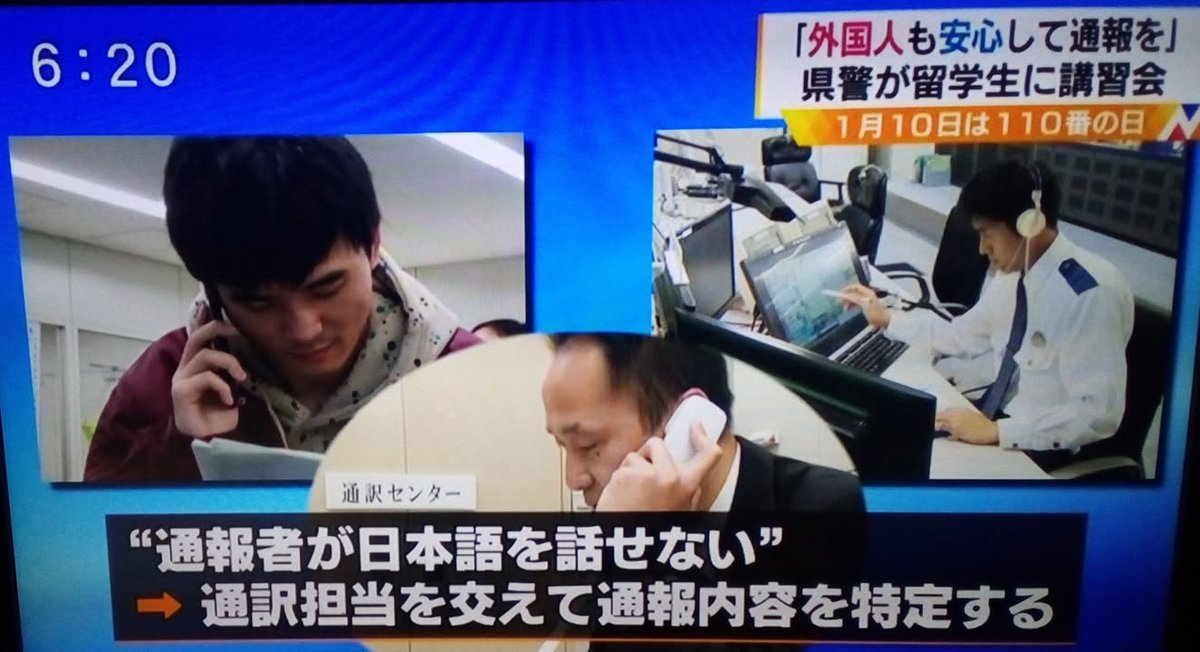
This image is from a segment on an RKK news show that was broadcast on 1/10 (January 1st). The 1/10 date was used as an occasion to talk about the 110 phone number which is intended to be used to report accidents or crimes to a police call center. On this segment they were saying that, even if the person who answers the phone is not able to speak English, there are always interpreters who are on call. So, if you have something to report, don't let concerns about a language barrier stop you.
-- Kirk
P.S. I reported in a post a few years ago that, even if they can't understand what is being said, they can identify your position and come to help:
https://www.facebook.com/Kumamotoi/photos/a.129499733790134/1071565039583594/?type=3&theater
Perhaps the situation has improved and the interpreting service has been added. That's good but I wonder how they are getting the word out to foreigners. I only learned about this via a Japanese TV report about a talk given to 4 students at Kumadai.

2019-01-23 06:45 JST