Archive of the Kumamoto International Facebook group, 2011–present.

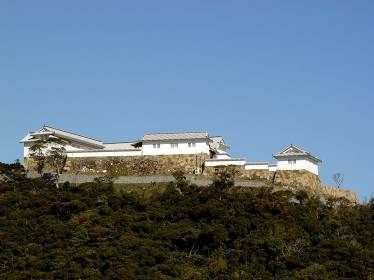
William Reihoku is a peninsula tipped by a large hill on Amakusa island, formerly known as Tomioka until it merged with several nearby villages. It even has a small castle, built in 1601 atop the hill, which came in handy in 1637, when rebels from Shimabara crossed the sea and attacked during the Shimabara-Amakusa Rebellion. It takes less than an hour to walk every small fork on the one road that crosses the tip; here and there are sandy beaches with fair-to-good water quality. Its small but deep harbor offers ferry service to Shimabara. For Amakusa fans, the sleepy town is a must-visit both for its past and present.
Japan Today reports that a jawbone fossil from a tyrannosaurid dinosaur was recently discovered there from the Late Cretaceous period, when Kyushu was connected to the Asian mainland. Maybe Reihoku will become a little less sleepy.
https://japantoday.com/category/national/tyrannosaurid-jawbone-fossil-found-for-1st-time-in-japan
2024-02-16 11:04 JST

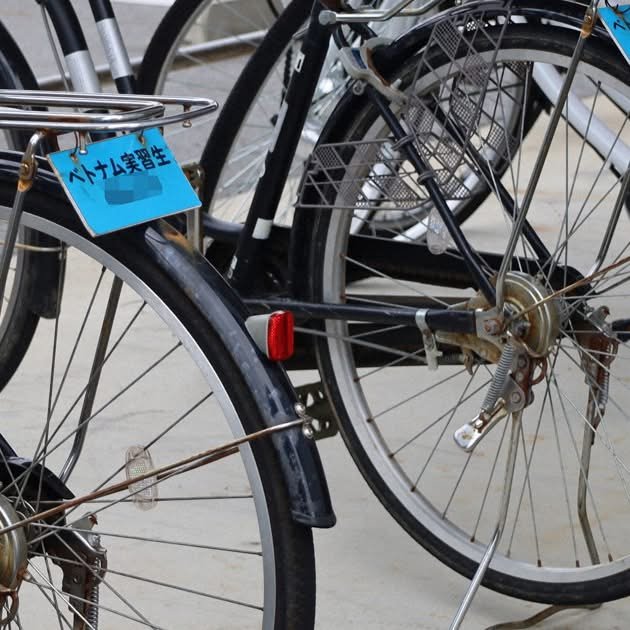
Kirk here with a call to foreigners to improve their manners. The illustration you see was added by the Kumanichi to a letter to the editor from a woman who wrote to complain. One problem brought up in the letter was a group of people gathering with bicycles on the sidewalk in a way that made it hard for other pedestrians to get by. Granted, that's not very considerate behavior. The other complaint (and what you see in the illustration) was about foreigners talking loudly on a bus and taking selfies. OK, having lived here a long time, I recognize that most Japanese people like for their bus rides to be quiet. However, I was very interested to hear from a Chinese student who gave a little presentation in a class of mine on "bus riding culture" that she found buses in Japan to be a bit too quiet. She said she actually preferred to hear people enjoying conversation and found the typical silence on Japanese busses to be a bit stifling.
I recognize that it's a good idea for foreigners to respect the fact that many Japanese people like their busses to be quiet. At the same time, I'd like Japanese people to recognize that other approaches aren't necessarily "wrong" or "bad." Loosen up! ;)
https://news.yahoo.co.jp/articles/a006c0f4cd609f6478a7ccf9dd0b102f3961a8d0
P.S. The letter writer thought that local governments should teach us proper manners. Hmmmm, that doesn't seem very likely to happen; I can't recall receiving such lessons since arriving here.

外国人に交通ルール周知を【ハイ!こちら編集局】(熊本日日新聞) - Yahoo!ニュース
 最近、外国人の方をよく見かけるようになりました。コロナ禍が落ち着いたので、外国からの研修生などが増えているのかもしれませんが、気になっているのが日常のマナーについてです。先日、歩道を歩いていたら1

2024-02-16 09:13 JST

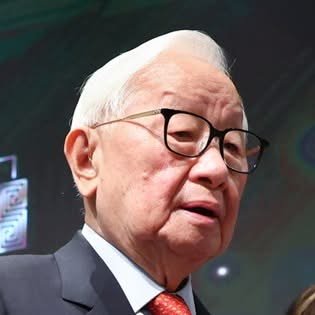
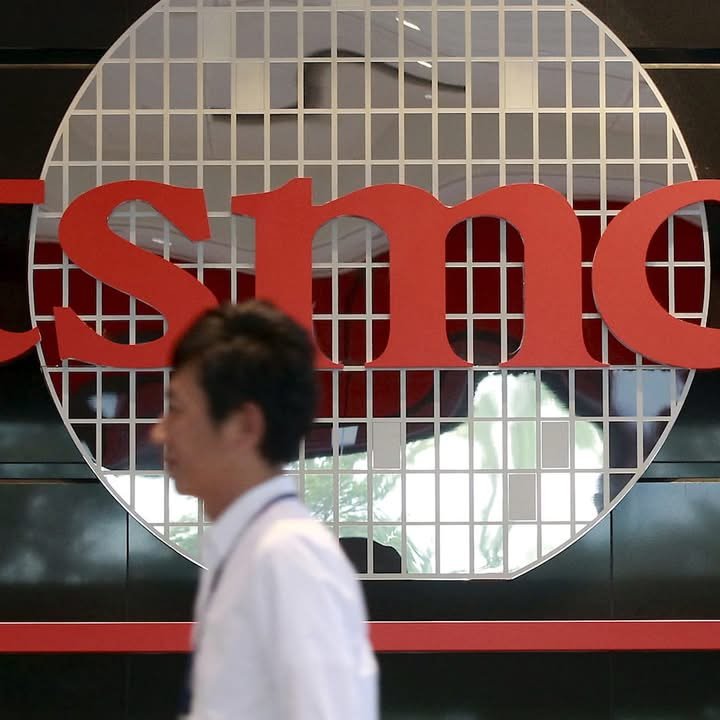
Kirk here. Morris Chang is a huge figure in the history of microchips. He is originally from mainland China then emigrated to the U.S., where he eventually became a vice president of Texas Instruments. Chang's perception that racism would prevent him from moving any higher in the U.S. company is one consideration that led to his move to Taiwan in 1983. In Taiwan, his decision to separate semiconductor manufacture from chip design (TSMC focuses on manufacture) was an important factor in TSMC's success.
https://focustaiwan.tw/business/202402050014
If you, like me, enjoy listening to audio, check this out:
https://www.npr.org/2021/12/21/1066548023/the-semiconductor-founding-father

Morris Chang likely to attend Kumamoto fab opening on Feb. 24: Source - Focus Taiwan
Taipei, Feb. 5 (CNA) A Taiwan Semiconductor Manufacturing Co. (TSMC) advanced wafer fab in Kumamoto, Japan is scheduled to open on Feb. 24 and founder Morris Chang (張忠謀) is likely to attend the opening ceremony, a source familiar with the matter said Monday.

2024-02-15 13:38 JST

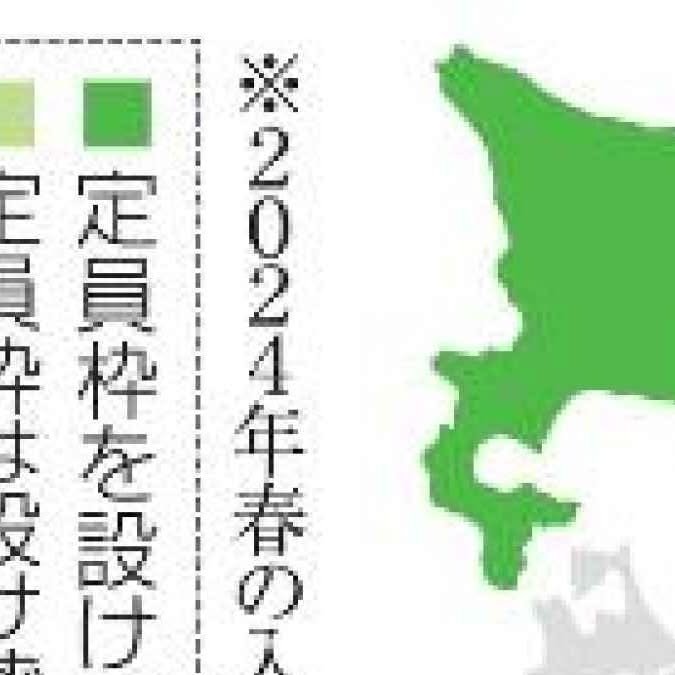
Kirk here. This article says that the Ministry of Education is pushing public high schools to create special entrance exams etc. for foreign students to make it easier for them to continue their education. Kumamoto is one of the prefectures in that is in compliance. The prefectures in light green have not made a special entrance exam system to help foreigners but conduct interviews with individual students wishing to study at a high school (presumably, in lieu of an exam). The prefectures in grey are not taking either type of action to accommodate foreign students.
外国人生徒の定員枠2割 公立高入試、対応に地域差(共同通信)|熊本日日新聞社
 全国の2024年春の公立高校入試で、外国人生徒へ特別選抜による定員枠を設ける学校が2割にとどまることが3日、共同通信の調べで分かった。文部科学省は各教育委員会に定員枠の設定を求めているが、入学後の指...

2024-02-15 10:00 JST

Happy Valentine's Day from Kumamoto.
Near Shaka-in Temple with 3333 stone steps.
⸜(*ˊᗜˋ*)⸝Atsuko
https://www.facebook.com/share/kqbXj2Mw2h2Vh6TE/

2024-02-14 21:32 JST

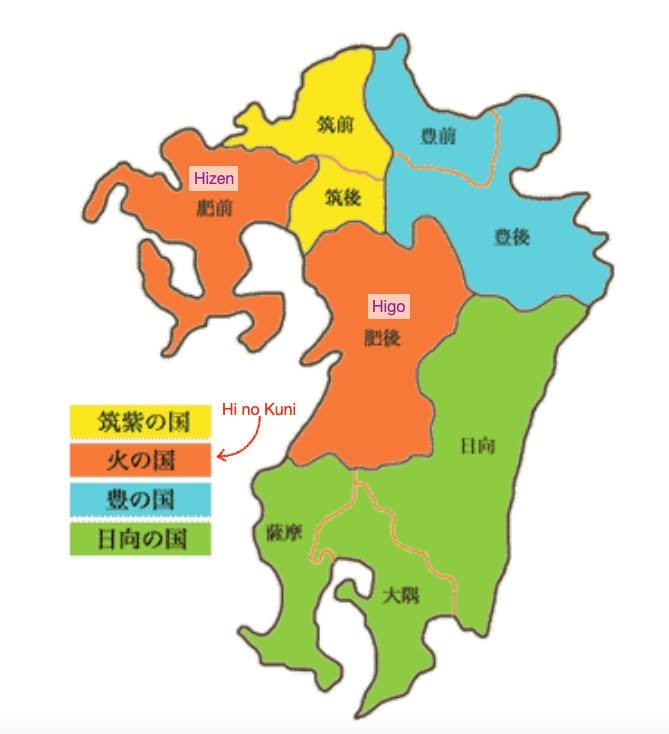
Hi! Kirk here with a repost and addendum to a post I made a while ago about "Hi no kuni" ("land of fire" vs. "land of fat"). I'm afraid I had forgotten since posting about how learning a bit about these old "countries" (kuni) in Kyushu (Higo vs. Kumamoto, etc.) also helps one understand how Kyushu (literally "nine states"; 九州) got its name. If you count the number of prefectures that make up Kyushu today it's not nine but seven. That's because two "countries" to our south (Satsuma and Okuma) were combined to make what is now Kagoshima, "Hizen" was divided into Nagasaki and Saga, and the three "countries" of Chikuzen, Chikugo and Buzen (its western half) to our north were combined to make Fukuoka, thus resulting in a total of seven prefectures. Only Higo (Kumamoto) and Hyuga (Miyazaki) survived the transition from "countries" (kuni or han) to "prefectures" (ken) with little or no change in boundaries.
Here's a review of the names for those who are interested:
Higo and Hizen are shown on the map in red.
Chikuzen and Chikugo are in yellow.
Buzen and Bungo are in blue.
Hyuga, Satsuma, and Okuma are in green.
When pairs of country names end in either "zen" or "go" (lit. "before" and "after"), the one ending in "zen" is considered to be closer to Edo (Tokyo).
https://www.facebook.com/Kumamotoi/posts/pfbid0uZMsAgPCLUWdyRZnhP7cUgkaR6p2PcGjmpv4GS67aUkFPzooQZMrxbuPZ1AHtNHRl

2024-02-14 09:45 JST

The marathon is coming up this weekend. -- Kirk
Marathon Overview | Kumamoto Castle Marathon 2024
Marathon Overview, Kumamoto Castle Marathon 2024 official web site 「新たな歴史に、挑め。」2月18日(日) 9:00 スタート

2024-02-14 07:43 JST

According to the article, in the Kumamoto quakes, 52 of the 186 who died held disability certificates. Disasters, both natural and man-made, hit people who are already already vulnerable the hardest. -- Kirk
Disabled account for over 20% of 2010s Japan disaster-linked deaths
The figures are particularly high when compared with the proportion of disabled people in the population, which the central government estimates at 9%.

2024-02-13 18:02 JST

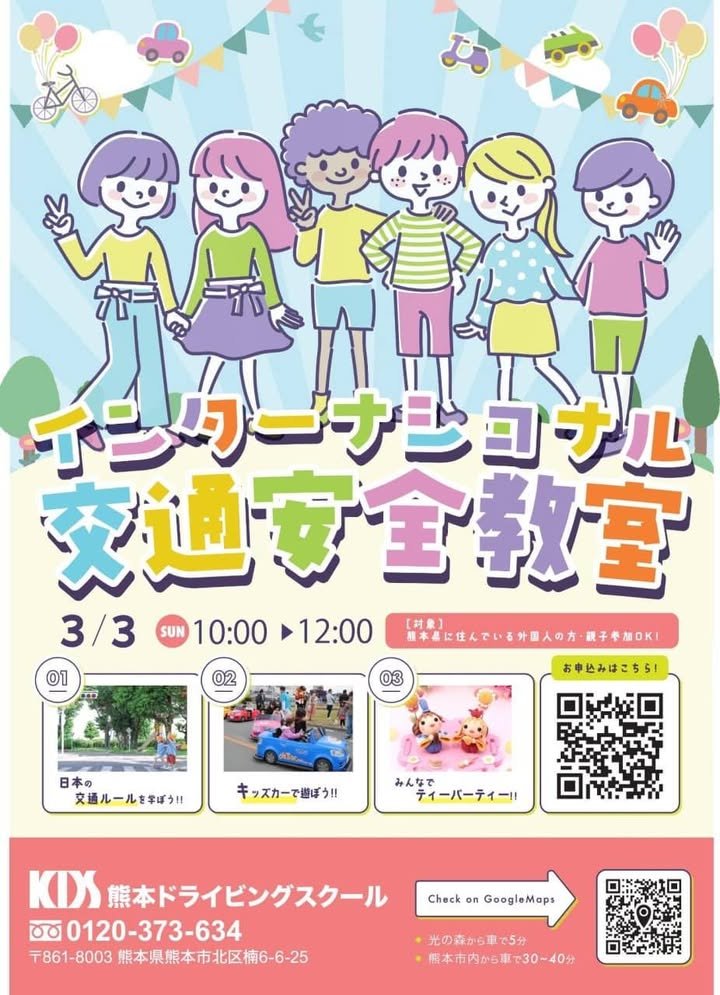
Kumamoto Driving School (KDS) is going to host the "International Traffic Safety Workshop" for foreign residents in Kumamoto, Japan! Join them on March 3rd, Sunday, from 10 AM to 12 PM at Kumamoto Driving School. Parents and children are welcome!
Check out the details below:
-Date & Time-
March 3rd (Sunday) | 10 AM - 12 PM
-Location-
Kumamoto Driving School
-Target Audience-
Foreign residents in Kumamoto, parents, and children
Registration: https://ws.formzu.net/sfgen/S261160935/
Posted by: Hari Devkota

2024-02-13 14:29 JST

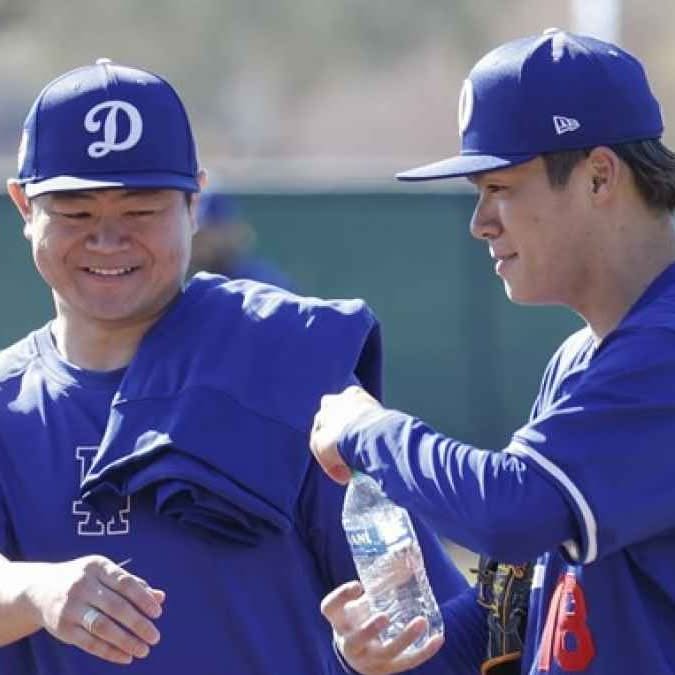
William Teaching English at JHS or HS level in Japan oft requires instilling motivation as students do not understand the utility of the subject. This could be a good motivator: Kyushu Gakuin High School graduate Yoshihiro Sonoda (46) has been appointed exclusive interpreter for MLB Dodgers pitcher Yoshinobu Yamamoto. (Disclaimer: the alma mater of my two children) Prior to this, Sonoda had been working as a lighting engineer at a film company in New York. "Maybe you, too, could someday be an interpreter - or work in the film industry," you can tell your students.
Kumanichi has the full story:

ドジャース山本投手の通訳に園田さん(熊本・九学高出身) 日本のエース支える|熊本日日新聞社
 米大リーグ・ドジャースの山本由伸投手(25)の専属通訳に、九州学院高(熊本市)出身の園田芳大さん(46)が選ばれた。大リーグに挑む日本のエース右腕をコミュニケーションの面で支える。

2024-02-13 12:15 JST

Kirk here. This came to me in a feed for "Kumamoto" because it includes a picture from Kumamoto but the issue is national. The article includes the following sentence.
"Asked whether they want a higher percentage of foreigners in their community, 54.5 percent said they do not, with many citing concerns about increased friction or deterioration of the social order."
Of course, friction can occur, particularly when it is assumed that it's somehow "natural" to treat foreigns as second-class entities, but I'm afraid that many of the nay-sayers are basing their opinions on stereotypes that have little to do with reality. :(

Many Japanese outside major urban areas do not engage with foreigners - The Mainichi
TOKYO (Kyodo) -- A recent survey has shown Japanese people who reside outside the country's major cities do not regularly interact with the foreigners

2024-02-12 20:45 JST

Kurokawa Onsen.
Atsuko⸜(*ˊᗜˋ*)⸝
https://www.facebook.com/share/vD4yaDhrA3zLm5Mo/

2024-02-09 22:50 JST

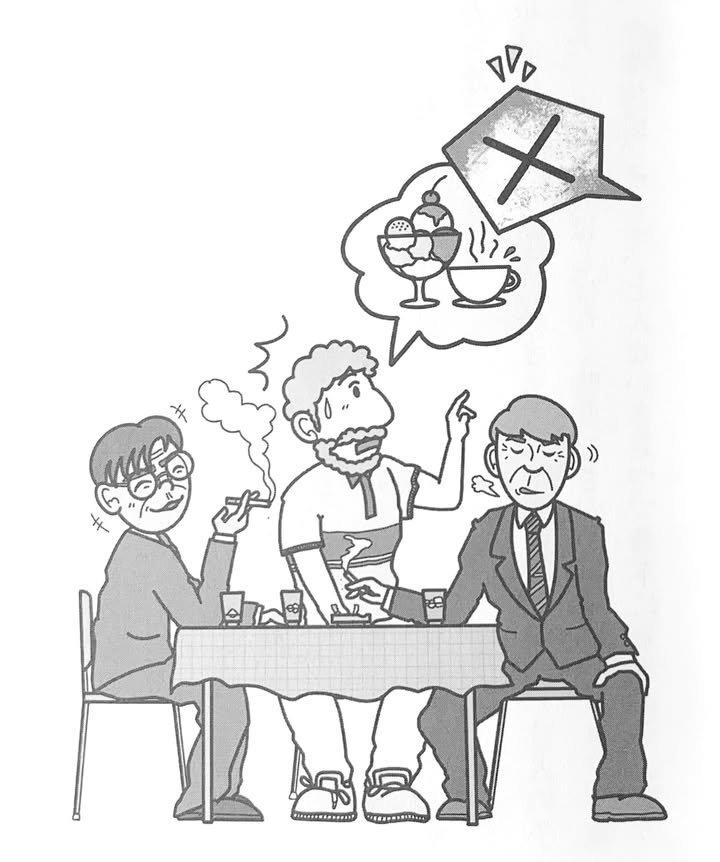
Kirk here. A while back I posted about how Kumamon is not allowed to enjoy cake because "he" is supposed to be male and "real" men don't go for sweets (at least that's the theory). You can find that post here:
https://www.facebook.com/Kumamotoi/posts/pfbid02yCZvZY2MevZLKAtPF7MFmKX23nGKQ5kstTCBrpmW3UTAtHYJpEB5Mb1aawMyW1PTl
This post is a follow-up to that. The same "men don't eat sweats" mentality is a topic of discussion in Alan Rosen's thoroughly enjoyable memoir: "Tales of Old Zen." Unfortunately for English speakers, the book is only available in Japanese:
https://www.amazon.co.jp/%E3%82%AA%E3%83%BC%E3%83%AB%E3%83%89%E3%83%BB%E3%82%BC%E3%83%B3%E3%81%AE%E7%89%A9%E8%AA%9E-%E3%82%A2%E3%83%A9%E3%83%B3%E3%83%BB%E3%83%AD%E3%83%BC%E3%82%BC%E3%83%B3/dp/4877556435
Alan describes his first meal in Kumamoto after which his chain-smoking colleagues from Kumadai poo-pooed his request for desert, explaining that men like alcohol and cigarettes, not sweets.
P.S. This and all the other illustrations in Alan's book have been done by his highly talented daughters.

2024-02-09 14:59 JST

William The Kumamoto District Court
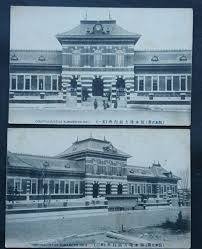
Wikipedia notes, "Georgian architecture is the name given in most English-speaking countries to the set of architectural styles current between 1714 and 1830." https://en.wikipedia.org/wiki/Georgian_architecture Its austereness was contrary to the baroque popular at the time. "Georgian architecture is characterized by its proportion and balance; simple mathematical ratios were used to determine the height of a window in relation to its width or the shape of a room as a double cube." Sounds like law.
With spring approaching and a desire to stretch your legs, head out a bit behind Ninomaru, a bit up the road, and you will find the former Kumamoto District Court Building (熊本地方裁判所旧庁舎, Kumamoto chihōsaibansho kyū chōsha), which was constructed in 1908 and in use until being replaced in 1978. Currently, it is used as a museum and is certainly worth a visit. Call first for reservations. https://www.courts.go.jp/kumamoto/kengaku/mogitaiken/siryokan_syokai/index.html
I once lived in Taiwan, a former Japanese colony. Many Georgian revival buildings from the Japanese colonial era remain. Below are two photos, one a former Japanese colonial building in Taipei, the other the former Kumamoto district court. Can you tell which is which?

2024-02-08 15:59 JST

Kirk here. It's official: a second TSMC plant will be built in Kumamoto.
TSMC to build second Japan chip factory, raising investment to $20 bln
Taiwanese chipmaker TSMC said on Tuesday it will build a second Japanese plant to begin operation by the end of 2027, bringing total investment in its Japan venture to more than $20 billion with the support of the Tokyo government.

2024-02-07 21:28 JST

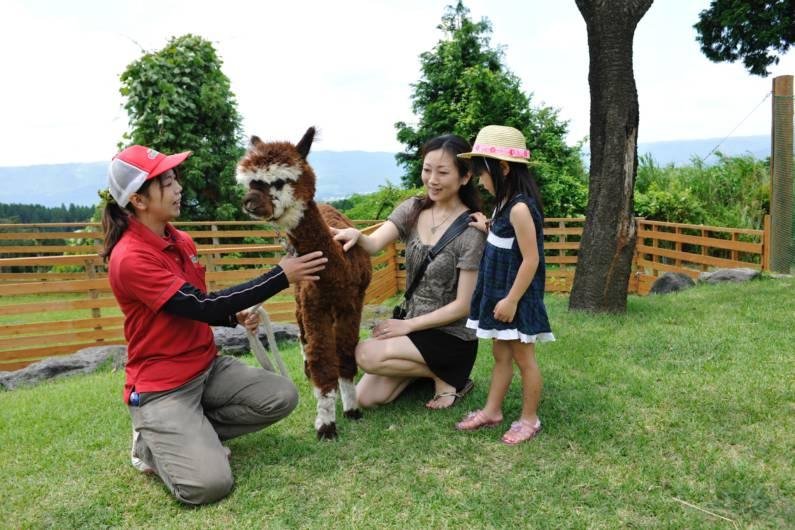
William Zoos excite in me mixed emotions. On one hand, when done well, they provide a wonderful discovery experience, particularly for children (drive-through parks, such as https://disneyworld.disney.go.com/attractions/animal-kingdom/#/sort=alpha/ , at least provide a semblance of the creature's natural habitat); when done poorly, the are sense-killing life sentences for sentient creatures (see Kumamoto Zoo - or, actually, don't).
I'd heard of Aso's "Cuddly Dominion" but hadn't given it much thought until I came across this article: https://travel.gaijinpot.com/aso-cuddly-dominion/ The word "cuddly" should have been a tip-off: the last thing even a domestic animal wants to do is be "cuddled" all day by strangers, which apparently is what this park encourages (and fortunately, they are mostly domestic). The ultimate curse I devised when my kids were young was "May you be reborn as a kindergarten hamster."
I'd like to know if any of our readers have been there and, if so, what your impressions are.

2024-02-07 20:24 JST

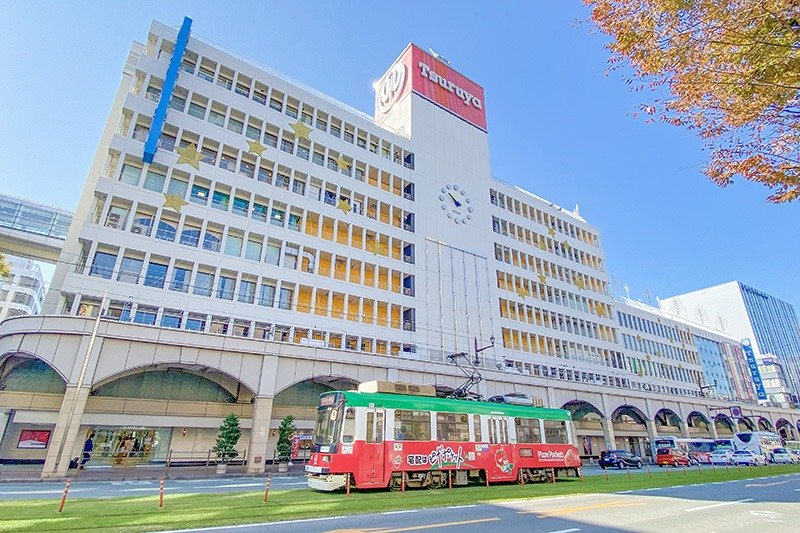
William Every city in Japan has its signature department store: Fukuoka = Daimaru; Osaka = Hankyu; Kyoto =Takashimaya; Tokyo = Mitsukoshi (this is all according to my daughter, whom you do not want to argue with). And, of course, Kumamoto = Tsuruya.
Established in 1951 as a joint investment by Chiebuya Kimono Store and Furusho Honten, it opened its present location in 1952 with three floors above ground and one below, and has expanded since. https://ja.wikipedia.org/wiki/%E9%B6%B4%E5%B1%8B%E7%99%BE%E8%B2%A8%E5%BA%97
A thing about Tsuruya is their paper bags. It is de rigueur when giving a gift in Kumamoto to enclose it in a Tsuruya paper shopping bag, no matter where the gift was purchased. A problem is that customers would accrue as many bags as possible on each visit, costing the company money and creating potential waste (though the bags tend to be reused multiple times).
In an attempt to reign in cost and waste, the company has announced that it will now be charging for paper shopping bags under the attached schedule. They're still cheap and probably worth it, particularly if you're giving a gift. https://www.tsuruya-dept.co.jp/information/info/bag.html

2024-02-07 17:25 JST

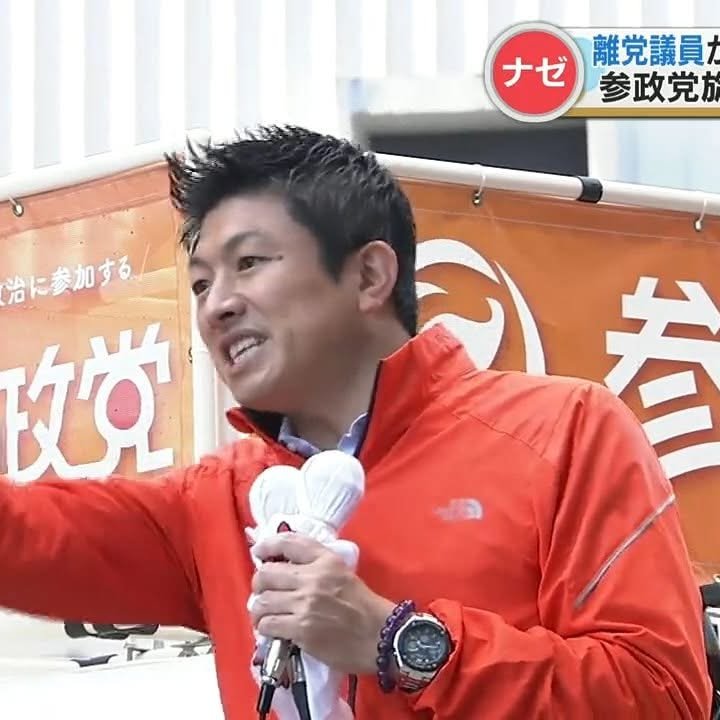
Kirk here with some news about local and national politics. The local politician at the heart of this story is not KAMIYA Sohei, the leader of the far-right SANSEITO party that you see pictured. Rather it's about TSUKUSHI Rumiko, who was elected to serve in the City Assembly and who ran as a SANSEITO candidate.
The news is that Ms. TSUKUSHI has decided to leave the party because the leadership runs it as a dictatorship, not allowing members to "participate" in decision making, even though the very name of the party gives the impression that belief in participatory democracy is a core value.
My reaction is that this is one of those rare instances when reading about Japanese news in English actually gives one better information than reading in Japanese. The problem with the Japanese is that the local media has focused on the nice ladies (TSUKUSHI in the City Assembly and TAKAI Chitose in the Prefectural Assembly) who stood as candidates and subsequently got elected but neglected to say much about this new party -- especially why it might be the sort of party to cause voters to think twice.
In English, if you started with Wikipedia (not necessarily a paragon of journalistic quality but a pretty darn good start in this case) you get this:
--- start quote ---
The party promotes COVID-19 misinformation and anti-vaccine propaganda, including the party's president, Manabu Matsuda, who has called COVID vaccines a "murder weapon". Sanseitō gained international media attention during the 2022 House of Councillors election due to the party's Secretary General, Sohei Kamiya's antisemitic rhetoric during public appearances and campaign rallies. Observers noted that Sanseitō differ from usual far right political parties in Japan, as most of its supporters are affluent, previously political apathetic, who get attracted by the party through topics like organic food culture and spirituality. The party has been described as a cult by experts.
--- end quote ---
https://en.wikipedia.org/wiki/Sanseit%C5%8D
So, readers of the Wikipedia blurb would not be surprised about recent news that leaders of the party don't run it very democratically because cults are not known for their democratic tendencies.
It's also been pointed out that SANSEITO seems to be looking to achieve Trump-like success but taking similar positions in Japan:
--- start quote ---
The party has characterized the pandemic as being staged and has heavily criticized the government’s handling of the health crisis. It uses rhetoric that resembles that of former U.S. President Donald Trump and his calls to “make American great again.”
In a campaign speech, one of the party’s candidates underscored the need to “restore a true Japan,” calling it “the world’s best” country.
Ninety-eight percent of its 50 candidates support protecting domestic industries, according to a joint study by The Asahi Shimbun and the University of Tokyo.
The study also found that 94 percent oppose Japan accepting more foreign workers.
Asked about parallels with the “America First” policy championed by Trump, Kamiya acknowledged the similarities, saying, “There is no question about it.”
--- end quote ---
https://www.asahi.com/ajw/articles/14668905
Now, I don't mean to say that nothing has been written about this party in Japanese; of course, a lot has been written. People actively searching for background information in Japanese will find plenty of it. In the local news coverage, however, such context has been largely absent.
Let's take TAKAI Chitose's support for Japan becoming a nuclear power as an example. As I mentioned above, TAKAI has been elected to the prefectural assembly. In the profile on TAKAI by the Mainichi Shimbun (not exactly "local"), she clearly affirms that she thinks that Japan should be a nuclear power.
https://mainichi.jp/senkyo/26san/meikan/?mid=B43000001001
Well, she's entitled to her opinion, but I think that voters in Kumamoto who don't happen to read the Mainichi Shimbun are also entitled to know about her embrace of this position. At my university, I'm able to access the complete database of Kumanichi articles so I was able to confirm the Kumanichi has been completely silent on this issue. Coverage of TAKAI that I've seen on TV has been extremely friendly to her. A direct interview I saw on RKK didn't include any tough question about her anti-foreign or militaristic stances.
I've spent a lot of time learning Japanese and find being able to access information written in the language to be very valuable. Usually, the best information about a country is to be found in the language of its people. But, occasionally, one can get a better sense of phenomenon by reading in another language -- from the perspective of an outsider. For me, this is one such example.
https://newsdig.tbs.co.jp/articles/rkk/984519?display=1

「独裁的な体制に怖さを感じた」なぜ相次ぐ “参政党議員の離党” 議員9人が相次いで党を離れる 離党した筑紫るみ子議員、伊藤翼議員に話を聞いた | 熊本のニュース|RKK熊本放送
去年(2023年)の熊本市議選に初挑戦した参政党は2議席を獲得し、参政党旋風が続くかと思われましたが、そのうちの1人 筑紫るみ子(ちくし るみこ)議員が、突然離党しました。離党に至った理由は何なのかカメラの…

2024-02-06 22:49 JST

Kirk here. The article begins " . . . police stationed in Kumamoto -- One Piece author Eiichiro Oda's hometown -- arrested two foreign citizens suspected of infringing on Weekly Shonen Jump's copyright." I hope no one associated with page was involved in the crime.
Multiple Major One Piece, JJK Leakers Shut Down Following Arrests
Major One Piece and Jujutsu Kaisen leakers shut down following the arrest of individuals suspected of infringing on Weekly Shonen Jump's copyright.

2024-02-06 18:00 JST

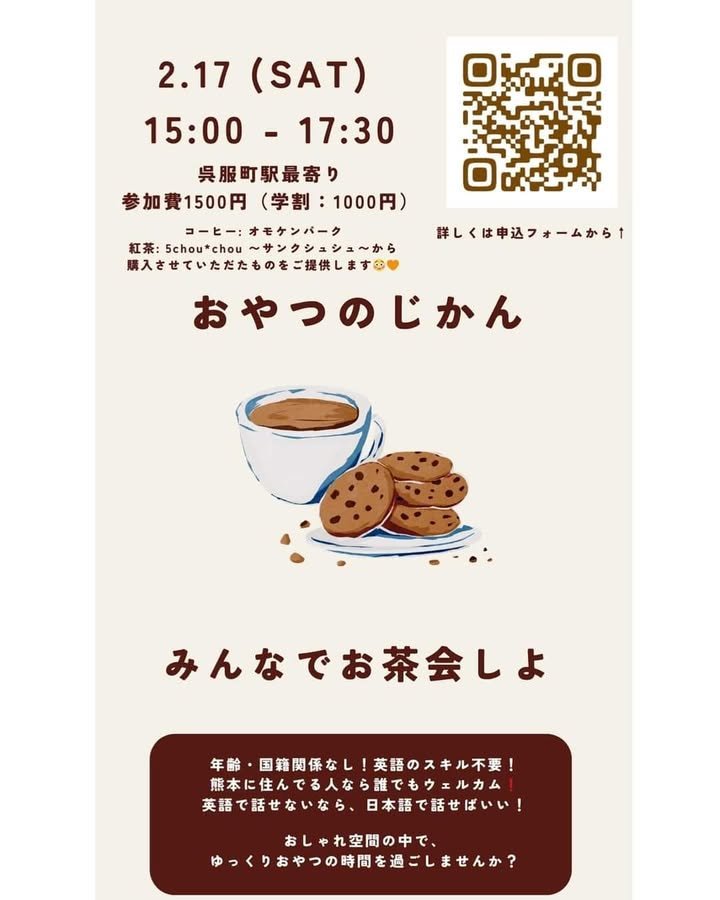
Ruth here sharing an invitation to a social afternoon, decorating cookies, speaking Japanese, playing simple games and such, in Gofukumachi•呉服町 on Sat., 17th Feb.
The organiser is a local university student, who is big on organising international exchange events, so they asked to extend the invitation to our Kumamoto International community.
It's 1500 yen to participate, and that includes a drink and the other activities. Students get a discount! ☕
Please see the image or FB page for more details:
https://m.facebook.com/story.php?story_fbid=122125299632106966&id=61553208980192&wtsid=rdr_0qpD9Ui27Ho78GNMl
https://www.facebook.com/share/p/YZNMKBQuEC8xqcam/

2024-02-06 14:07 JST