Archive of the Kumamoto International Facebook group, 2011–present.

Kirk here with another report on how deeply the Unification Church managed to integrate itself into the Kumamoto's public life. Today's topic is the Peace Road initiative. First of all, what's this "peace road" thing about, anyway? In English, the Moonies have explained it for us on the UPF (Universal Peace Federation) website:
"The Peace Road and the World Peace Road Foundation are global goodwill projects of the Universal Peace Federation. The project dates back to 1981, when the late Rev. Dr. Sun Myung Moon proposed an international highway that will physically connect all people of the world."
Further down on the page, we find the following explanation:
"The vision of the Peace Road Initiative goes beyond the materialistic desire for the economic and political benefits of an international road, and champions the spiritual dimension, which aims to tear down the walls that have historically divided us – racism and cultural differences, prejudice and fear – and bring humankind together as one family under God."
Still further down on the page, we can read about how this idea of unifying humankind under God is connected to the Japan-Korea tunnel project:
---- start quote ----
1981: UPF founders Rev. Dr. Sun Myung Moon and Rev. Dr. Hak Ja Han Moon suggested the construction of a highway between Korea and Japan, two former enemy nations, at an international science conference in Seoul.
2005: At the UPF Inauguration, the founders began advocating for the building of a “Peace Tunnel” across the Bering Strait, to connect North America and Asia. Rev. Sun Myung Moon made the following statement:
“This tunnel can help make the world a single community at last…Think of how much money the world is wasting on war. The time has come for nations to work together, pool their resources and, as the prophet Isaiah taught, beat our swords into plowshares and pruning hooks.”
---- end quote ----
https://www.upf.org/programs/peaceroad
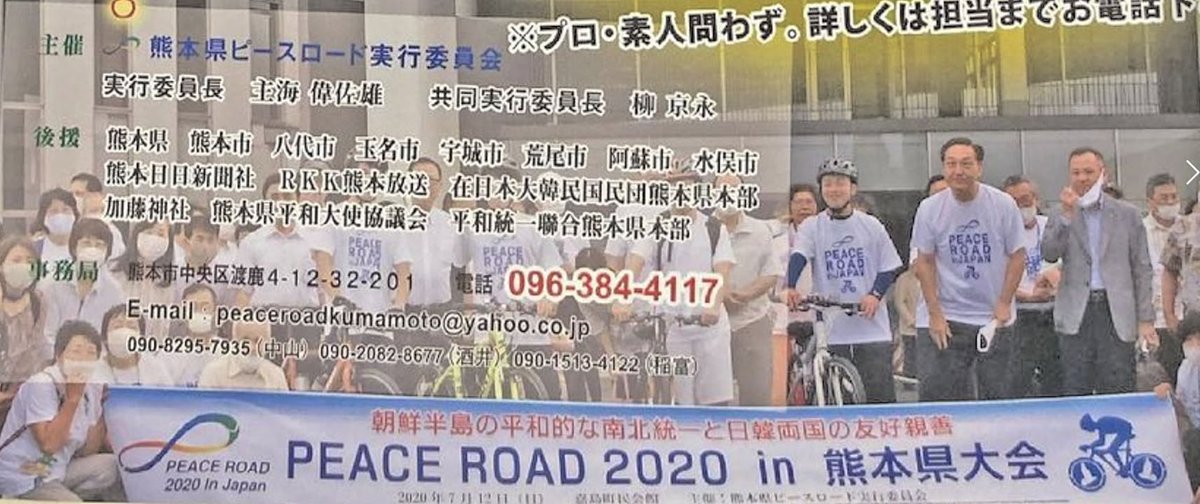
Amazingly, Kumamoto Prefecture, Kumamoto City, the Kumamoto Nichinichi Shimbun (Kumanich), RKK (Radio and TV network), and other notables supported Peace Road projects in Kumamoto until the house of cards came tumbling down with murder of Shinzo Abe.
The image I'm attaching to this post is from the following tweat:
https://twitter.com/HON5437/status/1551789258800656384
It lists the prefecture and the city and all of the other entities that blithely sponsored the Moonie project.
Now, the English page I quote above spells out the connection between Sun Myung Moon's organization and the project quite clearly but one might wonder if this wasn't harder to find out about if one only searched in Japanese. Not so. Here's a URL put out by "Peace Road in Japan" that spells it all out in Japanese:
https://www.peaceroad.jp/history
And here's the address of an Asahi Shimbun article about the recent discovery of the issue:
https://www.asahi.com/articles/ASQ8271VMQ82TIPE00N.html
I think that two things are worth noting. First that it was members of the Communist Party in the prefectural assembly that formally asked the prefecture to withdraw its support. I think that this may be important because the Communitist Party is the traditional enemy of the Moonies while the LDP has been in bed with them. So, the Communist Party making the first move fits with that.
Second, the prefecture (and presumably everyone else who sponsored this event) claimed not to have "noticed" the Moonie connection ("気づかなかった"). To be fair, I hadn't noticed either. Then again, I hadn't been asked to come on board as a sponsor. On the other hand, some people DID come to my house a long time ago asking me to contribute to some project that seemed worthwhile on the surface. As I wrote over a month ago, that prompted me to Google the group and doing so soon let me know that they were Moonies:
https://www.facebook.com/Kumamotoi/posts/pfbid02LzNtrc8vhvKSRSFWpoE9DS7cHdoWWk45hP6dTUXgiaLeqHUxgGhQG2W6VQN6Heanl
So, why no due diligence? Not sure.
But the problem of our paper of record, the Kumamoto Nichinichi Shimbun (Kumanichi), sticking its head in the sand is ongoing in that, at this writing, it has not yet reported the connection between the tunnel project and the Peace Road cycling event or made a full assessment of its Moonie-related culpability. In other words, it seems to be trying to let President Nakayama of Sojo University be the fall guy for the tunnel embarrassment and avoid connecting the dots in regard to how it, as our local watchdog of democracy, became a lapdog of the Moonies.
One final point: The idea that "all these respectable organizations are on board so it must be OK" is exactly the problem. I think we can assume that coming on board with Moonie projects lended respectability to the organization and further enabled recruitment and the sort of financial abuse that ultimately led to Abe's murder.
2022-08-28 11:22 JST

William My son will visit from Tokyo with his new wife (I'm a little nervous), so I referenced Kumamoto Castle's status and found their official website to be very picturesque and informative.
Visitor Information
今こそ見てほしい熊本城。平成28年熊本地震で大きな被害を受けた熊本城ですが、二の丸広場や加藤神社から、天守閣等を見ることができます。熊本城の復旧状況のお知らせや、二の丸広場等を活用したイベント情報も随...

2022-08-27 12:45 JST

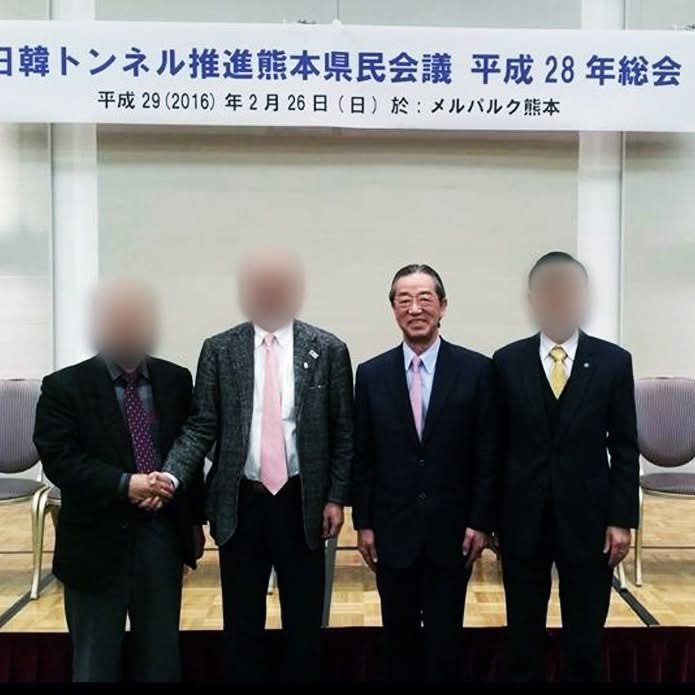
Kirk here. As I've written before, the president of Sojo University was recently in the news because he had been chair of the "Kumamoto Citizens Promoting the Building of a Tunnel Between Japan and Korea" (日韓トンネル推進熊本県民会議). Since posting that, I've learned a bit more about the history of the tunnel scheme.
Since President Nakayama was head of the Kumamoto organization, I started by searching for the website of the national organization, the "International Highway Foundation" (国際ハイウェー財団):
https://ihf.jp/overview/
This lists SATO Hirofumi (佐藤博文) as its head, so I tried to find more information about him. It turns out that he has written a book about the project with the following title: 平和の大道 国際ハイウェイ・日韓トンネル(The Great Way of Peace: The International Highway and the Japan-Korea Tunnel). What's more interesting is the first line of the blurb summarizing the book: 国際ハイウェイは、真の父母様の願いであり (The International Highway is the desire of the True Parents . . .). Once you see "True Parents" you know you are dealing with Moonies. Here's the website where the book is still being sold, though I don't recommend buying it:
https://www.kogensha.jp/shop/detail.php?id=3843
I wanted to learn a bit more about this SATO Hirofumi guy so I googled him a bit more and found this YouTube video:
https://www.youtube.com/watch?v=o4vK6saHbbI
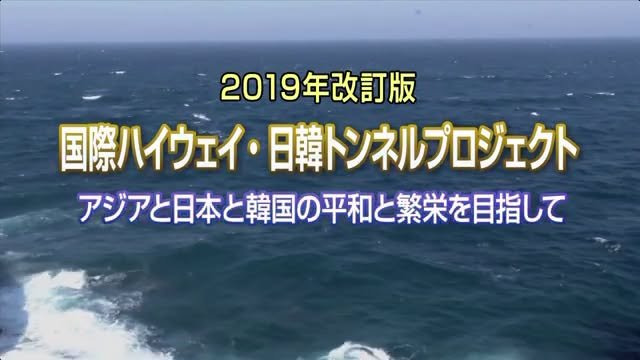
It begins with a conversation between SATO and some Korean gentleman and the second half is a nicely produced PR video about the project. The screenshots in this post are from the video. The project to build the tunnel itself is huge but it is only a part of a larger messianic mission to save the world (make it peaceful) by uniting it via an international highway. Mr. Moon is clearly cited as the originator of the plan.
So, if he had tried to figure out who was at the top of the organization he was supporting in Kumamoto, I think President Nakayama should have been able to figure out that it was a Moonie project.
That made me wonder how the local newspaper, the Kumamoto Nichinichi Shimbun (Kumanichi) covered this tunnel scheme before the sh*# hit the fan in regard to Nakayama. I searched a database and found out that in April of 1996, they published an article about a guy who filed a lawsuit claiming that he had been bilked of 3.7 oku (about $3 million USD today) in support of this tunnel project. That article is behind a paywall but you can read about the lawsuit here:
https://topics.smt.docomo.ne.jp/article/dailyshincho/nation/dailyshincho-881898
Interestingly, however, that was the last time that the Kumanichi connected the tunnel to the Moonies explicitly. As late as June 21 of this year (just over two weeks before Abe's July 8 murder) the Kumanichi published an article with the headline the following headline:
「日韓トンネル推進県民会議」設立10周年 熊本市で記念総会 韓国 海底トンネル
It was about a party held to celebrate the 10th anniversary of the establishment of Kumamoto's organization to promote the tunnel. In the nearly three decades since their article about the lawsuit of 1996, the Kumanichi published quite a few articles about the tunnel project but none of them mentioned the Moonie connection -- until Nakayama's recent press conference. Curiouser and curiouser.
Finally, here are links to my previous posts about this tunnel:
https://www.facebook.com/Kumamotoi/posts/pfbid0EbcNGY58UuyHsPMYjoz64RcZrPs6SgMFh9ekgYQoRcPJGL7oLUT1DM7QTSFq17Cvl
https://www.facebook.com/Kumamotoi/posts/pfbid0uHSZNYrcm8kv8Ksa8gFh3BLGSvUTYX7XS7CmJx8NkK1dKQfgm6HeupYfiJS1VVXM

2022-08-27 10:53 JST

William Lafcadio Hearn was, as Wikipedia notes, "a Greek-Irish-Japanese writer, translator, and teacher who introduced the culture and literature of Japan to the West.... During late 1891, Hearn obtained another teaching position in Kumamoto, at the Fifth High Middle School (a predecessor of Kumamoto University), where he spent the next three years and completed his book Glimpses of Unfamiliar Japan (1894)." His published books are available for free at Gutenberg.org: https://tinyurl.com/3wndckcv .
Japan Today has an informative article about Hearn as part of their biography series which includes several quotes from revered Kumamoto University professor, Hearn scholar, and long-time Kumamoto resident Alan Rosen as well as links to other articles in the series. https://japantoday.com/category/features/lifestyle/lafcadio-hearn-becomes-koizumi-yakumo-in-1890s-japan

Lafcadio Hearn becomes Koizumi Yakumo in 1890s Japan
If you ask your Japanese friend about writer Lafcadio Hearn (1850-1904), they might pause for a moment and say, “Who?” But after telling them a few details — that’d he’d traveled to Yokohama in April 1890 and spent the next 14 years writing ghost stories and folk tales (such as…

2022-08-26 17:13 JST

Kirk here with a share from Japan Today:
https://japantoday.com/category/features/travel/suizenji-garden-one-of-the-finest-of-japan’s-feudal-samurai-strolling-gardens-1
This is a pretty lengthy article and a very thorough introduction. The only problem I noticed is the following sentence:
"The site for the shrine was selected due to a spring in that location that had been recognized by the second Hosokawa daimyo, Tadaoki (1563-1646), father of Tadatoshi, as emitting the "sacred water of longevity.'"
Tadaoki wasn't the second Hosokawa daimyo -- he was with first in the Higo Hosokawa clan.
Otherwise, I think it's really well done.

Suizenji Garden: One of the finest of Japan’s feudal samurai strolling gardens
During Japan’s feudal age, the favorite duck hunting ground for the successive lords of Kumamoto Castle and their warrior entourage was a spring-fed pond about one ri (four kilometers) southeast of the castle. In the 1630s, Tadatoshi Hosokawa (1586-1641), the latest of the daimyo feudal lords of t...

2022-08-26 10:16 JST

Kirk here with an Asahi.com article that covers more-or-less the same territory as my post yesterday about the president of Sojo University. One thing in this article that I didn't mention yesterday was that "he (President Nakayama) said he took the chairman’s post at the organization in 2011, when it was established, because he was asked to do so by a former Kumamoto city assembly member." I wonder who that former city assembly membeter might be and how they might have been connected to the project.
Here's the URL of the post I made yesterday. If links to the online Bunshun article:
https://www.facebook.com/Kumamotoi/posts/pfbid02JdD5kMGh9wNuNjdtCouQPTrHMZZiefhi8yKP2eSjMkrDXKSSs14nEXAKy2z5yWA8l
https://www.asahi.com/ajw/articles/14702234

Kishida denies Unification Church ties after magazine report | The Asahi Shimbun: Breaking News, Japan News and Analysis
Prime Minister Fumio Kishida on Aug. 24 again denied having any relations with the Unification Church after a weekly magazine reported that one of his key supporters did.

2022-08-25 18:09 JST

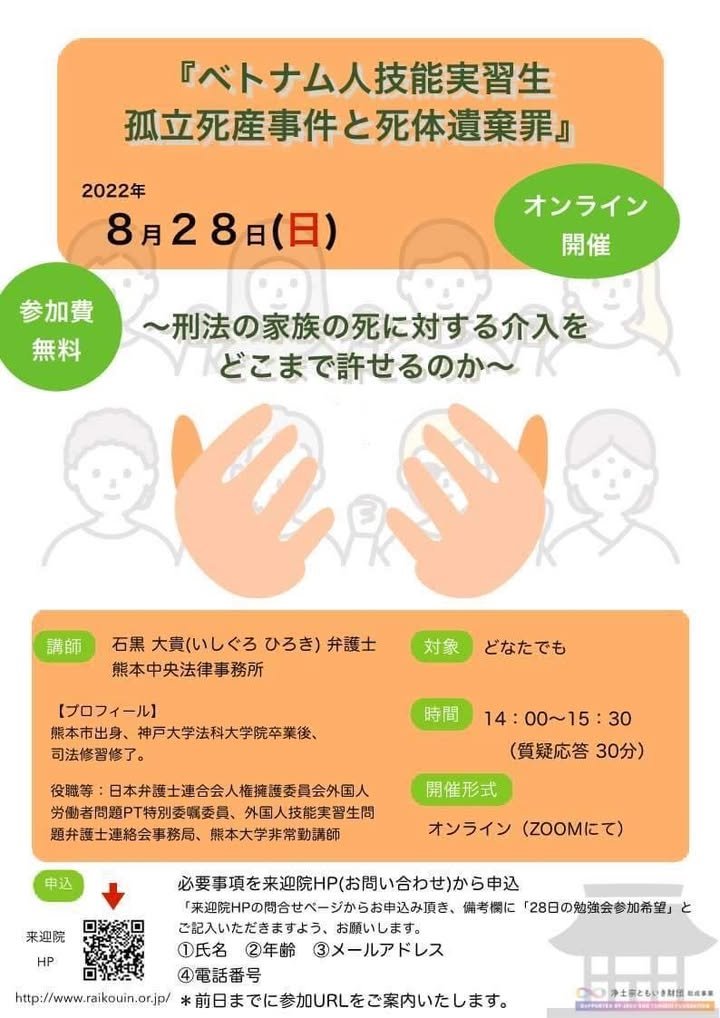
Kirk here with a notice from Yukiko Kaikita about an online (Zoom) event that will be held on Sunday. I'll share her English announcment and then put the Japanese text she sent me at the end of this message. (The event will be held in Japanese. このイベントは日本語で行われます。)
---------
The following lecture will be held online (free of charge) regarding the incident of a Vietnamese technical intern trainee, Linh.
This is a case in which it is questioned whether the act of mourning for a family member’s death constitutes "abandonment."
People have different religious views, and like Linh’s case, various circumstances may limit what you can do for the funeral. We think it is very dangerous for the judiciary to unilaterally decide that it is not a funeral.
I think this is a very important theme now that the relationship between religion and politics is drawing attention. Please join us.
# Linh is innocent
#Not Guilty for Linh
- - - - - - - - - - - - - - - - - - - - - - - - - - - - - - - - - -
Title: “To what extent should the criminal law intervene in the death of a family member?”
Date: August 28 (Sun) 14:00-
Location: Online (ZOOM)
Participation fee: Free
Application: Please apply from the inquiry page on the 来迎院HP.
http://www.raikouin.or.jp/

Please write 「participate in the study session on the 28th」in the remarks column of the page.
Thank you.
http://www.raikouin.or.jp/contact/?fbclid=IwAR3DorWtQsbRxTe7cne0CKekIwcVNRRELPbih9ykXFR64dFEb5mbkr4y2kI
【勉強会のご案内】
ベトナム人技能実習生リンさんの事件について、オンライン(無料)で下記の講演会を開催致します。
ベトナム人技能実習生リンさんの事件は、家族を弔った行為が「遺棄」にあたるかが問われている事件です。
人の宗教観はいろいろです。
また、様々な状況から、弔いのためにできることが限られてしまうこともありえます。
にもかかわらず、司法が一方的に、弔いではないと判断してしまうことはとても危ういことではないでしょうか。
宗教と政治の関係が注目される今、とても重要なテーマだと思います。ぜひご参加ください。
#リンさんは無罪
ーーーーーーーーーーーーーーー
「家族の死に対する刑法の介入をどこまで許すのか」
日時:8月28日(日)14:00~
場所:オンライン(ZOOM)
参加費:無料
お申し込み:来迎院HPの問合せページからお申込みください。
※ 備考欄に「28日の勉強会参加希望」と ご記入いただきますよう、お願いします。
http://www.raikouin.or.jp/contact/
こちらのURLから直接お問合せページに入れますので、どうぞご利用ください。
技能実習制度についてのご報告です。
現在、法務省と厚労省が、妊娠実習生の不当な扱い(強制帰国や強制中断、中絶の強要など)の実態調査を始めました。ようやくですが、大きな一歩です。
リンさんの事件から、妊娠した実習生の不当な扱いが大きく報道されるようになりました。
リンさんは現在も最高裁に上告中です。まだ、棄却されていません。審議中ということです。
死体遺棄していないのに、死体遺棄罪で逮捕されたリンさんの事件を、判例にしてはいけません。
リンさんの無罪は、女性の妊娠に関する自己決定権の問題でもあります。リンさんの無罪に向けて、サポートを宜しくお願いします

2022-08-25 16:57 JST

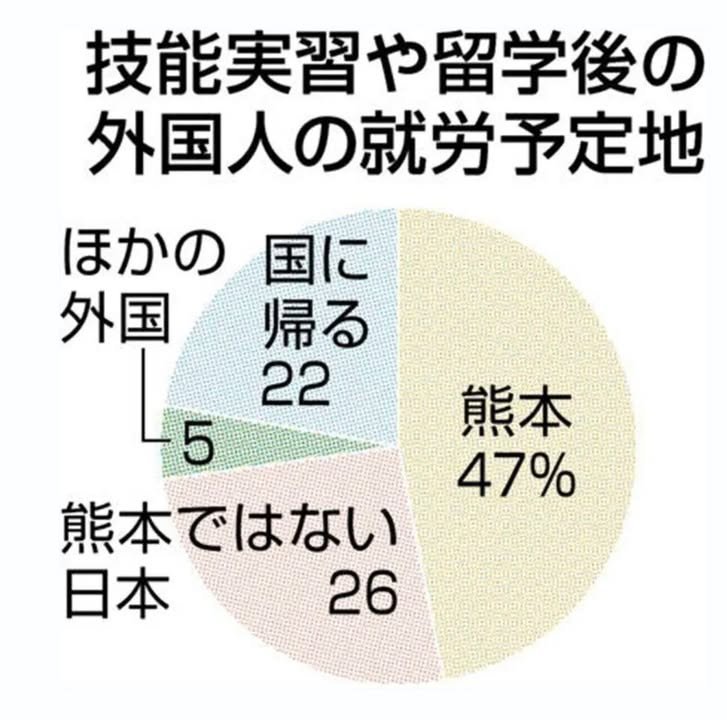
Kirk here with a screenshot of some survey results published in the Kumanichi (see URL below). According to the survey about half of the foreign "trainees" (jisshusei) and students (ryugakusei) in Kumamoto plan or hope to work in Kumamoto after their trainee or study period ends. Less than a quarter plan to return to their home country. I'm not sure how this compares to other prefectures but it makes sense to me -- Kumamoto is a nice place to live and work.
P.S. I got this link from Ms. Yukiko Kaikita. I'll be sharing more information from her about an event related to trainees soon.
https://nordot.app/928068046420164608?fbclid=IwAR0VoquS2rCwb_r8rBaIKOpYxcWEQG8sf30ZLjHH_OEtIYu8dG9BAGpYe30

2022-08-25 16:38 JST

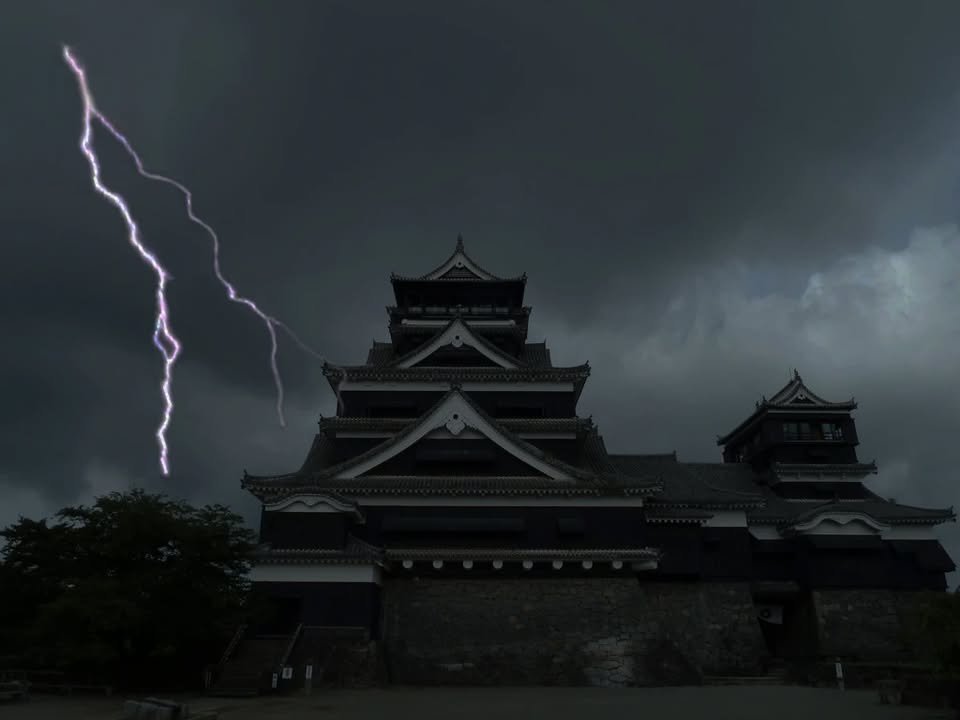
William That was some thunder storm last night! Lightning is rare in my hometown of Los Angeles, so I love it, but it used to terrify my dog so much that he'd hide under my daughter's bed, shivering for hours even after a storm had passed. It occurred to me that there might be a photo of the castle with lightning, and yes, there was: this rather spooky one. It is attributed to this blog: https://blog.goo.ne.jp/fuhkan/e/0b2421f85ed023898b758803dd6d625b

2022-08-25 14:12 JST

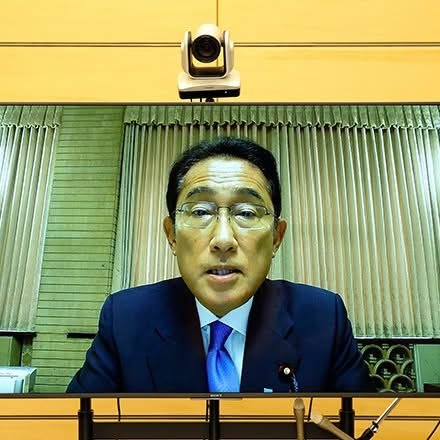
Kirk here with a Unification Church (Toitsu Kyokai) update. The gentleman pictured is NAKAYAMA Mineo, president of Sojo University. It seems that Nakayama-sensei has also been the Chair of "Kumamoto Citizens Promoting the Building of a Tunnel Between Japan and Korea" (日韓トンネル推進熊本県民会議). According to the Bungei Shunjun article, this project was proposed by Sun Myung Moon, founder of the Unification Church. The length of the tunnel would be about 200 kilometers, of which 500 meters have already been dug.
Nakayama-sensei's association with a Moonie project is political news because he is also the head of a local group to support KISHIDA Fumio, our current Prime Minister. Mr. Kishida has said that he has no connection to the Moonies so even indirect connections like this become news.
Today, Mr. Kishida's explanation regarding his support group in Kumamoto was national news. Nakayama-sensei says that he was unaware of the connection. Perhaps so. My response is: Have you heard of Google?
By the way, Nakayama-sensei held a press conference today, obviously in response to the Bungei Shunjun article. He is no longer associated with the tunnel project.
Actually, I have more to report about other local connections with the Moonies but I'll have to save that for other days.

岸田首相の後援会長が「統一教会関連団体の議長」問題 首相が統一教会との関係を否定、会長は議長を辞任 | 文春オンライン
岸田文雄首相(65)は8月24日、オンラインで記者団の取材に対して、「週刊文春」が報じた統一教会(現・世界平和統一家庭連合)との関係について、「旧統一教会との関係はありません」と改めて否定した。「週刊…

2022-08-24 21:41 JST

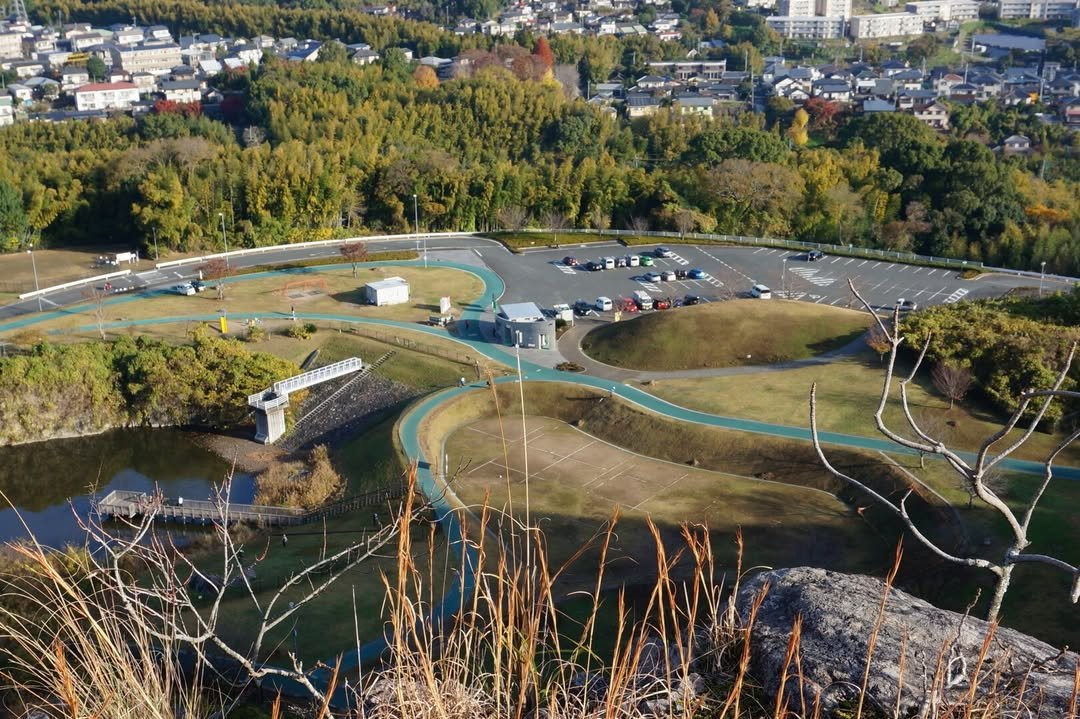
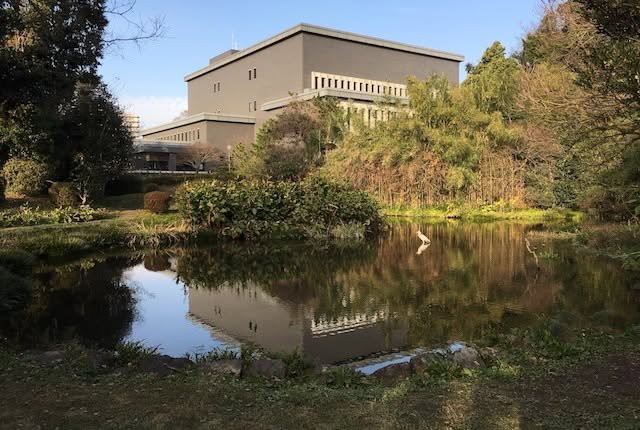
William Tatsudayama was created by tectonic uplift, apparent when hiking: its clay composition is so slippery gravel must be poured on paths. Mt Kimpo, conversely, is a dormant volcano (yes! it could erupt again! imagine that!) composed of granite; the stone used to create the castle walls was quarried there, leaving a large pit called Ishigamiyama kōen (石神山公園, photo below) which is filled with water but completely fenced. Even I wouldn't swim there: too dangerous, but the views of the city are nice. It's a scenic, short hike from the street car.
North of the Mt Kimpo, in Tamana, is a spring called Oda no Maru no Ike (尾田の丸池), which used to be a popular swimming spot for the youngsters until their raucousness ruined it all for everyone, as you can see from the sign. There is a foot bath, though, and probably if you're super quiet, you can swim in the pond.
It is connected, springwise, with Kusamakura Onsen, which deserves its own post, so I'll write about it later.
Kakutaxi has more photos and info: https://tinyurl.com/vwzseypu

2022-08-24 17:26 JST

Kirk here with something for sword fans and/or history buffs and/or gamers. First here are my sources:
https://kumanichi.com/articles/767778
https://ja.wikipedia.org/wiki/歌仙兼定
https://www.gematsu.com/2021/11/touken-ranbu-warriors-kasen-kanesada-trailer
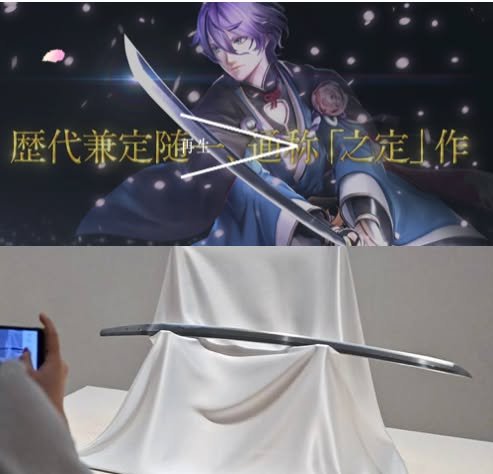
The lower half of the image I'm sharing shows a Japanese sword, owned and used by members of the Hosokawa family, that is currently on display at the Prefectural Art Museum. It's called Kasen Kanesada. Apparently, the Hosokawa's were not always nice guys. The Kumanichi and Wikipedia articles say that HOSOKAWA Tadaoki used the sword on 6 (or perhaps 36) retainers (today that would be "employees") with whom he was dissatisfied. The Wikipedia article says something about the policies or projects of the domain "not progressing" well enough. Sounds to me like Tadaoki was a bad boss. "Tadaoki, you can take this job and . . . ahhhhhh . . . gasp." At any rate, Kasen (歌仙) refers to some kind of poetry that comes in sets of 6 (or 36?) -- hence it's a euphemistic way of referring to the number of people that Tadaoki used the sword on. Kanasada is the name of the guy who made the sword in the Muromachi Period (sometime between 1336 to 1573 -- I don't have a more exact date).
Now, the thing is that this sword is quite popular with young folks -- despite its grusome history. That's because Kasen Kanesada is also a character in a game. It would seem that this pop culture notoriety has something to do with the Prefectural Art Museum declaring that they may limit the numbers who may enter to gaze at the blade:
https://www.pref.kumamoto.jp/site/museum/147503.html

2022-08-24 00:23 JST

William An uh-oh moment. Most are probably familiar with the lovely springs and banana trees behind the City Library in Suizenji-Ezuko.
"Kumamoto Prefecture announced on the 23rd that it will receive a donation of a children's library designed by world-famous architect Tadao Ando (80). It will be built on the grounds of Suizenji-Ezuko Park in Kumamoto City. It is planned to be located on the south side of the prefectural library....construction is planned on prefectural land within the grounds of Ezuko Park." Yes. Many concerns. But: "'We will proceed with the project while gaining the understanding of local residents so as not to damage the natural environment and scenery."'
The article goes on to say that Mr. Ando has a deep connection with Kumamoto, having designed the JR Kumamoto Station building and the Prefectural Decorated Tumulus Museum in Yamaga City and assures, "'We will build it in a place blessed with nature with a nearby stream. We want to make it a space where you can enjoy reading even outside.'"
This will either end in triumph or a tragedy, because we're dealing with this:
(article at Kumanichi: https://kumanichi.com/articles/767986)

2022-08-23 20:30 JST

William There's a council in Kumamoto made up of representatives of labor and management whose recommendations almost inevitably turn into law. The council has recommended a ¥32 rise in the minimum wage to ¥853 which, if applied by the Labor Bureau, would be the largest raise ever, a full ¥2 higher than is standard. There is no national minimum wage in Japan; all are set by prefecture. By comparison, the minimum wage in California is $14, almost twice as high, though individual cities can (and often do) set higher rates; that in Los Angeles is $16.04, or about ¥2,123. The US federal minimum wage is $7.25, unchanged since 2009 and currently worth about ¥984.
NHK Japanese: https://www3.nhk.or.jp/lnews/kumamoto/20220809/5000016578.html
An English article regarding the Central Minimum Wage Council is here: https://mainichi.jp/english/articles/20220801/p2a/00m/0bu/004000c

熊本県の最低賃金32円引き上げで答申 853円に|NHK 熊本県のニュース
熊本県の最低賃金について、県内の労使の代表者などでつくる審議会は時給を32円引き上げて853円とする答申をまとめ、熊本労働局に提出しました…

2022-08-23 13:14 JST

Kirk here sharing something that is related to Japan's "foreign trainee" issue. It's not about something that happened in Kumamoto but the basic issue of problems with the trainee (jisshuusei; 実習生) program is a topic we've discussed on this page. The article includes a link to a shocking video of highly abusive treatment of a "trainee" from Vietnam that occurred in Okayama.
By the way, I've been meaning to post about a seminar I attended on the case Ms. Le Thi Thuy Linh, the Kumamoto resident who is appealing her conviction for "abandoning" her two stillborn babies to Japan's Supreme Court. There's no direct connection to the Okayama case, but it may be another opportunity to observe the extent to which Vietnamese trainees can or cannot get justice in Japan. At any rate, I'll try to post my report about the seminar soon.

Visible Minorities: Reforming Japan's Dickensian Foreign Trainee Program - SNA Japan
News Item: video footage surfaced in 2020 of a Vietnamese “trainee” being physically abused by Japanese co-workers at a construction company in Okayama Prefecture, resulting in injuries including broken ribs and a broken tooth.

2022-08-22 22:29 JST

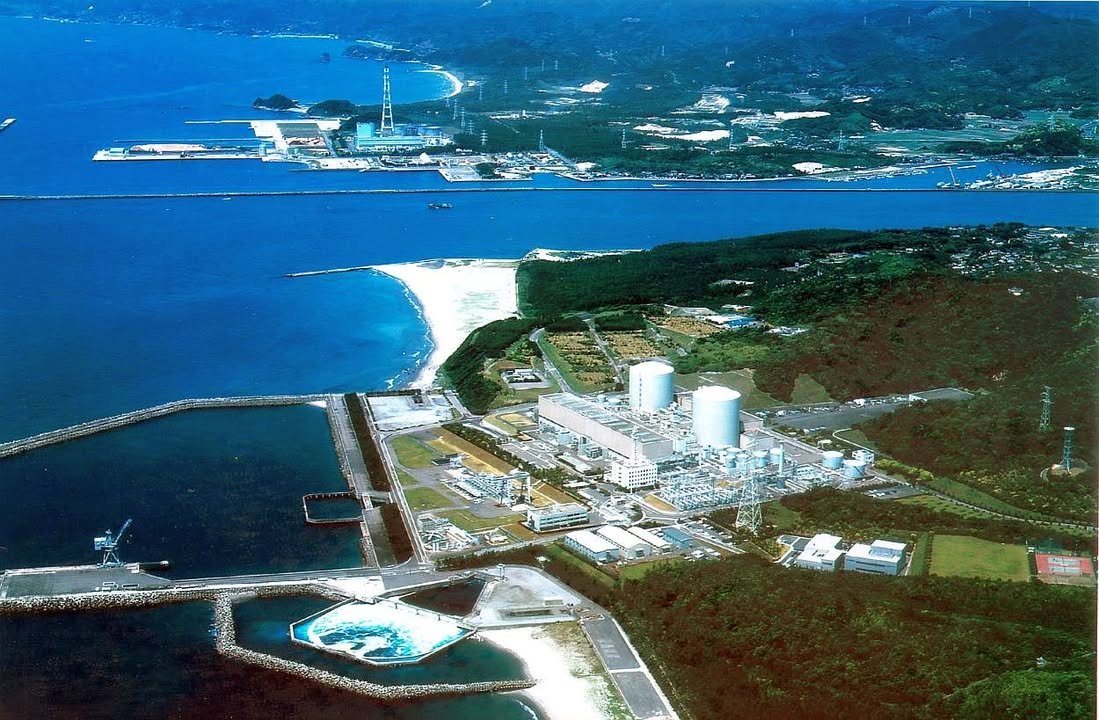
William Kyuden (Kyushu Denryoku, our electricity utility) runs two nuclear power plants (genshiryokuhatsudensho, 原子力発電所) in Kyushu: Genkai (玄海原子力発電所), west of Fukuoka City and closer to Tsushima than to Kumamoto; and Sendai ( 川内原子力発電所), south of Akune in Kagoshima. Their website gives current reactor status: https://www.kyuden.co.jp/nuclear_index.html
Kagoshima is well-known for its unique pronunciation. The further south one travels, the more non-intuitive it becomes, which is why Miyagi Sendai (仙台), the team which won the national baseball championship, makes sense, but all one's training insists that 川内 should be pronounced "Kawachi," as it sensibly is in Kumamoto (different kanji: 河内.)
Kagoshima Sendai (as it is often called for differentiation) has some gorgeous beaches which nobody visits due to its isolation. Some have fantastic rock formations. A road trip is recommended; best would be to bring a tent or ryokan money and make it a two-day trip.
I drove by once and thought I'd take the local road past the nuclear reactor. It is beautiful: Rolling, grassy hills with small, windbeaten trees. It wasn't long before I realized I was being followed. Security is very tight, and I suppose a lone foreigner driving slowly and stopping frequently attracted attention. I was never stopped, though. The area is worth a visit.

2022-08-22 17:50 JST

Kirk here following William's lead by writing about Kumamoto's own yokai, Amabie:
"According to a legend, the mermaid-like yokai emerged from the sea off the Higo domain, now Kumamoto Prefecture, southwestern Japan, in Japan's Edo period and told locals that they should draw a picture of it and show this to others in the event of a plague."
https://www.nippon.com/en/news/yjj2020041300499/
Even though William has written about Amabie several times already (you can find the posts with the page's search function), I didn't take a special interest in the yokai at the time. I'm prompted to post about it today because I just heard an old podcast about yokai that talks about, among other things, how Amabie have become a "thing" since the start of the pandemic. If you like podcasts, check it out:
https://99percentinvisible.org/episode/return-of-the-yokai/

Return of the Yokai - 99% Invisible
One of the cool parts about moving to a new city or a new state or a new country is that you notice all the fascinating things about a place that is just normal for people who have been there for a long time.  When Chris Carlier moved from England to Japan in 2002, there

2022-08-22 07:29 JST

Kirk here with some Kumamon news. I looked but couldn't find the complete list of the new images.
New official images show beloved Japanese mascot Kumamon making the most of the summer - The Mainichi
KUMAMOTO -- The Kumamoto Prefectural Government has unveiled 29 new illustrations and logos featuring the prefecture's rotund bear mascot Kumamon.

2022-08-21 18:37 JST

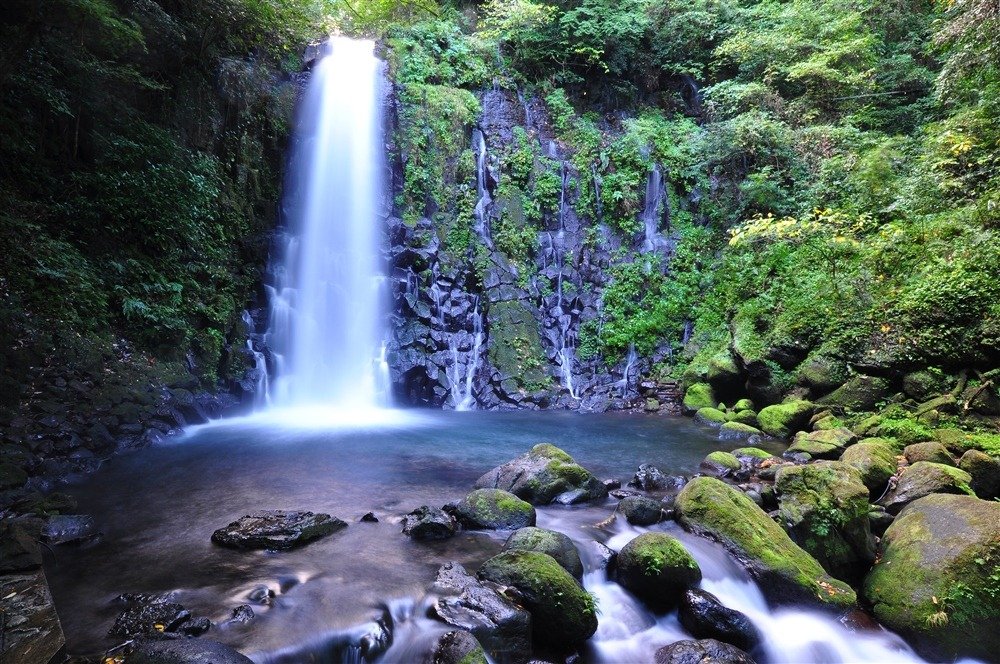
William Shirakawa is quite diverse despite its short length, from its silent birth in the springs of Aso to its broad flow into Ariake Sea. A delightful area many overlook is its passage through Nishihara Mura, where a beautiful waterfall, Shiroito ("White Thread"), cascades 20 meters down volcanic rock hundreds of thousands of years old.
Volcanic columns formed when lava cooled and solidified are apparent. The waterfall has been selected as one of the 100 best waters in Kumamoto Prefecture. Heavily forested, the spot is an oasis from summer heat, is not too far from the city, and embodies the three symbols of Kumamoto: red, from lava; green, from forest; and blue, from water. A pool at the fall's foot allows for a dip, though be considerate of photographers.
NOTE: Douglas Bruce comments below on the course of the river following the falls: it is the "Taki river which flows into the Kiyama river. The Kiyama river becomes the Futa river for a short stretch and then retakes the name of Kiyama river. The Kiyama river flows on into the Kaze river, which passes the southern end of Ezu lake. Finally the Kaze river joins the Midorikawa and then flows into the Ariake sea." Thank you, Douglas.
This useful site contains many photos and videos of the area:
https://nishiharakanko.com/shiraitonotaki/

2022-08-21 13:57 JST

Japan urges its young people to drink more to boost economy
The government's tax agency is encouraging a new generation of alcohol drinkers.

2022-08-20 19:58 JST