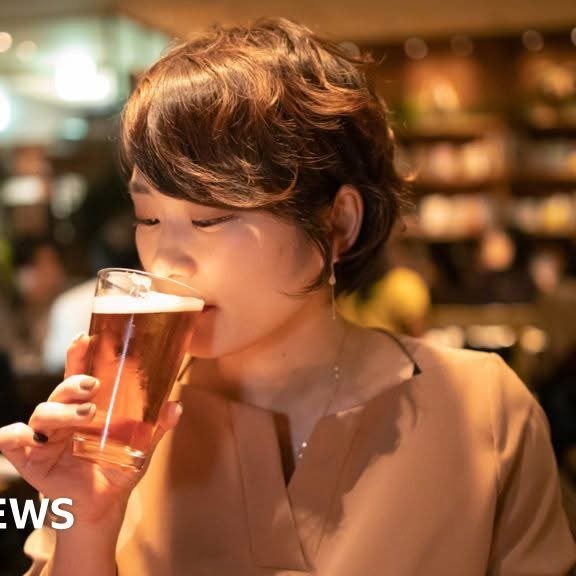
2022-08-20 19:58 JST 2022 Japan urges its young people to drink more to boost economyThe government's tax agency is encouraging a new generation of alcohol drinkers. https://www.bbc.com/news/world-asia-62585809 ↗ View original post on Facebook For a link to the original post on Facebook, open this page on a computer. Reactions: 4 · Shares: 1 ← 2022-08-20 19:48 JST 2022-08-21 13:57 JST → Around this time … 2022-08-22 22:29 JSTKirk here sharing something that is related to Japan's "foreign trainee" issue. It's not about something that happened in Kumamoto but the basic issue of problems with the trainee (jisshuusei; 実習生) program is a topic we've discussed on this page. The article includes a link to a shocking video of highly abusive treatment of a "trainee" from Vietnam that occurred in Okayama. By the way, I've been meaning to post about a seminar I attended on the case Ms. Le Thi Thuy Linh, the Kumamoto resident who is appealing her conviction for "abandoning" her two stillborn babies to Japan's Supreme Court. There's no direct connection to the Okayama case, but it may be another opportunity to observe the extent to which Vietnamese trainees can or cannot get justice in Japan. At any rate, I'll try to post my report about the seminar soon.Visible Minorities: Reforming Japan's Dickensian Foreign Trainee Program - SNA Japan 2022-08-22 17:50 JSTWilliam Kyuden (Kyushu Denryoku, our electricity utility) runs two nuclear power plants (genshiryokuhatsudensho, 原子力発電所) in Kyushu: Genkai (玄海原子力発電所), west of Fukuoka City and closer to Tsushima than to Kumamoto; and Sendai ( 川内原子力発電所), south of Akune in Kagoshima. Their website gives current reactor status: https://www.kyuden.co.jp/nuclear_index.htmlKagoshima is well-known for its unique pronunciation. The further south one travels, the more non-intuitive it becomes, which is why Miyagi Sendai (仙台), the team which won the national baseball championship, makes sense, but all one's training insists that 川内 should be pronounced "Kawachi," as it sensibly is in Kumamoto (different kanji: 河内.) Kagoshima Sendai (as it is often called for differentiation) has some gorgeous beaches which nobody visits due to its isolation. Some have fantastic rock formations. A road trip is recommended; best would be to bring a tent or ryokan money and make it a two-day trip.I drove by once and thought I'd take the local road past the nuclear reactor. It is beautiful: Rolling, grassy hills with small, windbeaten trees. It wasn't long before I realized I was being followed. Security is very tight, and I suppose a lone foreigner driving slowly and stopping frequently attracted attention. I was never stopped, though. The area is worth a visit. 2022-08-22 07:29 JSTKirk here following William's lead by writing about Kumamoto's own yokai, Amabie:"According to a legend, the mermaid-like yokai emerged from the sea off the Higo domain, now Kumamoto Prefecture, southwestern Japan, in Japan's Edo period and told locals that they should draw a picture of it and show this to others in the event of a plague."https://www.nippon.com/en/news/yjj2020041300499/Even though William has written about Amabie several times already (you can find the posts with the page's search function), I didn't take a special interest in the yokai at the time. I'm prompted to post about it today because I just heard an old podcast about yokai that talks about, among other things, how Amabie have become a "thing" since the start of the pandemic. If you like podcasts, check it out:https://99percentinvisible.org/episode/return-of-the-yokai/Return of the Yokai - 99% Invisible 2022-08-21 18:37 JSTKirk here with some Kumamon news. I looked but couldn't find the complete list of the new images.New official images show beloved Japanese mascot Kumamon making the most of the summer - The Mainichi 2022-08-21 13:57 JSTWilliam Shirakawa is quite diverse despite its short length, from its silent birth in the springs of Aso to its broad flow into Ariake Sea. A delightful area many overlook is its passage through Nishihara Mura, where a beautiful waterfall, Shiroito ("White Thread"), cascades 20 meters down volcanic rock hundreds of thousands of years old.Volcanic columns formed when lava cooled and solidified are apparent. The waterfall has been selected as one of the 100 best waters in Kumamoto Prefecture. Heavily forested, the spot is an oasis from summer heat, is not too far from the city, and embodies the three symbols of Kumamoto: red, from lava; green, from forest; and blue, from water. A pool at the fall's foot allows for a dip, though be considerate of photographers.NOTE: Douglas Bruce comments below on the course of the river following the falls: it is the "Taki river which flows into the Kiyama river. The Kiyama river becomes the Futa river for a short stretch and then retakes the name of Kiyama river. The Kiyama river flows on into the Kaze river, which passes the southern end of Ezu lake. Finally the Kaze river joins the Midorikawa and then flows into the Ariake sea." Thank you, Douglas.This useful site contains many photos and videos of the area: https://nishiharakanko.com/shiraitonotaki/ 2022-08-20 19:58 JSTJapan urges its young people to drink more to boost economy (this post) 2022-08-20 19:48 JSTWilliam The crayfish might hold a record for record number of names (crawfish, craydids, crawdaddies, crawdads, freshwater lobsters, mountain lobsters, rock lobsters, mudbugs, baybugs, yabbies). I was fortunate to have an elementary school friend whose mother was Cajun - straight from Louisiana! - and the crawdads we caught in the creek she put into a tank for a few days, feeding them with cornstarch to clean out their inners, and then: Oh, my!The species is known in Japanese as "zarigani." I asked my wife why, and she didn't know; my etymological dictionaries provided no help. Perhaps "zari" is related to "jari," so "gravel crab." While Japan has a few native species living in Tohoku, all those in Kumamoto are descendants of those imported from America in the 1930s in what turned out to be a misguided effort to provide income for farmers: though most locals love ocean crustaceans, they recoil at crayfish as they are associated with water filth, which is not true: crayfish only thrive in fresh water and help maintain its state by consuming decomposing matter. They abound in Lake Ezu, where they're caught by children and either tortured on site or taken home or to school science class, but never eaten. Photo courtesy of Kumamoto YMCA.They are delicious. If you go hunting (most bodies of water with mud banks should harbor them) and get lucky, here is a good recipe: https://louisianafishfry.com/recipes/official-crawfish-boil-recipe/ 2022-08-20 12:36 JSTKirk here with a question about the future of this page. Recently, I've enjoyed posts on the "Engrish in Japan" group. Anyone can publish posts to this group but they are all moderated. I recently tried to publish a photo I had taken of some rather strange English I saw in the Asahi Shimbun but it wasn't accepted. That's OK because my post would have been a bit different from typical posts in that group and I think the editots just want to keep a tight focus. But, thinking about "Engrish in Japan" made me consider whether this page should be more like that group.Things have been pretty peaceful here recently so part of me also thinks that "if it ain't broke, don't fix it" may be the best policy. Still, I wonder if any of you have any thoughts or preferences one way or the other.https://www.facebook.com/groups/EngrishInJapan 2022-08-20 10:46 JSTKirk here with some information about free COVID-19 antigen test kits available in Kumamoto.The situation is pretty confusing because Kumamoto City and Kumamoto Prefecture have separate programs with completely different rules. Moreover, they don't refer to each other on their web pages so I had to do some detective work to figure out that there are actually two completely different programs. In regard to the city's program here's a page in English (machine translation):https://www.city.kumamoto.jp.e.fm.hp.transer.com/hpKiji/pub/detail.aspx?c_id=5&id=43827&class_set_id=2&class_id=128The original Japanese is here:https://www.city.kumamoto.jp/hpKiji/pub/detail.aspx?c_id=5&id=43827&class_set_id=2&class_id=128For this one, you need to be between 16 and 39 years of age and have symptoms. Here's a translation of the prefecture's page:https://www.pref.kumamoto.jp.e.qp.hp.transer.com/soshiki/30/120272.htmlAnd the original Japanese:https://www.pref.kumamoto.jp/soshiki/30/120272.htmlFor this one, you must NOT have symptoms (go figure) but there's basically no age limit.Both of the English translations are pretty awful so I'd recommend going to the Japanese and manually checking the content with DeepL:https://www.deepl.com/translatorI think both the city and the prefecture are pretty darn lame when it comes to promoting new programs in a way that people can understand. I saw a TV segment on RKK about few people taking advantage of the city's new program:https://newsdig.tbs.co.jp/articles/rkk/129420This made me hesitate to even post about this (the linguist hurdle compound confusion and difficulty) but I thought some people might want a heads up about the new system.https://www.japantimes.co.jp/news/2022/08/05/national/antigen-test-kits-explainer/How to self-test for COVID in Japan, and which antigen kits to use 2022-08-19 12:11 JSTKirk with an inquiry about an ENT (ear, nose and throat) specialist (otorhinolaryngologist or 耳鼻科 [jibika] in Japanese). There seems to be an ENT specialist in Kumamoto who studied at the University of Michigan and speaks English quite well. Does anyone know who that might be?P.S. The photo is just a generic jibika image from the web -- this is not the guy. 2022-08-18 23:08 JST(Douglas) It is interesting to see the latest headlines from Japan being shown on the BBC news.I guess some of you will be taking part in the campaign! 😃Japan urges its young people to drink more to boost economy