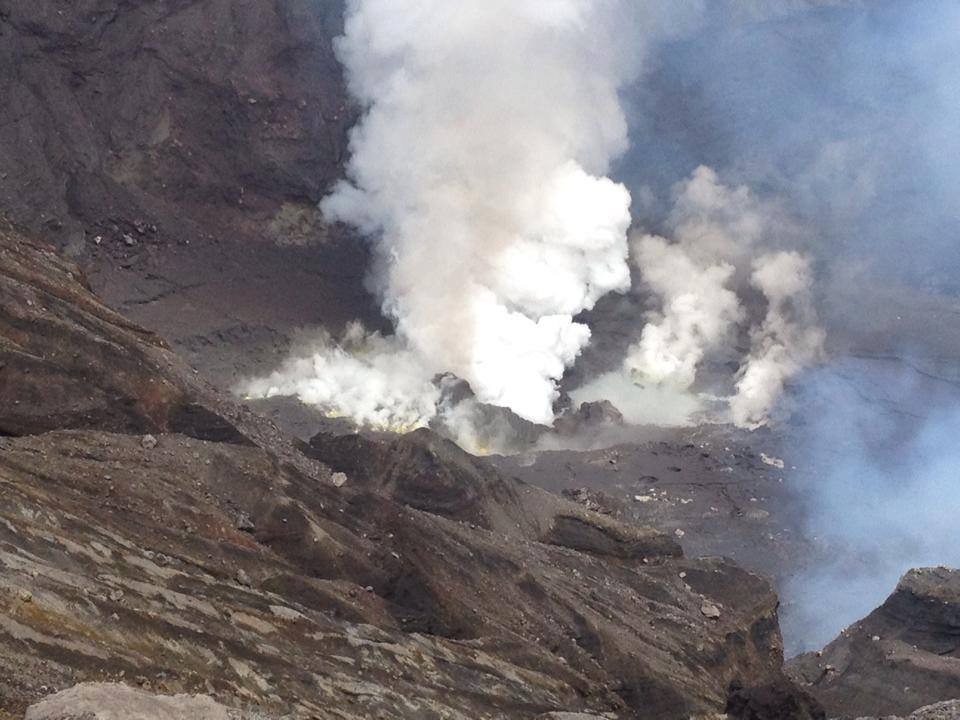
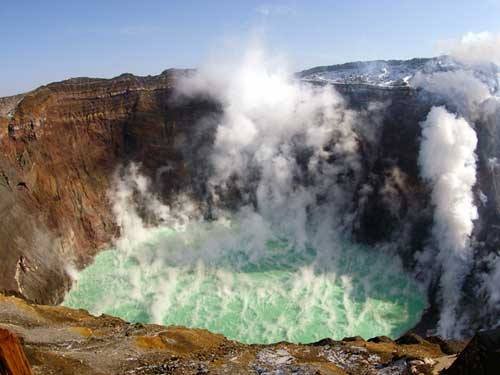
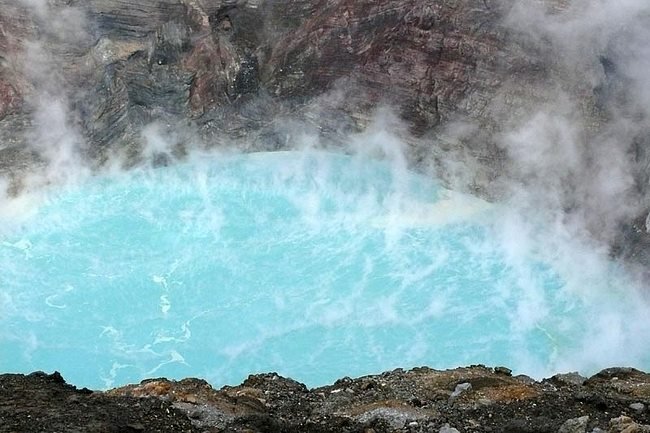
I enjoyed the view of Mt. Aso's crater yesterday. (The photo is one taken by another participant in a group trip -- I hope they don't mind my "borrowing" it.) The pool at the bottom of the crater is almost gone. The other two photos are taken from the following web page and show what the pool can look like when the there's more water in the crater:
http://andromeda.phpapps.jp/archives/1261
I learned later from a curator at the nearby Volcano Museum that the pool dries up like this when the volcano is particularly active. As you can see, a lot of steam is being released. I was also told that the reason we were able to look down into the crater today is that wind happened to be blowing in the right direction. If the winds had been blowing the steam toward the viewing area, it would have been closed off.
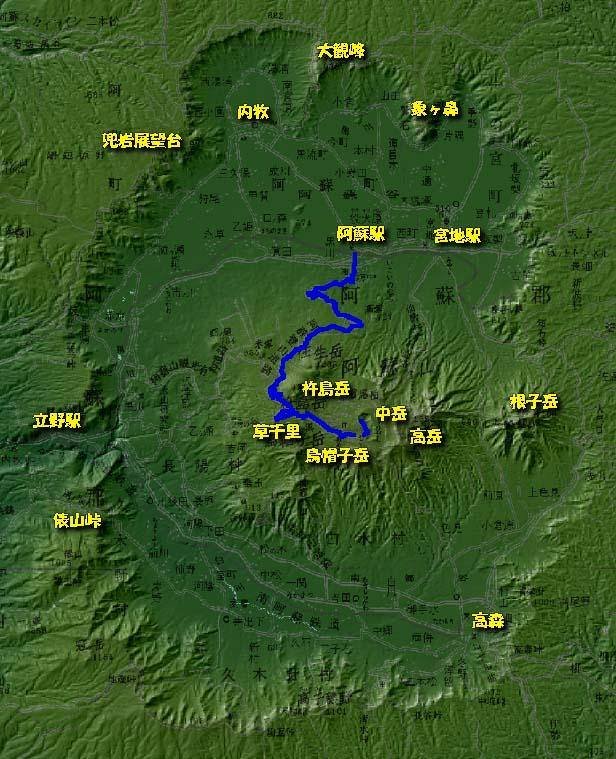
By the way, you may sometimes see statements about the Aso Caldera being the largest in the world. This is not correct, though it is among the largest. The green map shows the outline on the caldera, which is far, far larger than the volcano itself. Here's an accurate explanation:
"The Aso caldera, which extends 17 kilometers from east to west and 25 kilometers from north to south, is a non-explosive caldera. It is one of the largest calderas in the world, roughly equal in size to the Aira caldera. "
http://www.aso.ne.jp/~volcano/eng/html/history.html
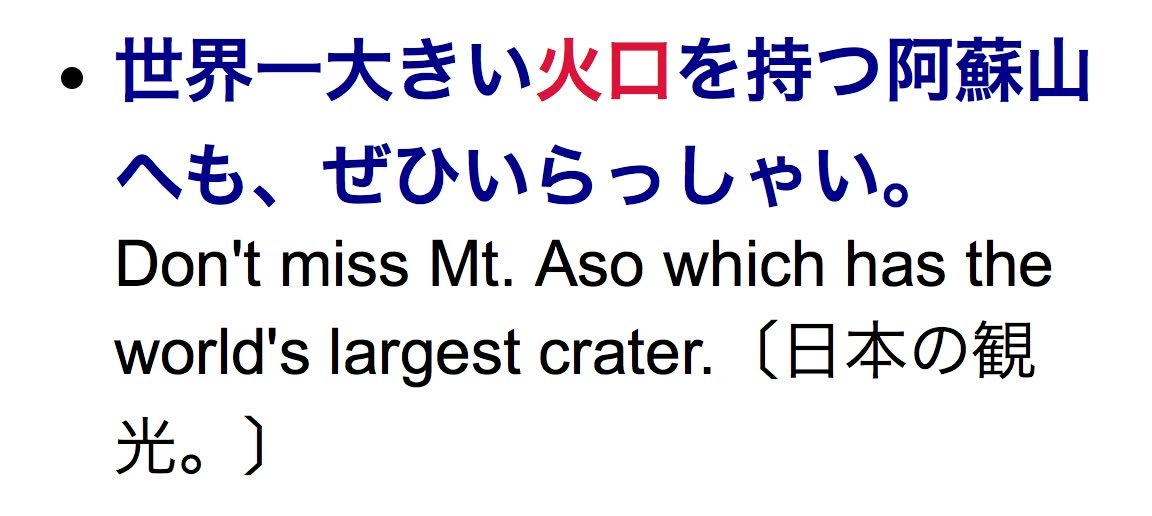
Unfortunately, sometimes the nuance of "one of the largest in the world" (最大級) is lost and the caldera (or crater) is called "the largest in the world" (世界最大). That's the case in this entry from Eijro, an otherwise very useful Japanese - English dictionary on the web: