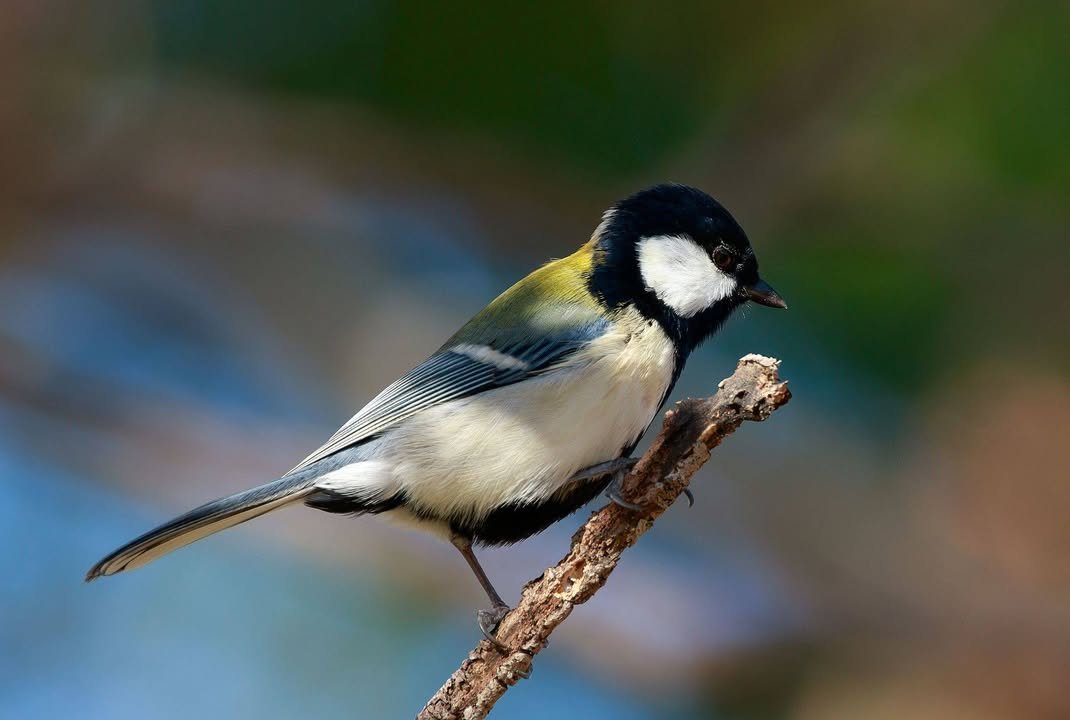
You'll probably see dense groups of small birds flitting about and twitting excitedly like children who've consumed way too much sugar. Those would be the Japanese tit (hee hee) - shijyuukara
(シジュウカラ、四十雀). The name is interesting: カラ(雀) is an alternative pronunciation of suzume - sparrow - and シジュウ is an ateji (当て字) - kanji used as a phonetic symbol rather than for its meaning; in this case, it approximates the bird's call.
The Japanese tit (hee hee) generally spends its summers up in the mountains but retreats to the plains during the winter. The species made headlines in 2016 when experimental evidence was reported indicating compositional syntax in their calls, marking the first evidence for that type of syntax in nonhuman animals. It is also the Kumamoto prefectural bird.
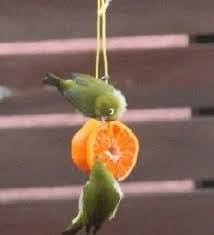
Many locals feed the Japanese tit (hee hee) by hanging strings of mikan outside their window. You will find yourself popular with the Japanese tits (hee hee) if you do so. - William
Note: Apologies for being so juvenile. :) If you teach English, though, introducing the topic of the Japanese tit (hee hee) might be fun.