For the geologically inclined, Kagoshima is Disneyland. It's best known for Sakurajima, a volcano which formed on the edge of the giant caldera today known as Kinkou Bay (錦江湾 - and if you haven't studied this, you should). Times are, when a volcano chamber collapses, enough debris clog the chamber to cause subsequent eruptions to occur along its edges. This did not happen with Aso, where activity is still concentrated amongst its central vent, but it is the cause of Sakurajima's existence.
An equally large caldera is far less known, and that is because it's under the sea so is less apparent unless you're aquatic. Like Sakurajima, the main vent has been blocked, and this has resulted in peripheral eruptions which have created many islands, the most famous of which is Yakushima (addendum¹: as Evan James Gowan notes below, Yakushima is a granitic batholith, not a volcano). It is called the Kikai caldera (鬼界カルデラ). Just next to Yakushima is a tongue-twister named island, Kuchinoerabujima (口永良部島), which was created by being a peripheral vent of the Kikai caldera.
Apparently, the volcano has started rumbling again, and the few hundred residents of this island are being evacuated. This is simply standard procedure. However, each caldera exists where a mountain once stood, and each mountain was rather abruptly shoved aside, resulting in our present, lovingly mountainous Kumamoto - but we'd rather not experience that process in our lifetimes (word as it that, after the eruptions of the Aira and Kikai volcanoes, life took about 13,000 years to reappear in Kyushu, way past my bedtime). (Addendum² - Anett Iwamoto pointed out the extra zero in my note about the average time life took to return to Kyushu following these mega eruptions - it should read 1,300 years. From what I've read, it was first regenerated by Miscanthus sinensis, or Asian pampas grass [in Japanese, 「ススキ」], seeds blowing over from the Chinese mainland.)
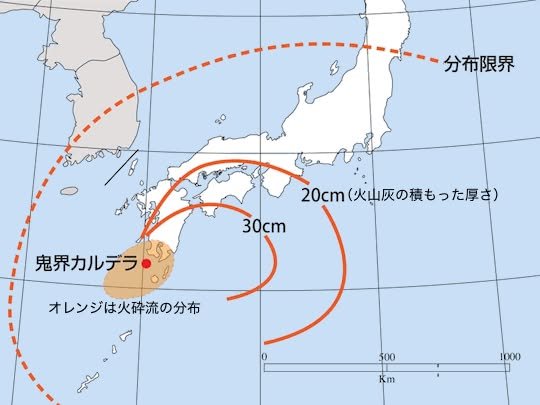
The image below is the extent of the Kikai caldera and possible ashfall in the extent of a worse-case eruption, which won't happen in our lifetimes, probably, so don't worry about it. Better use of time would be to learn how to pronounce Kuchinoerabujima and to think of its inhabitants' situation. - William