The Ginkgo biloba, known in Japanese as the 「銀杏」- pronounced as either "ginnan" or "ginkyou" (the latter from which its English name is derived and known scientifically as the イチョウ - ichyuu) deserves some attention. It's one of the oldest tree species, dating back to the dinosaur days (funny to think that dinosaurs grazed on their leaves), and dominated until more efficient breeds evolved. Its name comes from its native China via Japanese and means "silver nuts" (which, coincidentally, is my wife's nickname for me). At this time of year, you might see locals foraging for the nuts, which they steam before consuming.
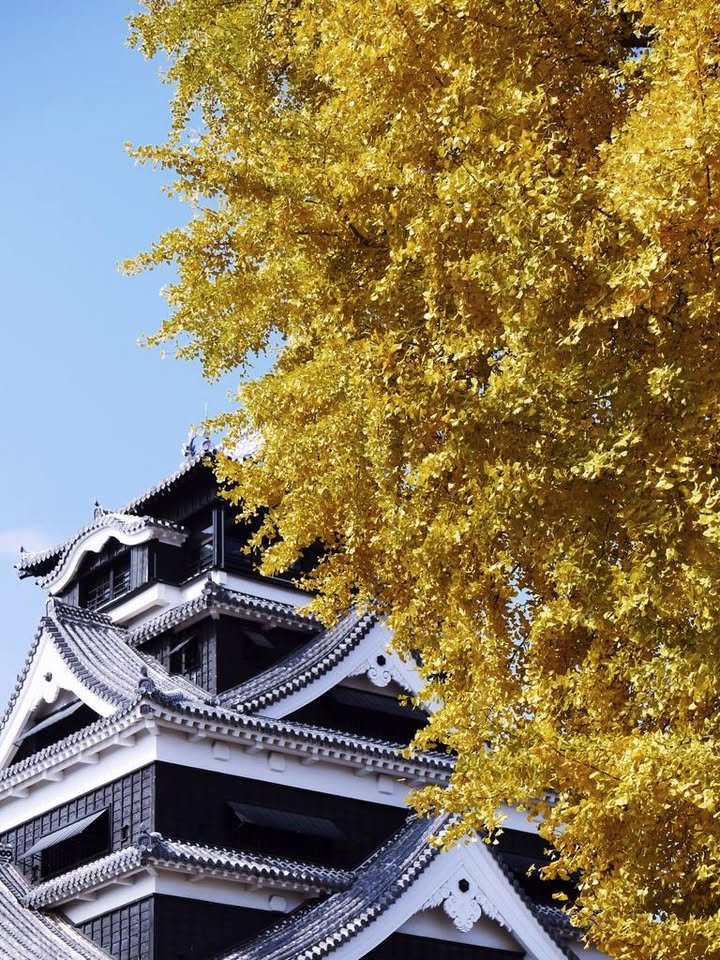
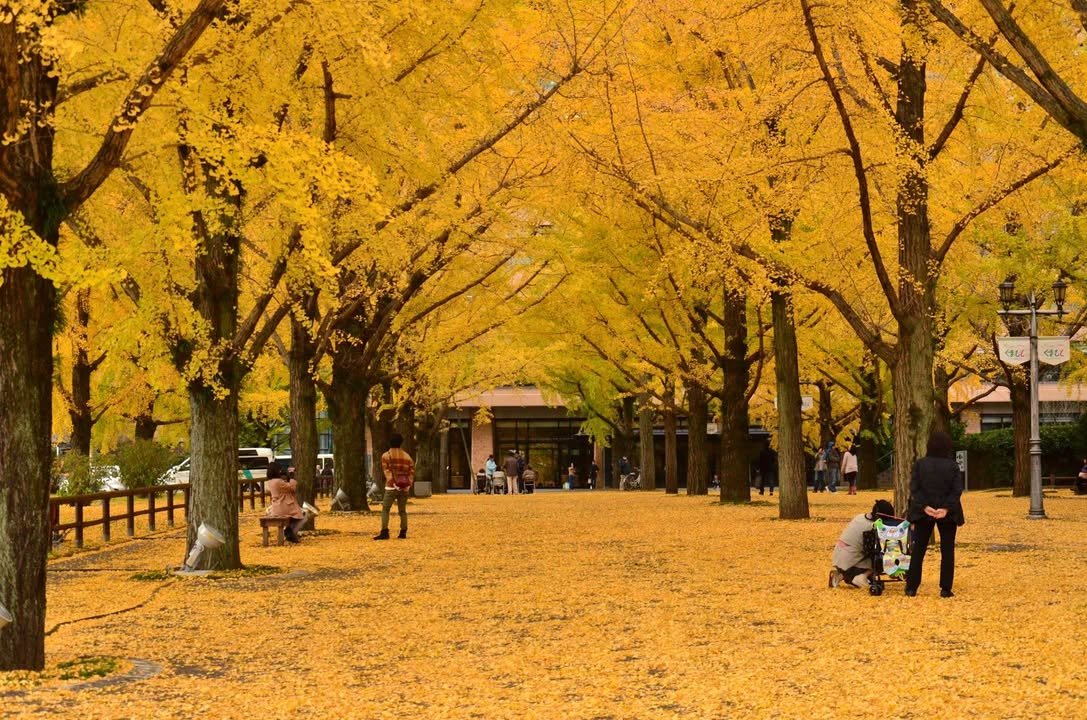
The tree is a symbol of Kumamoto. Our castle was known as "Ginkyou Jyo" 「銀杏城」due to the large number of trees planted there both as horse fodder and firewood. Many remain; a particularly famous example is one in Ichi-no-Maru, just next to the main keep (see below), which remains inaccessible during reconstruction. Another splendid spot to view their leaves is in front of Prefectural Hall in Kengun (also pictured below). Or you can just walk down the street and remember what you're seeing is what the dinosaurs saw (except more traffic). - William