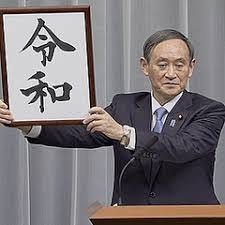
Gengou (元号) can be translated as "era name." In advance of the retirement of the Heisei Emperor at April's end, the new gengou has been announced: Reiwa (令和). Apparently, it references the 32nd chapter of the Man'yōshū; an 8th century anthology of Japanese poetry which might be translated as Collection of Ten Thousand Leaves (万葉集). The meaning is a reference to plum blossoms - that is, the start. Here is the relevant passage:
師の老の宅に萃まりて、宴会を申く。時に、初春の令月にして、気淑く風和ぎ、梅は鏡前の粉を披き、蘭は珮後の香を薫す
A more modern rendition would be:
大伴旅人の邸宅に集まりて、宴会を開く。時に、初春の何事をするにもめでたい月が出ていて、空気はよく風は爽やかに、梅は鏡の前の美女が装う白粉のように咲き、蘭は身を飾った香のように薫っている。
which could be translated as:
We gather at the residence of Otomo no Tabito (665 - September 4, 731, a poet of the early Nara period) and hold a banquet. Sometimes in the early spring sky, the moon appears to accomplish its tasks, and the atmosphere is refreshed by plum blossoms like the white powder applied by a beautiful girl in front of a mirror, and the orchids burn like incense.
Be prepared for a surge in popularity of plum blossoms. I've always preferred them to cherries. - William