William The crayfish might hold a record for record number of names (crawfish, craydids, crawdaddies, crawdads, freshwater lobsters, mountain lobsters, rock lobsters, mudbugs, baybugs, yabbies). I was fortunate to have an elementary school friend whose mother was Cajun - straight from Louisiana! - and the crawdads we caught in the creek she put into a tank for a few days, feeding them with cornstarch to clean out their inners, and then: Oh, my!
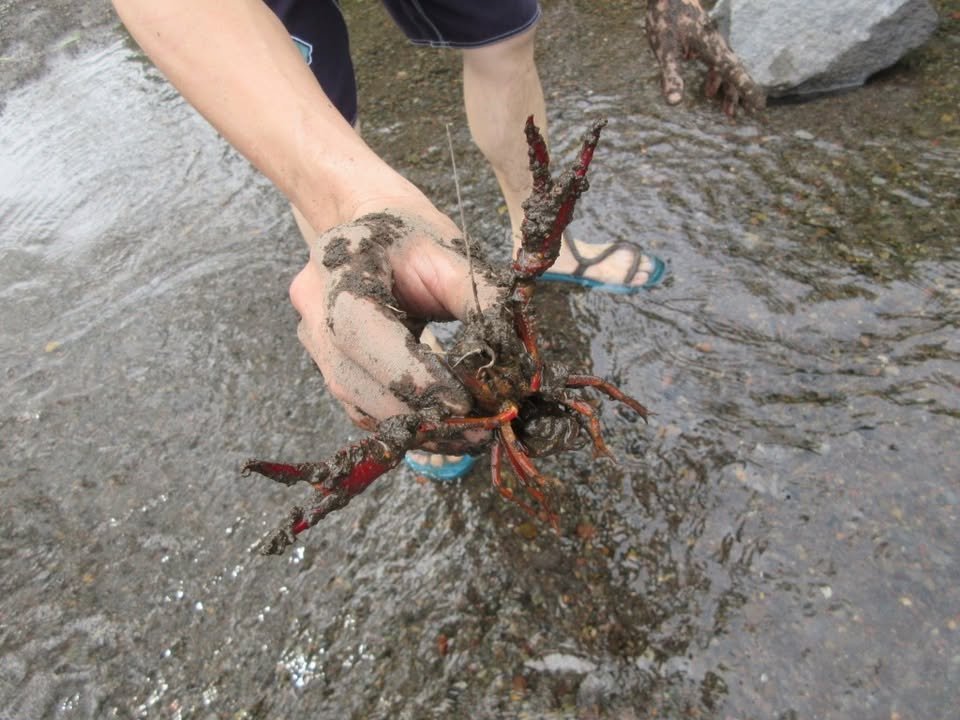
The species is known in Japanese as "zarigani." I asked my wife why, and she didn't know; my etymological dictionaries provided no help. Perhaps "zari" is related to "jari," so "gravel crab." While Japan has a few native species living in Tohoku, all those in Kumamoto are descendants of those imported from America in the 1930s in what turned out to be a misguided effort to provide income for farmers: though most locals love ocean crustaceans, they recoil at crayfish as they are associated with water filth, which is not true: crayfish only thrive in fresh water and help maintain its state by consuming decomposing matter.
They abound in Lake Ezu, where they're caught by children and either tortured on site or taken home or to school science class, but never eaten. Photo courtesy of Kumamoto YMCA.
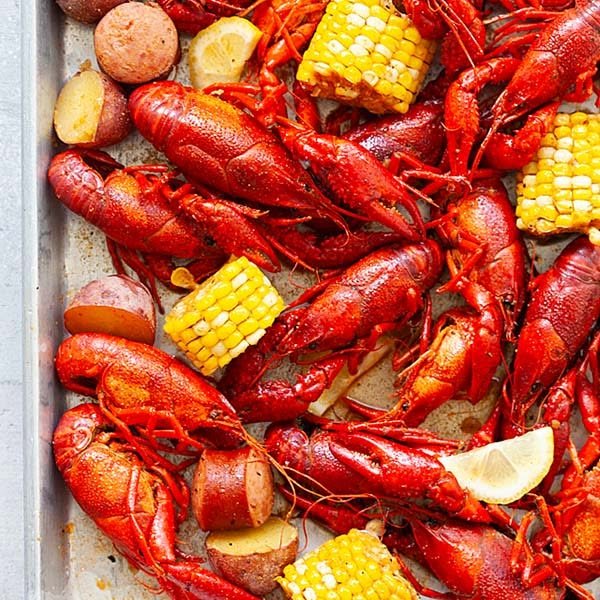
They are delicious. If you go hunting (most bodies of water with mud banks should harbor them) and get lucky, here is a good recipe: https://louisianafishfry.com/recipes/official-crawfish-boil-recipe/