William Shimabara (島原), on the east coast of the Nagasaki peninsula and just across Ariake Sea from Kumamoto, lies in about as precarious a position imaginable: it was sandwiched not only between warring clans during the Edo period but between Mt Fugen and the Ariake Sea, which produced one of the deadliest tsunami in human history: the 島原大変肥後迷惑 (Shimabara Taihen Higo Meiwaku), which can be (very) loosly translated as "Disaster of a day for Shimabara, bummer for Kumamoto." Read about it here: https://tinyurl.com/27wnx68a
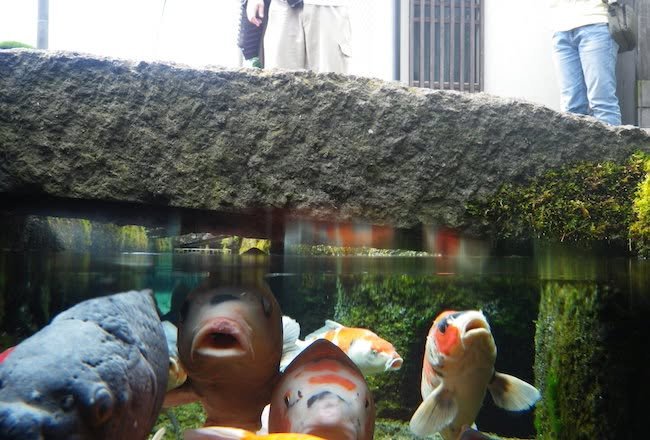
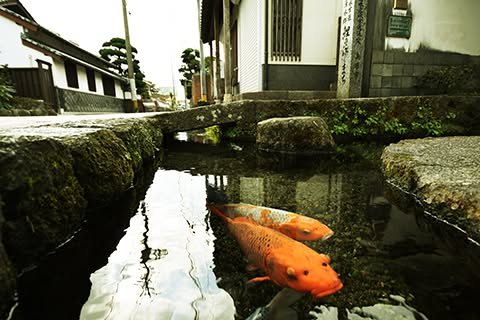
Volcanoes, being mostly granite, don't absorb much water, but their weight often results in springs around their edges. Shimabara abounds in springs. The samurai who lived there in what is called a "bukeyashiki" (samurai mansion, 武家屋敷) relied on the water, channeled on both sides of the lanes, for both living purposes and as a layer of defense for their houses. Many of these survive in Shimabara and are famous for their koi (bring fish pellets).
Everything is walking distance if you have enough time. Take an early ferry and spend a gorgeous autumn day absorbing the beautiful scenery and unparalleled history; skip the unimpressive castle. Notice that the stone in the two photos below is volcanic tuff, created from solidified volcanic ash.
Shimabara ferry website: https://www.kyusho-ferry.co.jp/world/index_en.html
Google "島原鯉" for some amazing images - and please send us those that you've taken yourself for posting.