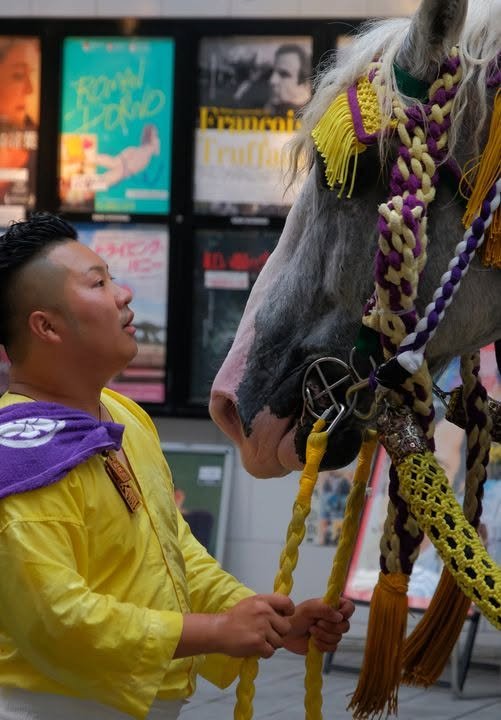
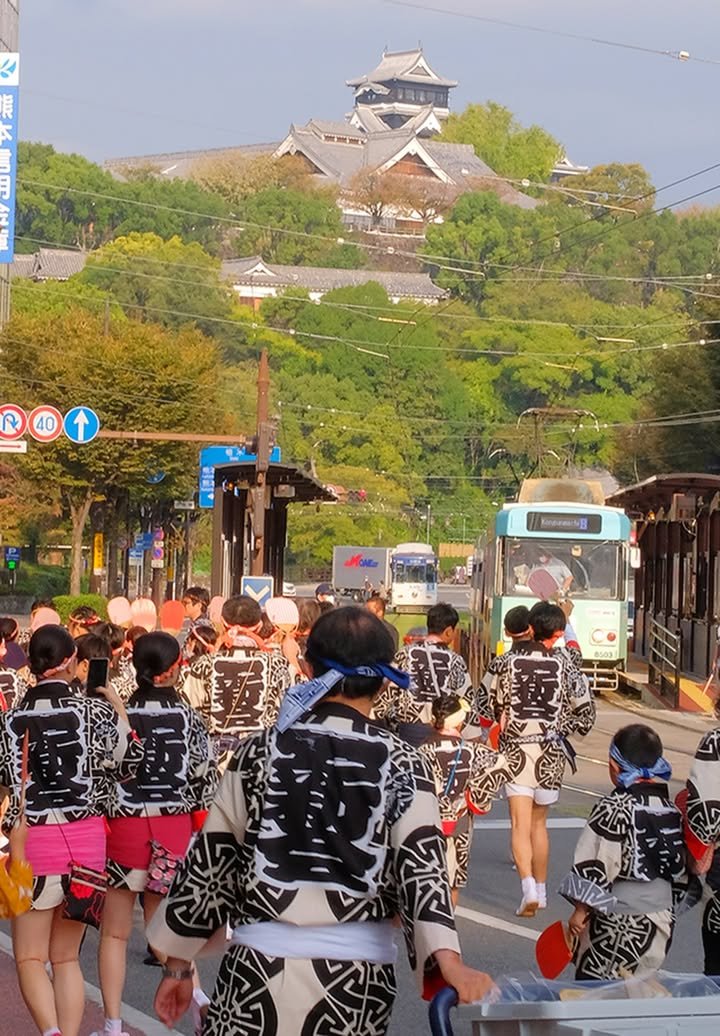
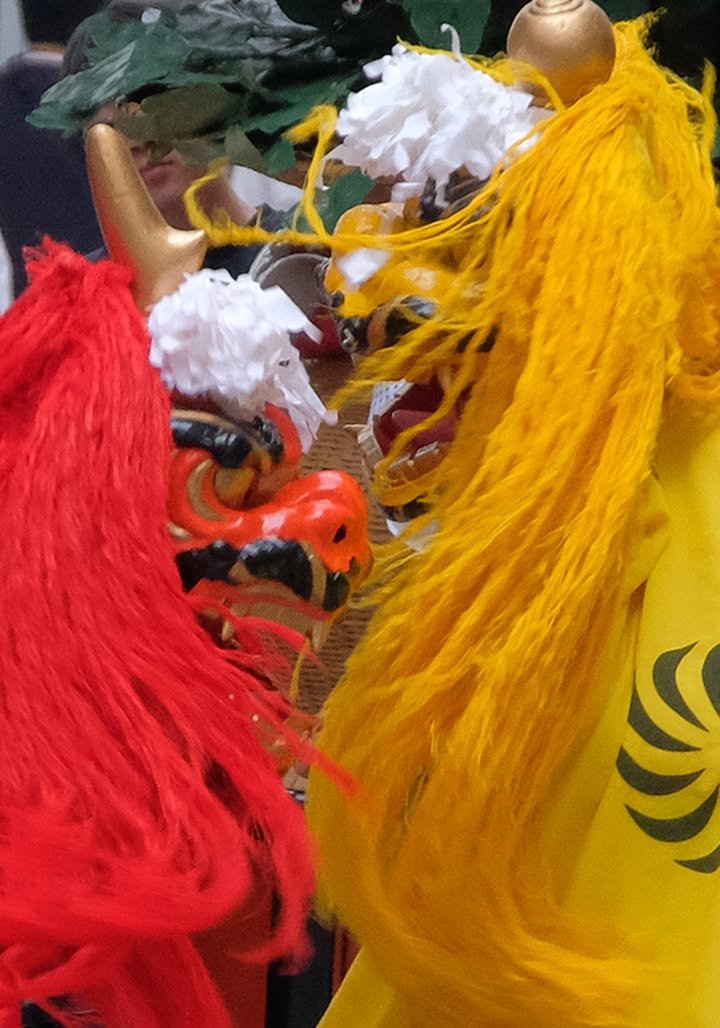
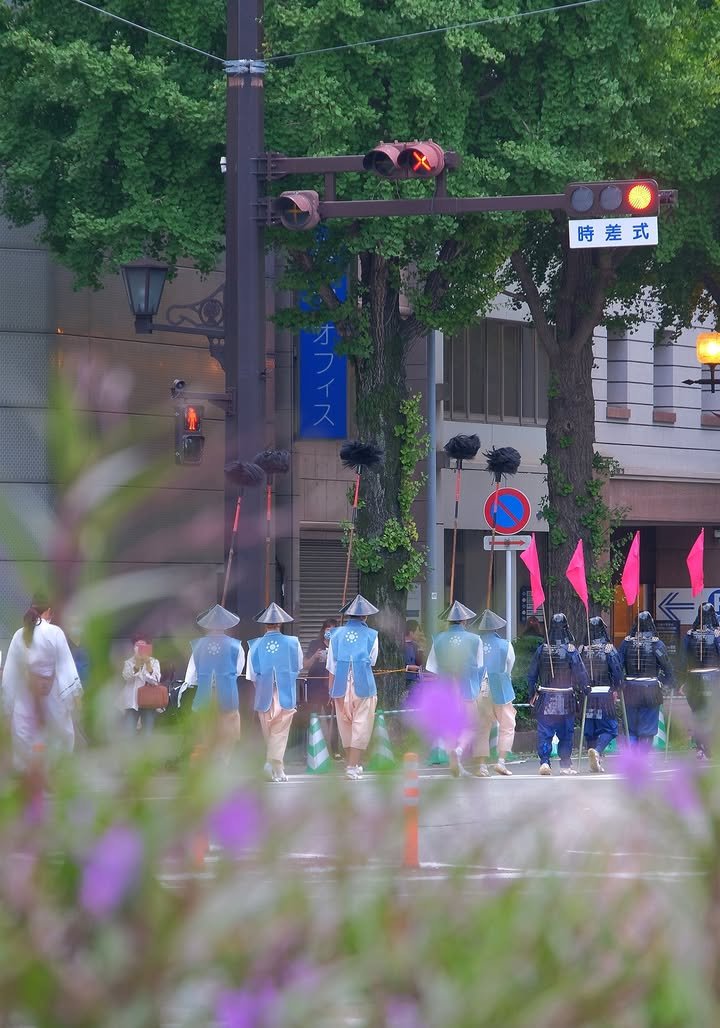
William Every Japanese city worth its salt has a festival. In Kumamoto, it is the Fujisaki Hachimangu Shuki Reitaisai (Autumn Festival https://fujisakigu.or.jp/reisai/index.html), or as we call it, the "horsey festival." The final day of the three-day festival is when the mikoshi (神輿, portable shrines) are trundled through the streets, allowing the gods enshrined within to bestow benevolence. The mikoshi are preceded by zuibyo (随兵, warrior entourage) and riderless horses intended to seat the gods; they are followed by some 60 groups of raucous celebrants chanting "Dokai, dokai" which, in Kumamoto dialect (higoben, 肥後弁), means "'Sup?" while manhandling decorated horses called kazariuma (飾り馬).
The festival, according to the shrine, originated to celebrate the safe return of Kato Kiyomasa from the Kansai region; Kato is said to have headed the zuibyo himself. However, an alternative (and more likely) theory is that it celebrates Kato's return from the Hamgyong campaign, his invasion of the northeastern Korean province of Hamgyeong during the Japanese invasions of Korea (1592–1598). https://en.wikipedia.org/wiki/Hamgyong_campaign This would explain why the festival was once known as "Boshita Matsuri" and the participants chanted, "Boshita! Boshita! Hora boshita!" ([We] destroyed! Destroyed! Completely destroyed!") Obviously, this was not an image an increasingly international Kumamoto wanted to convey, so in 1989, the cry "Boshita!" was replaced with "Dokai!" Despite this, many older people (like myself) still refer to the festival as "Boshita." Concerns have also been raised regarding animal cruelty. A rather exhaustive description is here: https://tinyurl.com/2fthehy6
Our friend Liz Suenaga, a very talented photographer, long-term resident, and Kumamoto-I editor, has provided these wonderful photographs. Liz and her son run an excellent photography studio near Fujisaki Shrine. If you ever desire a portrait or baby photo, this is the place to go (Liz is bilingual): https://www.p-suenaga.jp/