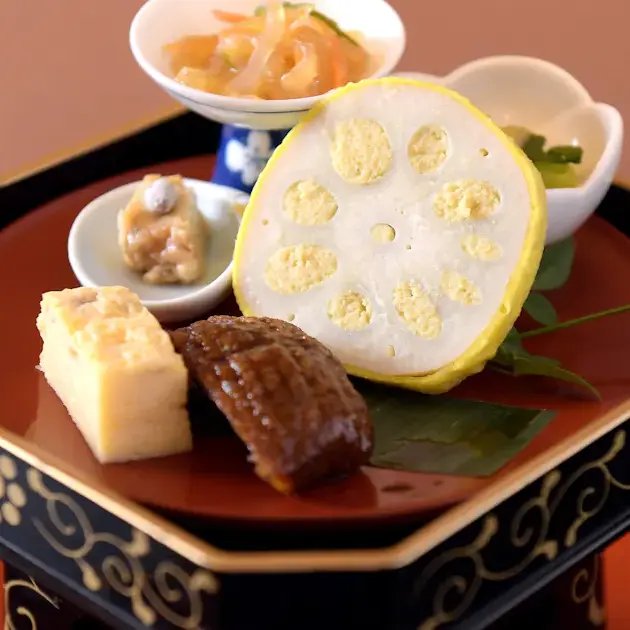
Kirk here. This article says that "Japan, like France, is known as a culinary country. But even within Japan, Kumamoto is definitely a foodie’s city." I would agree with that. Many friends who have come to visit me in Kumamoto have been impressed with the quality of the cuisine.
This article is pretty short and so only provides a small sample of information about food here in Kumamoto. Still, I think foodies out there should want to give it a quick read.
The article mentions the term "wasamon" -- lover of whatever is new. I'd like to provide a little Japanese lesson on the term for any of you who might be interested.
Etymologically, the word is made up of two parts: "wasa" and "mon." The second part, "mon" is the same as the "mon" in "Kumamon." In standard Japanese it would be "mono" (者) which means person. So, for example, "young people," which is "wakamono" (若者) in standard Japanese, is "wakamon" in Kumamoto dialect.
The first part, "wasa" stems from "wase" (早生 or 早稲) in standard Japanese. The basic meaning is "develping early" (早く成熟する). It's not as common in modern Japanese as is "mono" (者) but it's in the name of Waseda (早稲田), a famous university in Tokyo. The university was build in Waseda, a place that got its name because rice was planted and harvested earlier there than in other regions. If you're talking about rice, "wase" is written 早稲 but if you're talking about early development in general, 早生 is correct. So, Japanese discussions of the origin and meaning of the term "wasamon" usually show 早生者 as the characters, but in practice, the word is written in hiragana (わさもん).
Websites referred to in writing this post:
https://hougen-matome.org/wasamon/
https://www.jk-tokyo.tv/zatsugaku/172/
https://dictionary.goo.ne.jp/word/%E6%97%A9%E7%A8%B2_%28%E3%82%8F%E3%81%9B%29/
https://www.reuters.com/plus/kumamoto-japans-culinary-castle-city