William The Ginkgo biloba is an example of mistransliteration done when people unfamiliar with Japanese wrote stuff down in soggy notebooks before the Hepburn romanization system was introduced. According to Wikipedia, the tree has been romanized as "ginkjo" or "ginkio" until "ginkgo" was settled on. As the tree originated in China, Japan, too, flirted with a few names such as 公孫樹 and 鴨脚樹 (you can read a fascinating history here https://domani.shogakukan.co.jp/755350 or here https://tinyurl.com/yc5xxp5p ) before finally settling on 銀杏 (Ichō - though some still pronounce the same kanji "ginnan" ギンナン). Ginnan also refers to its fruit, which is "edible" if prepared sufficiently to remove toxins; failure to do so could be fatal. It is one of the oldest extant tree species in the world - literally, the dinosaurs ate it - so a bit of awe is in order.
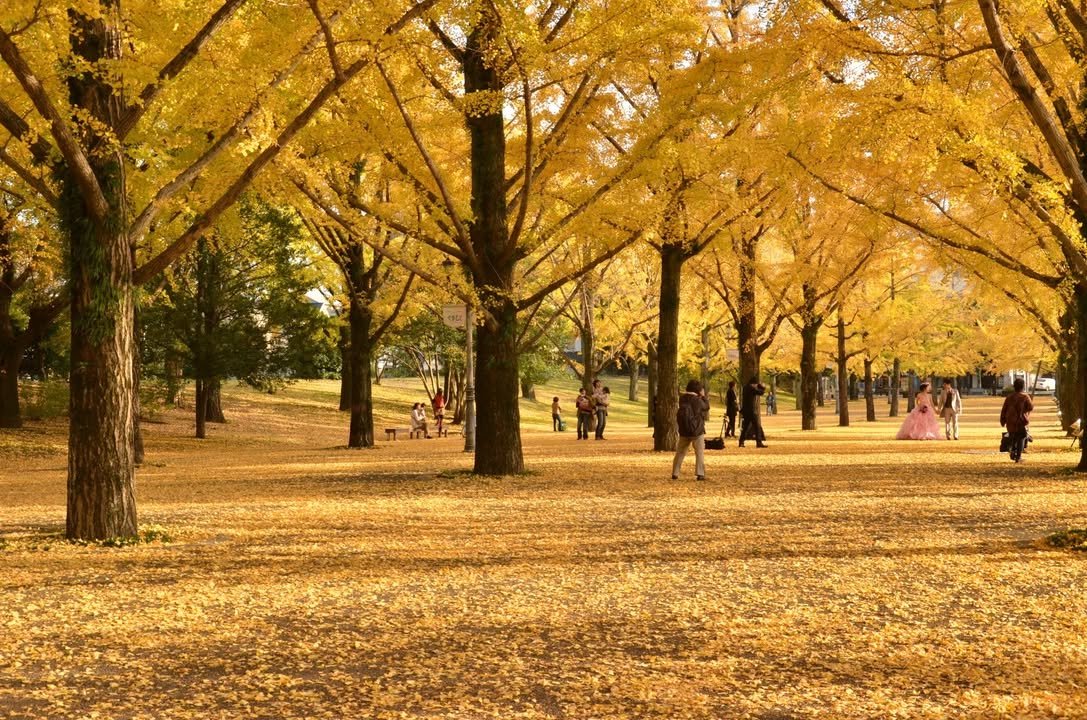
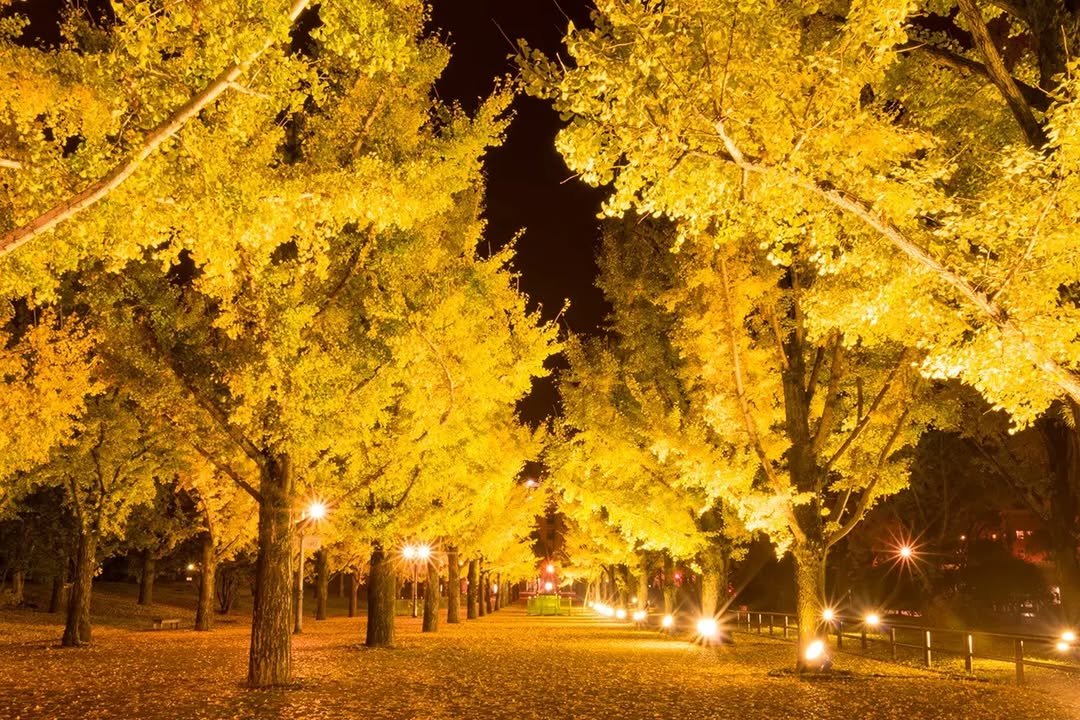
Kato Kiyomasa planted so many ginkos within the castle precincts for use as horse fodder and fuel in case of seige that the castle became known as "Ichō-jō" (イチョウ城) or "Ginnan-jō" https://www.nishinippon.co.jp/item/n/564179/ ) Sadly, most gingko within the castle are gone. However, a wonderful place to see them in their autumn splendor is in front of Prefectural Hall. There, 54 ginkgo trees, symbolizing the 540,000 koku held by Higo (a unit of rice production used in the Edo era, 肥後54万石), will be illuminated until the end of the month.
By day or night, it is an amazing sight, and the fallen leaves take on a pleasant acrid smell as autumn deepens. (Photos nabbed from the web.)
https://kumanichi.com/event/1197070
📅 Event details
- Event:
- 銀杏のライトアップ
- Date:
- 2023-11-05 – 2023-11-30
- Location:
- 県庁前