Kirk here. Tomorrow is "Labor Thanksgiving Day" (勤労感謝の日; kinrou kansha no hi)in Japan and "Thanksgiving Day" in the U.S. This coincidence made me wonder if it had something to do with the U.S. occupation of Japan and the imposition of American sensibilities on the country. I Googled the topic and found that the answer is "well, yes, in a way, but it wasn't just a matter of importing the U.S. holiday."
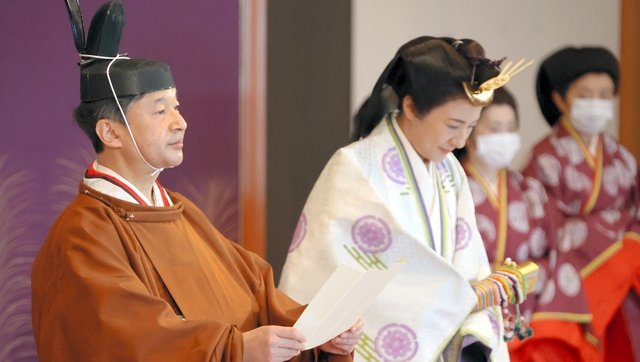
The Japanese Wikipedia page on the current thanksgiving holiday indicates that giving the Japanese people a holiday akin to the American one was part of the story but most of the web pages I looked at indicate that getting rid of another holiday with strong associations with the Emperor and Shinto was an even bigger motivation. That holiday was the Niiname-sai (新嘗祭, also read Shinjō-sai and Niiname-no-Matsuri). Wikipedia explains that the "ritual is celebrated by the Emperor of Japan, who thanks the Shinto deities for a prosperous year and prays for a fruitful new year." (It's no longer a national holiday but it is still celebrated by the emperor, hence the picture of the current emperor performing the ceremony.) And, since the Niiname-sai is also about giving thanks, a "thanksgiving" holiday made a good replacement. It's a bit like the Catholic church repackaging "pagan" holidays for converted populations.
The shift to the current holiday occurred in 1948.
Picture source:
https://www.asahi.com/articles/ASNCS5HNQNCNUTIL00T.html
By the way, I was a little surprised by the name of the old festival, "Niiname-sai," because the second word, "name," sounds like the work "lick." But this isn't the "new lick" holiday. Apparently, this "name" (嘗) means "taste" (as in tasting this year's new rice), whereas "lick" would be 舐め.