William Many unfamiliar foods introduced to unsuspecting populaces during the Age of Exploration acquired names of their supposed location of origin, often wildly off the mark (particularly those from the Americas or from along the Silk Road - turkeys are no more native to Turkey [North America, actually - even Turkey is now insisting that it be known as Türkiye - try finding "ü" on your keyboard] than tangerines are to Tangiers [look to China] - the latters were just a more proximate stop along the way).
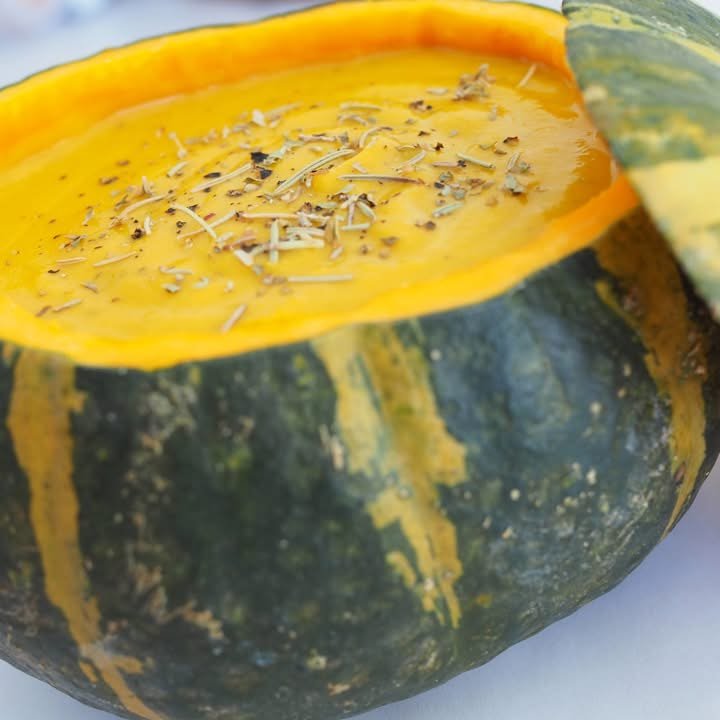
Such comes the amazing story of the kabocha (南瓜 or カボチャ) - the use of katakana is a giveaway to its foreign origin. According to many researchers, the ancestor of kabocha was brought from North America to Europe, then transmitted to Dutch colonies in SE Asia, from which it was introduced to Japan, and when startled, starving denizens asked, "What's this nutritious, delicious food that can be grown on marginal land?," the answer was, "Dunno, but it came from Cambodia." Which morphed into カボチャ, at least according to many anthropological linguists. Read a short intro here: https://gochisohistory.com/kabocha/ (In my hometown of Los Angeles, "kabocha" are called "kabocha pumpkin" - that was rather a long route from Peru) and look up the he Cambodian–Spanish War [1593-1597]).
Kabocha are in season now. They can be cooked in dozens of ways - heck, make your own up! (I recently roasted one in my oven until soft, then fried it with plain oil - any flavored oil will ruin its delicate taste - until crunchy. Worked out better than I could have imagined.) They are cheap and healthy. And they are grown locally. Bon appétit!