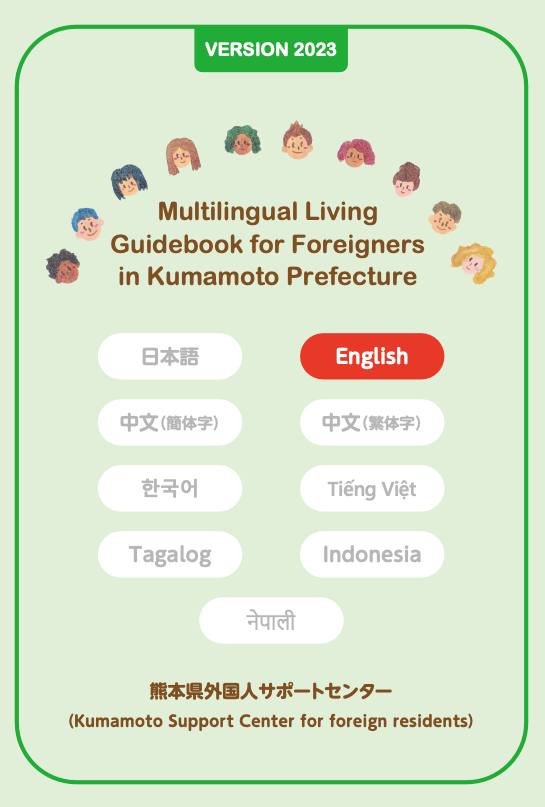
Kirk here with some notes on pdf publications in various languages that provide information for residents. The languages are やさしい日本語 (Easy Japanese), Tiếng Việt (Vietnamese), 中文(簡体字) (Simplified Chinese), 中文(繁体字) (Traditional Chinese), Tagalog, bahasa Indonesia (Indonesian), नेपाली (Nepali), English, 한국어 (Korean), မြန်မာ (Burmese), ខ្មែរ (Khmer). They are available at the following URL:
http://www.kuma-koku.jp/support-center/page338.html?type=top
I recommend that you download both the Easy Japanese version and the version in your target language (English or whatever). That way, you'll be able to find the key Japanese words you will need to get Japanese people to understand what you're talking about.
A simple example is the "Maternal and Child Health Handbook" mentioned on page 16 of the English. It's possible that a Japanese person at the Shiyakusho (city hall) will understand if you tell them that you want a "Maternal and Child Health Handbook" but you are much more likely to be understood if you can say "boshi techo." And, I think it's extremely unlikely that someone who has read the Tagalog version will be understood if they tell the person at the counter that they came to get their "Talaan ng Pangkalusugan ng Ina at Anak."
So, on a positive note, I think it's great that you can use these translations in tandem with the simple Japanese. Negatively, however, I'm mystified by the lack of any Japanese terminology in the foreign language versions. A little parenthetical inclusion of key terms such as "boshi techo" would greatly enhance the usefulness of such translations, especially in languages other than English. Though it is true that foreign language translations are very useful to people from other countries, particularly people who do not understand Japanese well, I'm amazed at the extent to which it is assumed that foreigners ONLY need foreign language translations. It's as though there's an assumption that foreigners only need to be able to read and understand documents and that they have no need to talk about the information they gleaned from them with actual Japanese people! As the documents are currently being provided, someone who doesn't understand Japanese well enough to locate the corresponding section in the Easy Japanese version or to read the hiragana will have considerable difficulty actually getting a copy of their "Talaan ng Pangkalusugan ng Ina at Anak."