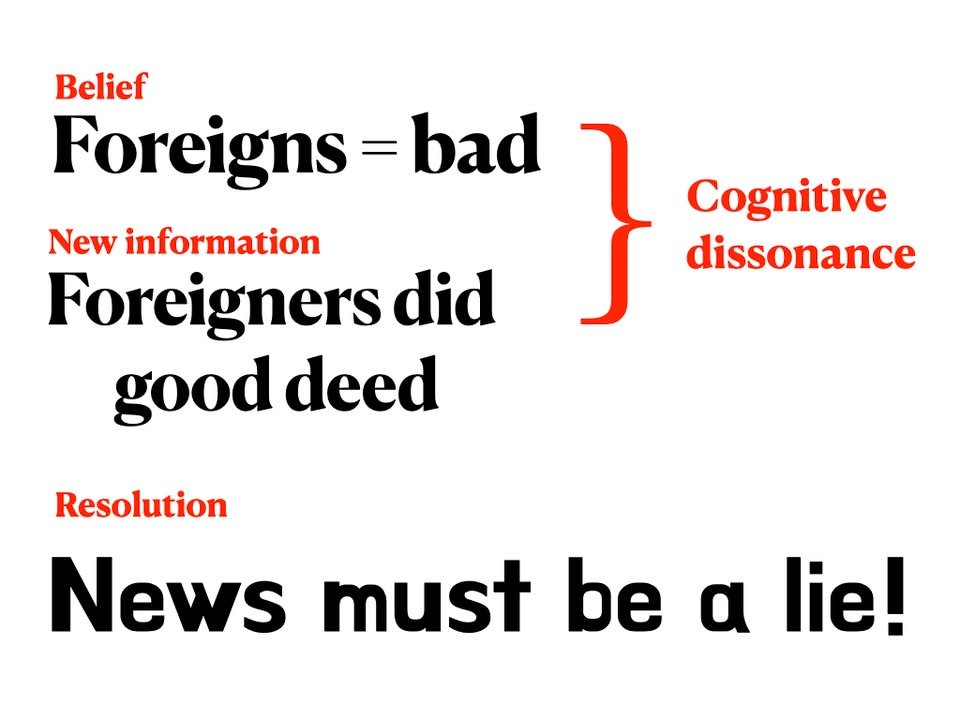
There's been a lot of criticism on the net about the media reports about the Vietnamese young people who were involved in the rescue of an elderly Japanese woman. As this article (translated from Japanese) says, "many news reports explicitly stated that the Vietnamese workers had carried out the rescue in cooperation with local residents." So, it would seem that both Vietnamese and Japanese people were involved in the rescue but I don't know exactly what the individual roles were, who took what initiative, etc. What is remarkable to me is how upset so many people are at the POSSIBILITY (or the allegation) that too much credit was given to the Vietnamese guys. When, conversely, media outlets present news in ways that give the impression that foreigners are more likely to commit crimes (a claim that CANNOT be adequately supported with current statistics), the same concern about media accuracy doesn't well up. I can only conclude that a significant number of people feel threatened by the idea that foreigners are actually good people.
By the way, the comments to this post may be more instructive about the current state of Japanese discourse than the article itself. I'm not posting the comments but, sadly, they are almost all critical of how the media portrayed the Vietnamese young people. As someone who knows that media coverage often distorts in one way or another, I don't feel any urge to claim that coverage has been flawless. But, what I would ask those who are complaining about the Vietnamese guys getting too much credit is "Why the hell does slightly too much credit for some Vietnamese young people concern you so much?" -- Kirk
--- ChatGPT translation of article ---
Social Media Posts Call Reports That “Five Vietnamese Rescued an Elderly Woman” in Kumamoto Earthquake “Lies” — Could This Constitute Defamation? [Lawyer Explains]
August 7, 10:20 a.m.
Bengoshi JP News
The Vietnamese people who rescued the woman are said to work on a broccoli farm. Photo is for illustrative purposes.
Immediately after the Kumamoto earthquake, five young Vietnamese men and women living nearby worked together with local residents to remove lumber and debris in order to rescue an elderly woman trapped beneath a collapsed house. After about 30 minutes of rescue work, they succeeded in getting her out safely.
Junchō Suzukida, company president:
“It is regrettable that it has been made to seem as though three of our employees never risked their lives taking part in the rescue at the scene.”
While the incident was widely reported both in Japan and overseas as a “brave rescue,” discussion spread on social media claiming that rescue efforts by Japanese people had not received sufficient media coverage.
There have also been numerous categorical posts claiming that “the Vietnamese did not actually rescue anyone” and that “the media are lying.”
If such posts are contrary to the facts, could they constitute defamation of the Vietnamese people involved or of the news organizations that reported the story, potentially exposing those who posted them to legal liability? We asked a lawyer.
Reported by Media in Japan and Overseas
The rescue of an elderly woman from a collapsed house in Yatsushiro following the Kumamoto earthquake on July 28 was reported on July 30 by TBS and other outlets, and on July 31 by major Japanese media organizations including Nippon TV and NHK, under headlines such as “Five Vietnamese Workers Rescue 90-Year-Old Woman.” Vietnamese media had also reported the incident by July 30.
According to the reports, the rescued woman and the Vietnamese workers knew one another and would see and greet each other almost every day.
It should also be noted that from the outset, many news reports explicitly stated that the Vietnamese workers had carried out the rescue in cooperation with local residents.
On July 31, however, Junchō Suzukida, president of the Kumamoto Prefecture company Jinrikiya, responded to the reports on his X account, writing:
“It is regrettable that it has been made to seem as though three of our employees never risked their lives taking part in the rescue at the scene.”
He later added:
“I ask the media to report the story fairly.”
Then, on August 1, the Sankei Shimbun reported a separate case in which a 19-year-old Japanese man had saved the lives of two elderly people trapped beneath a collapsed house.
This prompted debate on social media, with comments such as:
“Haven’t the major media been reporting only the achievements of foreigners while failing to adequately report what Japanese people have done?”
Could Posts Flatly Declaring the Story “A Lie” Be Illegal?
A look at X shows numerous posts flatly asserting things such as:
“The Vietnamese did nothing.”
and:
“All they did was film the rescue and sell the footage to a television crew; it was actually Japanese people who carried out the rescue.”
If such claims are factually false and lower the social standing or reputation of identifiable individuals, there is a possibility that they could be unlawful as defamation.
There are also many posts criticizing the news organizations that covered the incident, specifically naming television companies and claiming things such as:
“They praised the Vietnamese even though they had to lie to do it.”
and:
“This was fabricated reporting.”
We asked attorney Sugiyama, who specializes in criminal law, about these posts. He said that, in light of the facts that have been reported, both claims that “the Vietnamese did not participate in the rescue” and claims that “the news organizations fabricated the story” are contrary to the facts. However, he explained that this does not necessarily mean that every such post is illegal.
“First, for defamation to be established, there must be a lowering of the social reputation of a specific individual, rather than simply of a group or collective. Therefore, taking the various news reports and other information into account, it would have to be possible to identify the individual concerned within a certain degree of specificity from the post.
“The news organizations were not lying. However, if information about all of the people involved in the rescue was not adequately communicated, then I think that could provide grounds for criticizing the coverage as ‘not being fully accurate.’
“On the other hand, among the posts attacking the news organizations, there do appear to be some that could be regarded as abusive or defamatory statements containing false information. Still, news organizations ordinarily do not pursue legal liability over social media posts of this kind, and in many cases I think it would be difficult to say definitively that they are legally unlawful.”
Regarding this case, attorney Sugiyama pointed out:
“During disasters, false rumors involving foreigners tend to spread easily.”
He continued:
“One aspect of this case is that discussion arose after information was posted on social media concerning circumstances at the scene that had not been fully conveyed in the initial reporting.
“This is different from malicious disinformation based on premises that are entirely nonexistent. Rather than being a situation in which the law needs to intervene in order to stop it, I think this is something that should generally be left to public discussion and journalism.”
—Attorney Sugiyama
https://news.yahoo.co.jp/articles/a78f215dc788152b70a93c9f98503d8faddc7636