1711

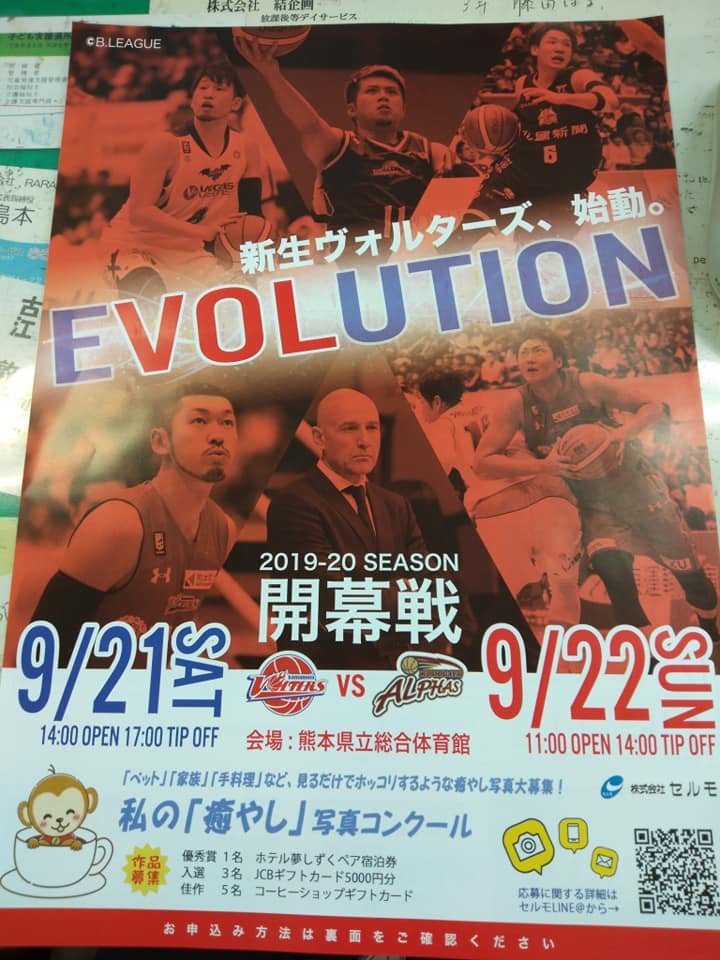
Here's one for basketball fans (and Kiwi fans)!
-- Kirk
Former New Zealand national team coach Nenad Vucinic hired to lead Kumamoto Volters | The Japan Times
Well-traveled coach Nenad Vucinic served an assistant for the New Zealand men's national team during the 2006 FIBA World Basketball Championship in Japan.

2019-06-04 07:54 JST
3662

Next year, an olympic torch runner will pass by the Kumamoto Castle. The castle is one of several iconic sites associated with natural disasters that are on the route. The idea seems to be to promote recovery efforts and progress. This has gotten a lot fo national coverage on TV.
-- Kirk
http://the-japan-news.com/news/article/0005767373

2019-06-03 19:41 JST
811

A latest edition of YOKA is out. Here's the table of contents (copied from the JET web page):
"Aso Village Festivals by Zaynab Nakhid
Koinobori of Kyushu by Greg Corbett
Golden Week in Seoul and Sayonara Sensei by Alicia Lim
A Day in an Inaka Life and Anata no Warehouse by Jess Langshaw
Sakitsu Church UNESCO World Heritage Trip by Olivia Saputra
To Cross a Threshold by Luna Howell
Cat Island by Melissa Wright
Photos by Greg Corbett, Bilal Khan, Jess Langshaw, Alicia Lim, Charles Marchant and Daniel McCoy"
Copied and pasted by Kirk
The YOKA Spring 2019

2019-06-03 17:15 JST
921

Fiona here, with an announcement about my latest Escape from Britz event.
Looking for some indoor entertainment for rainy season? Escape from Britz is a pop-up escape room in Kumamoto city. The latest game is INTERNATIONAL SCHOOL OF SPIES in which you and your team have one hour to investigate and uncover the deadly plot.
The game will run through June and July, and costs 1000 yen per player. It's best played in teams of 2-6 players, and will take around 90 minutes from start to finish. Flexible opening hours - if you're keen to play, get your team together and send me a message (@Fiona Wall Minami). It's in Onoue, Higashi-ku, close to Kencho and the streetcar line, with parking available. You can also find out more, and make a reservation via the Escape from Britz Facebook page.

2019-06-02 13:20 JST
400

Hi friends. Unfortunately It's rainy today.
My daughter is having EIKEN, English exam now. I met lots students there. I hope students should try to talk and interact more freely. They think they must speak correct words, correct sentences. I don't think so. The important thing is just enjoy to interact and conversation without worrying to make mistakes, yeah like me,HAHA. My English is poor but I enjoy my great opportunity to interact you and share information.
We, YWCA will hold interacting activities on next Saturday, on 8th June from 10am to 12.
We'll make 混ぜご飯 MAZEGOHAN and eat together. MAZEGOHAN is mixed tasted rice. Of course, we'll prepare Halal chicken for Muslim friends.
No need to book and any fee. Just come to join us. Come to see me! And talk about lots things.
I'm really looking forward to seeing you there!
PS. It's YWCA in Kurokami next to KUMADAI campus, it's not YMCA.ーAtsuko(*Ü*)

2019-06-02 12:08 JST
92146

Jigoku Onsen in the Aso area was hit hard by the 2016 earthquakes. For a while, landslides had made it impossible to even get to the facility. Recently, however, they've opened for business again. They still can't take overnight customers at the inn, but you can enjoy a nice soak in their deliciously muddy "Suzume no yu." ("Delicious" as in "extremely enjoyable" . . . but the mud is definitely not edible ;) )
Here's a page from Seifuso, the inn, announcing the partial reopening (English explanation included):
http://jigoku-onsen.co.jp/2019/03/17/ついに決定!%E3%80%80すずめの湯%E3%80%80再開/
And here's a page explaining how much they charge:
http://jigoku-onsen.co.jp/charge/
-- Kirk
P.S. I've been meaning to post about this for a while. I saw some TV programs about this (including at least one that was nationally broadcast) but was a bit busy at the time.
Oh, and the main inn is scheduled to reopen next year.
https://www.nippon.com/ja/guide-to-japan/gu900097/
南阿蘇村にある地獄温泉「青風荘」は、2016年に発生した熊本地震、その後の豪雨による土砂崩れで甚大な被害を受けた。3年後となる19年4月に、“奇跡の温泉”と呼ばれる「すずめの湯」を再開し、入浴客でにぎわっている....

2019-06-02 07:08 JST
3668

Hi friends.
This photo is a Japanese text page of 3rd grade of elementary school. I taught students about this page yesterday. Some of you might know the words こそあど言葉 ko-so-a-do Kotoba.
こ~、(ここ、これ、こんな、この....)means the thing it's placed close to you, here.THIS.
そ~、(そこ、それ、そんな、その...)means the thing it's placed far from me but near from you, there. IT.
あ~、(あそこ、あれ、あんな、あの...)means the thing it's placed far from both of you and me, over there, THAT.
ど~、(どこ、どれ、どんな、どの...)means the speaker doesn't understand which, where it is. It's where, which, how, and who.
It's a simple rule.
Yeah,Kumamoto dialect is also adapted.
こぎゃん、そぎゃん、あぎゃん、どぎゃん。
It's very familiar Kumamoto dialect. If you want to hear the words, you just ask someone, like Kumamoto-jin the road to somewhere. Older is recommended, haha. Some taxi drivers also ask us どぎゃん 行(い)きますか?'' (Which way we should take?'' ) "' こぎゃんでよかですかね' ''Is it OK in this way.?''
Sometimes,
someone can explain the direction with on the map or with their finger.
They say without こそあどwords. "ぎゃん 行(い
)って、ぎゃん行(い)ったら着(つ)く''It means ''If you go .this, this, you can arrive''. With lots gestures and pointing.
You might also know about,
こっちさん、そっちさん、あっちさん、どっちさん。
It's said in middle of Kumamoto. It seems to be said these as little bit more polite words.It's like this, あっちさん 行きなはっとよかですよ。You should go that way, it's better for you. (行きなはっと、and よかですよ。 also include polite , honorific meaning)
In Addition,If you go to north of Kumamoto prefecture, like Arao, Nankan, Taimei, near to Fukuoka.
The words might be こげん、そげん、あげん、どげん。
For example, そげんこつ言いなすなyou should not say such things(it).
If you go to Fukuoka, the words become
こげな、そげな あげな、どげな。
I was born and brought up in north of Kumamoto so I only know about there. If someone knows about the these words in
Kumamoto dialect, Please post it here.ーAtsuko(*Ü*)

2019-06-01 23:05 JST
1210

A walk my dog particularly enjoys (not that he disenjoys any walk, but he enjoys some more than others) traverses Meigo and Taiko bridges (the former was used by the Hosokawa clan when they visited Suizenji; the latter hosts the streetcar and was the official route through Kyushu - hence, Kokubu). Being off-lead, my dog requres more attention than this stele between the bridges that had long begged for attention deserved, so I photographed it for later consideraton. Here the mystery begins with two steps: deciphering the calligraphy and considering its meaning.
The stele's caligraphy is quite so stylistic (apperantly, it's a rubbbing of the originale stele that had deteriorateed) that even my Japanese friends could't read it, but a sufficient amount of fragments and Mr. Google resulted in this:
しら川の水を鏡に生ひたちし
黒髪にほへ妻となりても まさ子
So the content was solved, but then we get down to the meaning. A few eldely gents, bereft of family but blessed with knowledge, visit most mornings for breakfast, and their take was startling. (Sorry - this is kind of long.)
Good poetry is purposely ambiguous. Here, obviously, 黒髪 could mean actual hair but could also indicate the direction in which she was gazing - which is also the direction of her college. More interestingly is that 鏡 - mirror - is also the name of Natsume Souseki's wife, 鏡子 (Kyouko), herself also an accomplished author. Apparently, Souseki was too rather violent for Kyouko-san to put up with, and she tried to drown herself at this spot.
My take: The author, Yasuda Masuko (安田昌子), was an early graduate of Kumamoto Women's College, and this poem is an example of Japanese proto-feminism. Here is one way it can be translated. If you have other ideas, please let us know. - William
Shiraka is born a mirror
And though betrothed, my hair retains the river's fragrance
Which perhaps means
My past and present are here visable
As is my future.

2019-06-01 17:38 JST
4974

I was interviewed about this Facebook page by a local magazine called "Espresso" which is published by Kumamoto Keizai:
http://espresso-kumakei.com/information/espresso-vol-2/
The new issue with the article about our little community hasn't come out yet but, in anticipation, I took a look at the magazine's "back number" (back issues). And, lo and behold, is it not our friend and local shakuhachi virtuouso Jeff Cairns on the cover of the second issue (2008)?
Here's a page about Jeff but it seems to be rather dated:
https://www.komuso.com/people/people.pl?person=528
Jeff, please add a word or two to this post about your recent activities for your local fans! ;)
By the way, Jeff, your home is looking very nice. ;) Just kidding, of course. That's the opulent interior of the Honmaru Palace (Honmaru Goten) near the castle -- before the quakes, when we could still get in to see it. Still, Jeff, the place suits you. You should have been born a Tono-sama!
P.S. I'll write again about the Espresso article on Kumamoto International in a week or so.

2019-05-31 11:38 JST
20813

Kirk here with a post about a new, easier to understand, 5-level warning system that has been put into effect.
When the weather's nice, as it is today, those of use who edit Kumamoto International post about whatever happens to interest us or seem important at the time. When there's some kind of natural disaster, or the threat of one, however, we try to do what we can to provide practical information about how to weather the storm. That was particularly true in April of 2016, after the quakes hit, but we've also posted a lot about approaching typhoons, landslides, floods, volcanic eruptions, and other worrisome natural events. At such times, since there is often not enough good information available in English, we need to rely of warnings issued in Japanese and try to summarize the information in English. And, at such times, I have frequently found myself feeling irritated by cryptic, ambiguous Japanese-language warnings.
Apparently, I wasn't alone in feeling that more clarity was needed. Here's a link to an article about a new 5-level warning system that was put into effect because, in regard to last year's system, "complaints were raised that there were too many difficult-to-understand warning and evacuation advisories released":
http://www.asahi.com/ajw/articles/AJ201905270039.html
Clarity in Japanese makes the job of translating and/or summarizing the same information in English that much easier so I'm very glad to see this improvement. I wonder, however, why no one seems to have bothered to translate the reasonably simple and clear Japanese table (see attached image) into English. The Asahi article describes the five levels in text but in an emergency we'll need to refer to this color-coded chart. I'll make a few notes about it in this post in preparation for rainy days when I might need to quickly put out some information about warnings that have been issued.
First, one really nice feature is the clarity of the 5-level scale itself. Level 1 is the lowest level ("be on the look up for bad weather in the next few days") and Level 5 the highest. One important point is that Level 5 advises NOT to evacuate. By the time you get to Level 5, it's too late to try to go to an evacuation center because of the risk involved in moving to one. At Level 5, you need to do what you can within your house or apartment to weather the storm: move to a higher floor in case of flooding, move to a part of the building farthest from a possible landslide, etc. Level 4 is "everyone should evacuate" and level 3 is "the elderly and others who cannot evacuate quickly should begin evacuating now."
If anyone happens to see a clear graphic in English that explains this, please post a note about it to this page. In an actual emergency, I would like to have such a graphic available.
Ideally, I think the color-coded warning levels should be displayed on a map but, as far as I know, that is part of the plan at this point. "To evacuate or not to evacuate" is a very site specific decision. For now, however, I guess I just need to put such a map on my wish list.
Finally, here are some musings about confusing warnings issued in Japanese by the prefecture. I am posting them mostly for my own reference (I'm planning to write about this for a different forum later and would like to be able to find the links quickly) but, if you're interested, have a look.
https://www.facebook.com/Kumamotoi/posts/667596949980407
https://www.facebook.com/Kumamotoi/posts/667492209990881
https://www.facebook.com/Kumamotoi/photos/a.129499733790134/667780409962061/?type=3&theater
Thanks for reading and stay safe! :)

2019-05-30 16:19 JST
5725

A note from the Kumamoto International Desk of We're Not Suggesting You Do This but It Would Be Really Cool If You Did (we have lawyers): Discussion arose on our recent post regarding the Tsujun aqueduct (通潤橋) in Yabe about the Gorougatake waterfall (五老ヶ滝), just downstream and quite downhill from the bridge. It is one of the highest waterfalls in Japan, and as the photo shows, was created by that mighty Aso eruption that created most of central Kyushu 300,000 years ago. The falls fall into a relatively placid pool which then drains to Midorikawa.
While there are many visitors, nobody swims in that pool except me. I suppose one reason is that it is a common suicide spot. If you decide to do so (and I'm not saying that you should but not saying you shouldn't), here is advice: as you approach the falls, the water will hit your face like bullets, so you should swim backwards. Swim backwards to the right of the falls where you can climb up behind the divulge to a ledge covered with moss the thickness you've never seen. This is a sight you will never forget. - William

2019-05-30 10:22 JST
802

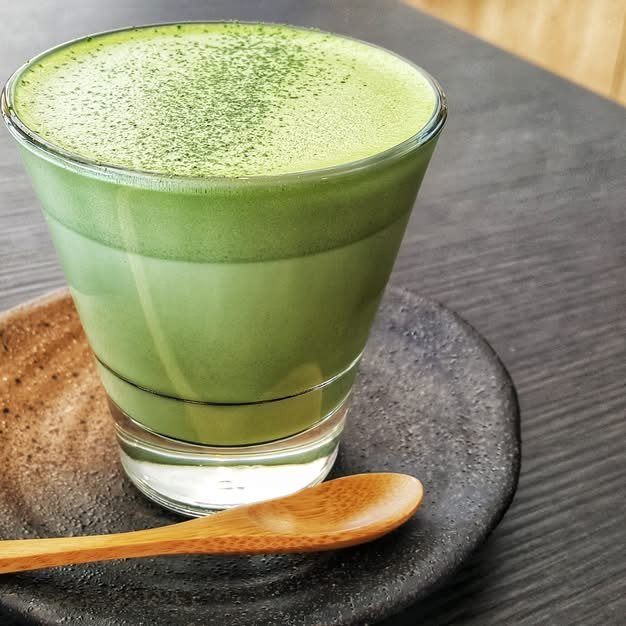
Hello friends. Do you like Macha? Have you ever joined tea ceremony before? I like to have macha at tea ceremony. If you join it, you can enjoy the atmosphere, macha taste, Japanese sweets, beautiful this season cup, flower, calligraphy... No need to worry if you don't know how to do. Just enjoy the precious time.
I sometimes take my kids to tea ceremony at 公民館 KOUMINKAN. (Some Kouminkans have culture festival twice a year.They also have it sometimes)
Especially this tea ceremony is for international people. It also has Japanese salon. Hoping you enjoy the bitter tasty tea and wonderful chatting there.ーAtsuko(*Ü*)

2019-05-29 22:43 JST
732

British prime minister Benjamin Disraeli is credited with saying, "There are three kinds of lies: lies, damned lies, and statistics." Having studied economics in college, I am aware of this - but absent figures, nothing makes sense.
Kumanichi reports that the number of child abuse consultations at consultation centers in Kumamoto in 2018 has reached an historic peak at 1,532 cases, of which consultation with police was 43.5%, followed by neighbors and acquaintances (13.5%) and schools (8.2%). How the data was acquired and its accuracy is not stated. Abuse types were divided into three: psychological abuse of spouses in front of children, which accounted for about half at 48.5%; physical abuse (28.6%), neglect (21.1%), and sexual abuse (1.8%). Abusers were somewhat evenly divided: 43.4% fathers, 41.1% mothers; child ages were reported as predominantly primary school children.
Much of this rise, I suspect, is not an increase in child abuse but an increase int the willingness to report and a growing awareness of what abuse is. My wife's childhood was perhaps normal at the time, but her father's behavior would be considered abusive today. And that's a sign of progress, as sad as it is. - William
児童虐待の相談、最多1532件 18年度熊本県内 | 熊本日日新聞
2018年度に熊本県内3カ所の児童相談所(児相)が対応した児童虐待の相談件数(速報値)は、前年度より...

2019-05-29 18:23 JST
7357

Long ago, people in Yabe gazed longingly at land on a plateau which could be farmed if only it had water, but a narrow river valley cut it off. One day, a villiage leader, Futa Yasunosuke (布田 保之助), came up with a good idea: Let's build an aqueduct! So, at about the price of one Hosokawa clan visit to Edo, they did (seriously - this is like building an aqueduct for the same cost as a single Trump golf outing). The bridge was completed in 1854. To save on cost, they let it sag a bit in the middle, with water pressure moving things along - but there was a problem with sediment building up in the center, so Futa-san came up with the brilliant idea of vent-holes at the arch's lowest point which can be periodically opened to flush the plumbing (there are large wooden plugs). From this practical purpose, a work of art was born.
The bridge was damaged in the quakes and then by heavy rain, with the southern side subsiding by some ten meters. Kumanichi reports that restoration work has begun - the integrity of the structure and of its plumbing, still vital to the area, must be maintained. (Disclaimer: Decades ago, my father-in-law worked on a previous bout of the bridge's restoration.) - William
https://this.kiji.is/505923696441082977?c=92619697908483575

2019-05-28 22:30 JST
1403

Hi friends. You might speak English well or study English. This is a event just for You!!
Hoping you enjoy speaking English and interact local English learners here. Of course, English speaker is special welcome!! [ I don't write you as Native speakers here. If I wrote the words ''Native'' speaker special, someone will ask me ''how long he has studied English makes him Native speaker??'' Hahaha٩( ᐖ )۶]
I will also join with my daughter. Hoping to see you there! ーAtsuko(*Ü*)
Here is event page.
https://www.facebook.com/events/320880158583537/?ti=cl
This is a form page to book it.
https://docs.google.com/forms/d/e/1FAIpQLSdqjvpCcws2Q9mvcsnUJDrouboRNTD0xuudBe4o_IczVfftUw/viewform

2019-05-28 18:46 JST
943

Hi friends.
Your knowledge and your skills are special for local people. Yes, you have a special talent! You are the super teacher!! Please join it as a behalf of your country!! ーAtsuko(*Ü*)

2019-05-27 18:03 JST
2102

Years ago, I was hanging in front of a Costa Mesa Japanese supermarket waiting for my wife and fell into conversation with a woman handing out flyers for a New Year's festival. Turns out she was from Kashima but hadn't returned in decades and was amazed at my stories of its development, with the Aeon mall and housing and all - she left it as rice paddy and couldn't imagine it as anything else.
That looks the fate of the Kosa-Yabe interchange. A bit more detailed info on Costco's plans: They've purchased six hectares on the impossibly multisyllable Koiketakayama (小池高山 - for a country that is so good at abbreviating words, such as remokon, couldn't they have done so here?!) Interchange and plan to open their first Kyushu outlet outside of Fukuoka in 2021, just in time to catch Olympic spectators who had gotten horribly lost. - William
https://this.kiji.is/505153622238069857?c=92619697908483575

2019-05-27 15:24 JST
1001

A note from the Kumamoto International Meteorological Desk (we have lots of umbrellas): A quick look at this JMA image shows a narrow band of rainfall extending from the south. This is due to seasonal winds whipping around the Himalayas and rushing north - that is, rainy season. Soon, it will always be raining somewhere, with the rain front moving east and west (but always north). Get your rain gear ready. - William

2019-05-27 12:49 JST
1250

As the trans-Kyushu expressway construction continues apace, changes happen. For example, we own land in Yabe, and the guy to whom we outsource stuff came all the way downtown to visit us the other day to suggest we sell the land to him as, as he said, future prospects look bleak. That's a good sign. Another good sign is the announcement of a Costco opening slated for 2021 at the Kosa-Yabe intersection.
Think twice when listening to your broker. - William

2019-05-26 20:50 JST
2921

Amakusa Airlines has run into a problem: One of their pilots, a guy about my age, has had health problems, so they've had to curtail flights, mostly those on their longest leg to Osaka. (Demand for pilots is high, and those with experience go for larger companies.) I'd long considered the airline to be a boondoggle for local politicians, but the Kumanichi article I read noted that it's known as the "Doctor Airline" - depopulation has resulted in a dearth of medical professionals in the area, making the airline a vital link to medical personnel and facilities. This fact totally changed my opinion of the airline.
The pastor at my church in his sermon this morning touched on the Kashiragashima Church (頭ヶ島教会), a World Heritage site located on the Gotourettou (五島列島), a group of small islands off the west coast of Nagasaki (I asked him whether the pronunciation was "Atamagashima" or "Tougashima" and whiffed twice) . Its history begins with the return of European Catholics in 1869, and the present church was completed in 1917. A main reason why the residents welcomed the foreigners was for their medical knowledge - "Doctor Boats."
Apparently, depopulation has left the congregation at ten, including an 89-year old woman who tidies up the grounds, rain or shine. The theme of the sermon was fulfilling promises. They led us here, and we cannot leave them behind. Thought must be given to the plight of the elderly who remain in depopulated areas. - William

2019-05-26 18:09 JST