1320

Charles LaFayette Brown, born in North Carolina, lived from 1874 to 1921; during his brief life, he spent 1898 to 1916 mostly in Kyushu, and mostly in Kumamoto, working as the head of the Japan Lutheran Theological Seminary. After returning to America, he was sent to Africa, where he died, in Liberia, of typhoid. If interested in the history of early Lutheran missionaries in Japan, please see the attached link (PDF).
His missionary work was closely intertwined with his belief in education, and what resulted was Kyushu Gakuin (九州学院), today encompassing both a junior and senior high school (Disclaimer: Both of my children attended both.) It is considered upper-middle in terms of academic rigor; however, due to the presence of American missionaries as English teachers, it is the closest to an "international" school that Kumamoto has. (And, being Lutheran, they offer Christianity as a sort of study area and never push dogma.) In 1925, a church was completed on the school grounds named Brown Chapel. It remains one of the oldest Christian structures in Kyushu. (Photos below)
There will be a special service Sunday, 12/24, at Brown Chapel from 10:30 and another service in the evening at the main church, just across the lane, from 7:00 PM. All are welcome. Please PM for more information. - William

2017-12-23 20:18 JST
500

Hi! Here's some information from Sarah Faherty at Sojo University:
"At Sojo, we have a Teaching and Learning Forum every year, and 2018 will be our 4th year. We choose a different theme each time, and welcome presenters from all over Japan. Next year's theme will be "Beyond the Classroom", focusing on learner autonomy, English in the community, study abroad and professional development. The information is included in the link."
-- Kirk
SUTLF 2018: English Beyond the Classroom - NanKyu Chapter
Homepage for the NanKyu Chapter of the Japan Association for Language Teaching (JALT)

2017-12-22 17:10 JST
681

Question time:
A referral visited today - a lad of three, along with his mother and grandmother. His speech reticence had resulted in his rejection from kindergarten, and though I'm neither a licensed speech pathologist nor a pediatrician, they ended up here. I set the boy up in a comfort zone with some shape toys - nesting dolls and a figure puzzle - and kept an eye on him as I talked with his elders and was impressed with his purpose and dexterity as he explored the puzzles. He didn't speak but did look at me when he encountered a problem he couldn't solve in a way very similar to the way my dog does - as if I'd understand, so words are superfluous.
I next brought out a large box filled with various toys, some anthropomorphic and some not, and noticed he withdrew when confronted with the former - particularly those with discernible faces. All in all, he was an engaged, active boy, not afraid of the new environment or the dog - he just spoke very little.
I advised the mother, who was thinking of putting him in some sort of special facility, to simply wait another year before kindergarten. My own educational history reflects this; it was once called "delayed development," but a better term would be "asynchronous development."
His engagement and demeanor clearly set him apart from the autistic class (though autism is a wide spectrum). I just wonder if there is a connection between his fear of faces and speech reluctance. Does anyone have any ideas? - William

2017-12-21 22:42 JST
35242

My daughter studies in America. She'd procrastinated booking the Narita-Kumamoto leg of her お正月 (oshyougatsu, New Year) return journey (likely a genetic trait response) and was shocked to find the one-way ticket at some 40,000 yen. I suggested that she check out the JR free pass; for the same price, she could get two weeks of unlimited rides on the shinkansen and related vehicles.
The rub is that the deal is limited to non-Japanese entering as tourists. To date, my daughter has always used her Japanese passport for Japan and her US passport for the US, but she would have to enter Japan on her US passport to get the deal. I instructed her to discuss with her local JTB branch to parse, and she responded that they gave their assurances all would be okay. I'll let you know how it goes.
For those Kumamoto-I'rs with dual-national kids abroad, this might be an economical option. Funny thing is that this will be the first time in my daughter's 20 years of existence that she will be a non-Japanese in Japan. - William
Discounted Shinkansen Bullet Train Tickets & JR Packages
Special price: 17% off Shinkansen tickets from Tokyo to Kyoto or Osaka! Plus huge savings on Shinkansen train & hotel packages to Kansai, Hiroshima, Nagoya and more!

2017-12-21 10:28 JST
12101

Hi all! It's been a while since I've been able to post due to work and illness, but I had a thought this morning and wanted to ask a quick question in preparation for a potential future post.
While studying abroad in university and then working as a volunteer at my university's study abroad office, I gathered quite a bit of information about study abroad programs and scholarship opportunities for students. Many of these scholarships are easy to apply for but unknown by a lot of students and, unfortunately, one of the biggest things that keeps students from studying abroad is the notion that it's expensive and they can't afford it.
Would anyone be interested (or does anyone know someone who might be interested) in a list/spreadsheet of scholarships and programs? Most of my knowledge is aimed at American college students, but I would happily do some research about opportunities for students from Europe and Japan, etc. This also extends to foreign postgrad programs.
Let me know in the comments and I can whip something up!
-Grace

2017-12-20 16:15 JST
1510

Kumanichi reports on positive aviation news. The article is a bit lengthy, so I'll summarize:
- Kumamoto Airport now has four international routes - Seoul, Gaoxsiung (Taiwan), and Hong Kong. The fourth, to Pusan, commenced from 12/15.
- Flights are charter-style conducted by LCCs (HK Air, Tea Way Airlines, Airsoul, and JAL to Taiwan).
- Due to its central location, Kumamoto has proven a popular alternative gateway to Fukuoka for Asian visitors.
- The Kumamoto prefectural government provides various subsidies averaging 2,500 yen per passenger.
- Between April and October of this year, international travelers amounted to 46,931, 4.8 times over the same period last year, and seems set to exceed the all-time high of 75,567 passengers set in fiscal year 2015.
- Due to the increase in international flights, the number of overseas guests at hotels and inns in the prefecture has recovered to the same level as before the quakes. Governor Kamoshima says, "By increasing the number of tourists from overseas through the resumption of three international routes," - now four by my count - "we can contribute to the economic development of Kumamoto."
Photos and a bar graph of passenger number are at the link. - William
熊本空港、国際線V字回復 利用客、過去最高の勢い - 熊本日日新聞
香港線が再開し熊本空港に到着した香港エクスプレスの第1便=11月、熊本空港くす玉を割って就航を祝う香港エクスプレスの何泓蔚総経理(中央右)ら=11月、熊本空港 「熊本は九州の中心。福岡や鹿児島にも近く...

2017-12-19 13:13 JST
4465

Ah, the pure joy expressed in Kimiko Nishimoto's self-portraits!!
William posted about this Kumamoto City native a few weeks ago:
https://www.facebook.com/Kumamotoi/posts/1667932429946849
I'm prompted to post this update because I saw a report on national television about the opening of her exhibit in Tokyo. I love the name of the exhibit, too: "Asobo ka ne" (遊ぼかね; I think I'll have some fun):
http://www.epson.jp/osirase/2017/171002.htm
I'm especially fond of the photo that accompanies this article, in which she seems to be on the verge of passing a speeding car -- to the astonishment of its driver.
I learned a bit about how to came to be a photographer. It seems that her husband (now deceased) gave her a camera and she took a photography class at Yubijuku (遊美塾) in Kumamoto:
http://www.yubijuku.net
Conveniently, the school is run by Kazutami Nishimoto, her son.
Obviously, she's doing a lot more than just pointing and shooting to make her photos. It seems that she has become extremely adept at crafting her photos using Lightroom and Photoshop (Adobe software) on her Mac. Adobe has made a Japanese web that describes how she works:
https://helpx.adobe.com/jp/photoshop/how-to/nengajo_newyear_greeting_birds_layer.html
If you'd like to check out her official Facebook page (of course, she's on Facebook!), you can find it at:
https://www.facebook.com/kimiko.nishimoto.official/
Enjoy!
-- Kirk
P.S. I'll try to let you all know if I hear about an exhibit that will be held in Kumamoto.
https://petapixel.com/2017/11/15/89-year-old-shoots-playful-self-portraits/
This 89-Year-Old Shoots Playful Self-Portraits
Kimiko Nishimoto picked up a camera for the first time when she was 72 years old. 15 years later, the 89-year-old photographer is now receiving a good deal

2017-12-16 18:52 JST
300

An English-language report on Jikei Hospital was just published. - William
Baby hatch operator calls for allowing anonymous childbirth
The operator of Japan's only baby hatch said Saturday the country should allow women in cases of unwanted pregnancy to give birth anonymously at hospitals, while ensuring the children's right to know their mother's identity after they grow up. Jikei Hospital in the city of Kumamoto, southwestern Jap...

2017-12-16 16:07 JST
2403

Kumamoto's Jikei Hospital (慈恵病院) is well-known nationally for its "baby hatch," into which desperate mothers (or fathers) can entrust an infant rather than resort to far worse measures.
A characteristic of Japanese officialdom is the "family register" (koseki , 戸籍), however, on which such desperate mothers' (or, to scandalously less frequency, the fathers') child would be noted and permanently remain. This is a major cause of the prevalence of highly dangerous home births.
Kumanichi reports that Jikei Hospital is investigating a method to circumvent this system. The plan has three steps: (1) A sealed document with the mother's identity is entrusted to the hospital; (2) the mother gives birth at the hospital under anonymity; (3) the hospital arranges for the child's adoption as a child with unknown parentage. Hasuda Ken, deputy director of the hospital, said, "After consulting with administrative agencies and confirming procedures, we will implement our plan."
As an adoptee myself, I have an existential understanding of the importance such a system would offer - and this is yet another example of Kumamoto dragging Japan into the 21st Century (however reluctant the latter might be). I will try to keep you up to date with results of government-hospital negotiations. - William
慈恵病院、内密出産の可能性検討 「母親の孤立防ぎたい」 - 熊本日日新聞
内密出産の可能性を検討している慈恵病院。左奥に「こうのとりのゆりかご」がある=熊本市西区 親が育てられない赤ちゃんを匿名でも預かる「こうのとりのゆりかご(赤ちゃんポスト)」を開設している慈恵病院(熊本...

2017-12-16 11:55 JST
2626

Kumamoto's Animal Welfare Center is well-known in Japan for its no-kill policy. However, faced with space restrictions, it was recently forced to euthanize 16 pups, :( the first such action in 20 months. Over a hundred dogs remain under the care of the facility. If you're thinking of a Christmas gift - well, give a dog a home. Contact info is at the link, or message us for help. - William
犬の殺処分、1年8カ月ぶり実施 熊本市 - 熊本日日新聞
熊本市動物愛護センターで収容している子犬たち=熊本市東区 2014年度と16年度に犬の「殺処分ゼロ」を達成した熊本市動物愛護センター(同市東区)が、1年8カ月ぶりに犬の殺処分をしたことが12日、分かっ...

2017-12-15 17:35 JST

Y'know when you go to a party and you don't want to be the first to leave but at the same time you don't want to linger too long? In terms of lifespan, Kumamoto hits that sweet spot. (Below chart: blue = stay to long; yellow = depart too early; pink = sweet spot - and white = fall asleep under the kotatsu while the party is still raging.) According to a government survey of 2015 for lifespan among all 47 prefectures, Kumamoto ranks 10th for men at 79.22 years, meaning we leave the party a tad earlier after those from Nara but at the same time as those from Okayama (we can share a taxi!), and 3rd for women at 86.54 years, who depart on average just earlier than Okayama women to snag the best taxis, but after those from Shimane because, y'know, well, Shimane.
Sex discrepancy was attributed to the naturally ingrained stubbornness of women.* - William
http://www.mhlw.go.jp/toukei/saikin/hw/life/tdfk05/02.html
*I made that up. But maybe it's true.

2017-12-14 19:17 JST
831

This news is about a nuclear power plant in Shikoku, but the possibility of a huge eruption of Mt. Aso was a decisive factor in the court's decision:
"In the ruling, the high court concluded there was a chance the Ikata plant could be affected by a pyroclastic flow from Mount Aso if an eruption occurred similar in scale to a massive one 90,000 years ago on the southern island of Kyushu."
-- Kirk
For 1st time, a high court rules against nuclear plant operations:The Asahi Shimbun
HIROSHIMA--A high court for the first time has banned operations at a nuclear power plant.The Hirosh

2017-12-13 21:41 JST
3114

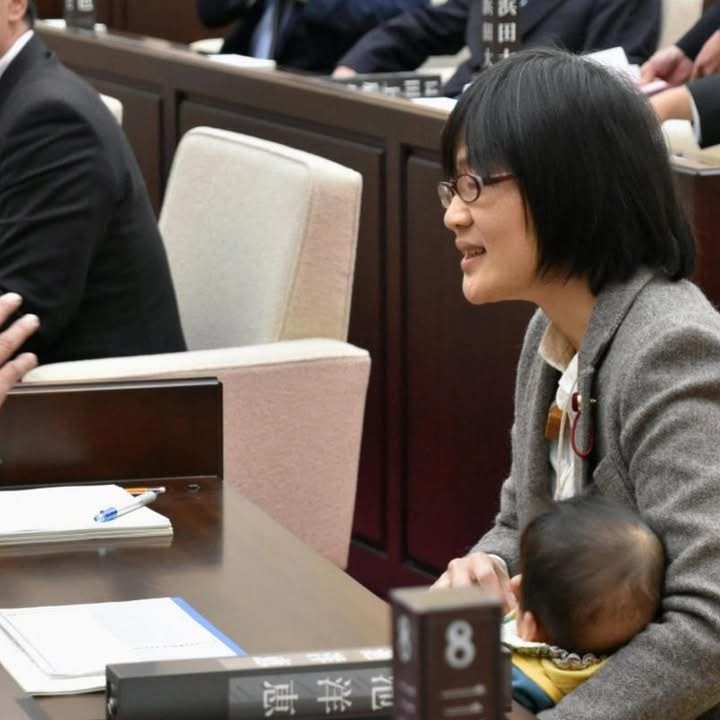
Here's an update on the "baby-in-city-council" issue. This article doesn't mention it but I saw a TV news segment in which Mr. Yoshitomo Sawada, chairman of the Kumamoto municipal assembly, spoke about this willingness to discuss the issues Ms. Ogata has raised. Also, in response to Ms. Ogata's request, she is being allowed to leave the council hall temporarily during meetings to breast feed her child. So, despite the controversy, there are indications that Ms. Ogata's actions are succeeding in moving the discussion in a positive direction.
If you read Japanese, please have a look at the following Change.org article about a meeting with supporters that was held yesterday:
https://www.change.org/p/子育てと仕事の両立を個人の問題にしないで-赤ちゃんと議会に出席しようとした緒方夕佳熊本市議を支持します/u/22129906
Please note, too, that over 10,000 people have signed a petition of support for Ms. Ogata and there is a link to that petition on the Change.org page.
For her part, Ms. Ogata spoke apologetically about the fact that the beginning of the meeting was delayed as a result of her action (and also, of course, by the manner in which Mr. Sawada and others reacted -- though Ms. Ogata didn't put it that way).
-- Kirk
http://www.asahi.com/ajw/articles/AJ201712120053.html
Kumamoto politician who took baby into session rebuked:The Asahi Shimbun
KUMAMOTO--An assemblywoman who tried to attend a plenary session with her 7-month-old infant son has

2017-12-13 16:46 JST
3243

From the Kumamoto International Desk of Grounds for Arguing over Kanji: It's that time of year when the Japan Kanji Aptitude Testing Foundation chooses which kanji best represents the past 12 months, and for various (lame!) reasons, north (きた、北)was chosen. 北 is composed of two people carrying loads, back-to-back. Let me begin the argument over why 北 was an unfortunate choice by discussing the origin of the character. To do so, we must look to China, where kanji originated.
In Chinese tradition, the North Star - aka Polaris - symbolized the Chinese emperor. Thus, the emperor was always placed with his back oriented northward, and all spread from there southward. (The main gate at the Imperial Palace is on the south, and an artificial mount was built at the northern end.) Also, China traditionally faced its greatest dangers from the north - Mongols, Jurchen, Manchu - so combined with symbolism of the emperor, the meaning indicates a barrier against invasion.
When 北 is combined with 月 (which in this case indicates an individual), the result is 背, which means "back" - that is, turning away from the emperor, which was something not wisely done. The Great Wall in northern China - to the rear of the emperor - was built for a reason, and in both China and Japan, the north was used as a place of exile.
For these reasons, 北 carries the nuance of defeat. The kanji "haiboku" (敗北)literally means to lose and run away with ones back to the emperor. The phrase is interesting as it indicates a bit of tolerance on the emperor's part - he sent his enemies scattering to the north and sat again with his back to them.
So the origin of 北 contains several rather negative nuances. To be sure, 2017 saw many setbacks, but we're scattered, not defeated. Let's hope 2018 will result in a more positive kanji. - William
北 (north) chosen as kanji character best representing 2017
The kanji character 北, meaning north, has been chosen as the character best representing the sentiment and events in Japan in 2017. The Japan Kanji Aptitude Testing Foundation, a Kyoto-based organization that promotes kanji, has conducted the survey nationwide every year since 1995. The foundation...

2017-12-12 20:39 JST
300

Sorry that I neglected to post about this in advance. It's an annual event so perhaps I can help get the word out next year.
-- Kirk
2017 Kumamoto International Friendship Festival

2017-12-11 20:40 JST
1741

You'll probably see dense groups of small birds flitting about and twitting excitedly like children who've consumed way too much sugar. Those would be the Japanese tit (hee hee) - shijyuukara
(シジュウカラ、四十雀). The name is interesting: カラ(雀) is an alternative pronunciation of suzume - sparrow - and シジュウ is an ateji (当て字) - kanji used as a phonetic symbol rather than for its meaning; in this case, it approximates the bird's call.
The Japanese tit (hee hee) generally spends its summers up in the mountains but retreats to the plains during the winter. The species made headlines in 2016 when experimental evidence was reported indicating compositional syntax in their calls, marking the first evidence for that type of syntax in nonhuman animals. It is also the Kumamoto prefectural bird.
Many locals feed the Japanese tit (hee hee) by hanging strings of mikan outside their window. You will find yourself popular with the Japanese tits (hee hee) if you do so. - William
Note: Apologies for being so juvenile. :) If you teach English, though, introducing the topic of the Japanese tit (hee hee) might be fun.

2017-12-11 14:22 JST
100

Here's a post from earlier this year about satisfying American notarization requirements via the web. Has anyone actually tried this? I have a friend who needs to get some documents notarized in order to inherit property but isn't sure how to go about it.
The Japanese word for notary is koshonin (公証人) and the government has a local office in Kumamoto:
熊本公証人合同役場
〒862-0976 熊本市中央区九品寺2丁目1-24  ベストアメニティ熊本九品寺ビル3階
電話:096(364)2700
http://houmukyoku.moj.go.jp/kumamoto/table/kousyou/all/kumamoto.html
I'm not sure, though, if they can help with the notarization of documents required in the United States.
Another possibility might be the American Consulate in Fukuoka:
https://jp.usembassy.gov/u-s-citizen-services/notarial-services/
If anyone has any insights regarding this issue. Please make a comment to this post. Thanks!!
-- Kirk
Notaries Are Starting To Put Down The Stamp And Pick Up A Webcam
Technology and new laws are taking notarizations digital, adding them to the list of things you can do on your phone or computer. However, America's 4 million notaries are split on the idea.

2017-12-10 21:49 JST
400

For those of you who have been staying awake at night wondering what you might do to make your mouse sperm last a little longer, some researchers at Kumadai have the answer.
Actually, I doubt that many readers of the page spend much time thinking about mouse sperm ( ;) ) , but, for people who use mice in research, mouse sperm viability seems to be an important issue (see article).
-- Kirk
Cold-stored Mouse Sperm Viability Can Be Maintained for 10 days
A Japanese research team from Kumamoto University has succeeded in developing a refrigeration preservation technology that maintains the fertilization functionality of mouse sperm for 10 days.

2017-12-10 08:34 JST
911

From the Kumamoto International Desk of Obscure Town Names: Uneno (畝野)*. Let's get back to this in a minute.
Long ago, travel across Kyushu was hindered by rivers which blocked the most convenient valley routes. Today, driving up Rt. 218 as it traipses between ranges before suddenly diving into a valley, you'll come across two parallel bridges crossing Midorikawa, one built rather recently and the other in the mid-1800s called Reidaikyo (霊台橋). Stop your car, get out, and look.
Though the route had been used since time immemorial, the lack of a bridge left crossing to forders and ferries in a narrow cleft on a river with thousands of upstream tributaries. Result = not good, survival-wise; the water could rise meters in seconds even when local conditions were fine. A sequence of smaller wooden bridges having been sequentially washed away, when the government in 1846 proposed a really big bridge made of stone, local enthusiasm was so great that an eventual 44,000 local citizens joined the 72 government masons sent, and the single-arched stone bridge was completed in one year, far earlier than planned. Thus the name etymology: Ancient Chinese texts regarding Confucian morals denote spontaneous acts of labor in support of public gain as 霊台建造 (which could be translated as "spirit-based construction"). So the name is kinda cool if you think about it.
Anyway, crossing whichever bridge will bring you to an extremely steep incline which will not end until you reach the far-away Yabe basin, and to your right, you'll see a large dam which has somewhat tamed the river. This area is a town called Uneno (畝野), which literally means "furrow fields" as the steep slopes only allowed contour farming. The area has degraded to mostly cedar plantation today (though its stone terraces remain), but the dam is still under charge of Uneno, and to beautify its concrete walls after a recent cleaning, they opted to paint a large Kumamon panoramic.
A lot of news about a very small area, but this is, after all, what comprises Kumamoto. - William
*Disclaimer: My father-in-law was from Tomochi, just uphill from Uneno.
壁の汚れ、洗い残して「くまモン」 緑川ダム管理所 - 熊本日日新聞
緑川ダム管理所の下の法面に完成した巨大な「くまモン」の絵。手前は町道=美里町 美里町畝野の国土交通省緑川ダム管理所が11月末、近くのコンクリート法面に、壁の汚れを部分的に洗い残して巨大な県のPRキャラ...

2017-12-09 23:20 JST
3965

Kumamoto is famous for citrus. Two things you'll notice: (1) aside from the mikan, you'll probably have no idea what it is (don't worry - most Japanese don't either); (2) some of it is very large - like, bowling-ball size large.
Case in point: the Citrus maxima 'banpeiyu (晩白柚)'. The banpeiyu, similar to the avocado, is proof that God wasn't constantly paying attention during the design stage. It ended up with a massively thick rind encasing a sour, baseball-sized fruit. The name derives from Chinese - "ban"(晩)meaning "late" (in the season), "pei"(白, white), referring to the color of the mesocarp (inner rind), and "yu" (柚) - citrus.
The question has long been what to do with them (at least God made avocados really delicious), and, as is typical in Japanese culture with citrus you really don't want to eat, the answer has been to toss them in the bath. 晩白柚 contain a large amount of citrus oil in their rinds, which, when withdrawn by soothing, hot water, gives both women lustrous, glowing skin and their husbands time to sneak off for a beer.
If you'd like to try this, the Hinagu Onsen Collective, composing 11 onsen in what is the loveliest, most traditional onsen towns on the Yatsushiro Sea, is offering this chance through the end of January. For more info, please post below. - William
バンペイユ風呂、香り漂う 八代市・日奈久温泉 - 熊本日日新聞
さわやかな香りが広がるバンペイユ風呂=8日、八代市 八代市の日奈久温泉で9日、冬の名物「バンペイユ風呂」が始まる。お披露目会が旅館金波楼で8日あり、世界最大級のかんきつ類といわれるバンペイユが湯船に浮?...

2017-12-08 23:29 JST