Archive of the Kumamoto International Facebook group, 2011–present.

Sad news: Momoko Sakura, that wonderful author and illustrator best known for creating "Chibi Maruko-chan," has died of breast cancer at the age of 53. She was only 18 days younger than I. The first Japanese-language book I read, "Sakana no Okashira" [魚の尾頭], was her work. She was a delightful essayist, and I highly recommend her books for those learning Japanese. She will be missed. - William
https://en.wikipedia.org/wiki/Momoko_Sakura
2018-08-27 21:44 JST

Friday Funky Place is happy to introduce the Glocal Bar Vibes. It's a shochu bar and the owner, Noriyuki Yamashita, is from Kagoshima, and he not only keeps a huge array of shochu, he is a shochu evangelist who wants to introduce foreigners to shochu in all its myriad forms. Beyond the triumvirate of rice, barley and sweet potato (kome/mugi/imo), he also has a number of other shochu made from more exotic ingredients.
That devotion, bordering on mania, is one that we truly appreciate at FFP. Glocal opens at 8 and doesn't have much in the way of food, but if you want to know more about shochu, it is definitely the place to go. Fortunately or not, the pours are generous, so if you want to try lots of different shochu, I recommend going with a lot of friends, or you will get toasted.
The bar is located just off Shimotori in the Arita Building, walk down Shimotori, away from the densha and take the second right after Cocosa
The FFP map has it and it is at
https://drive.google.com/open?id=1qUH94Bac7Hr939b7_8gtvebaJZffGRsX&usp=sharing

2018-08-24 10:00 JST

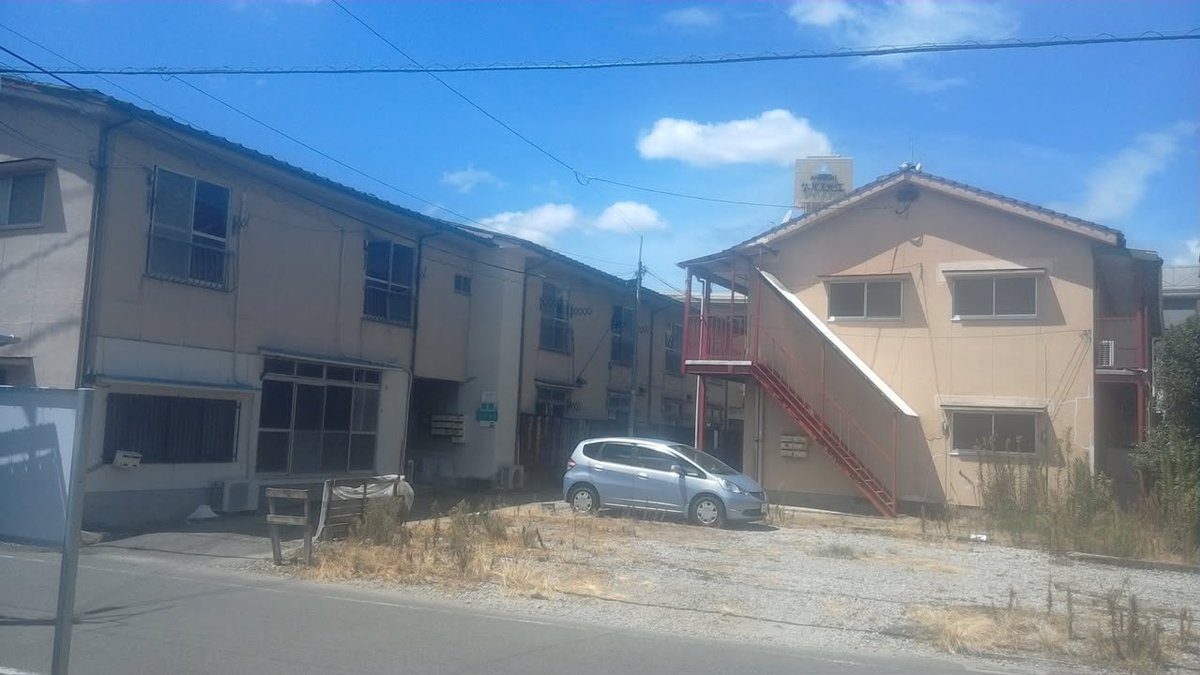
After the war, from the rubble was thrown up a slew of cheap multi-unit apartment housing which came known as "bunkajyutaku" (文化住宅).
A parcel of three exist across from my house, and I've watched as the inhabitants were slowly driven out by the passive-aggressive measures landlords use when direct eviction is illegal. I watched this mostly with disinterest, understanding that time moves on and the buildings have served their purpose.
My wife, though, mentioned something of importance this morning. A sign has gone up announcing construction of a 12-story mansion on the lot, and she mentioned that none of its former inhabitants have any hope of affording a unit - their previous rent was likely some 30,000 monthly. Their only choice is a desperate search for the dwindling number of remaining 文化住宅, which has been almost entirely extirpated from my neighborhood (and relocation for their mostly elderly inhabitants severs their vital neighborhood ties).
Affordable housing in my home state, California, is a perennial problem. I hope it does not become so in Kumamoto as well. Below is a photo of the soon-to-be-nonexistent 文化住宅.ー William

2018-08-23 13:26 JST

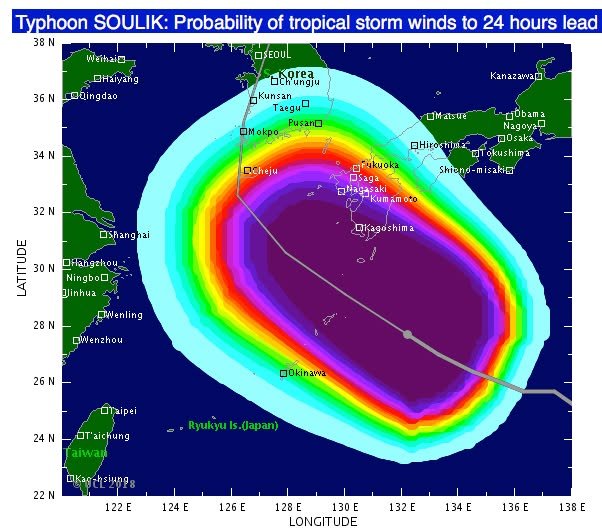
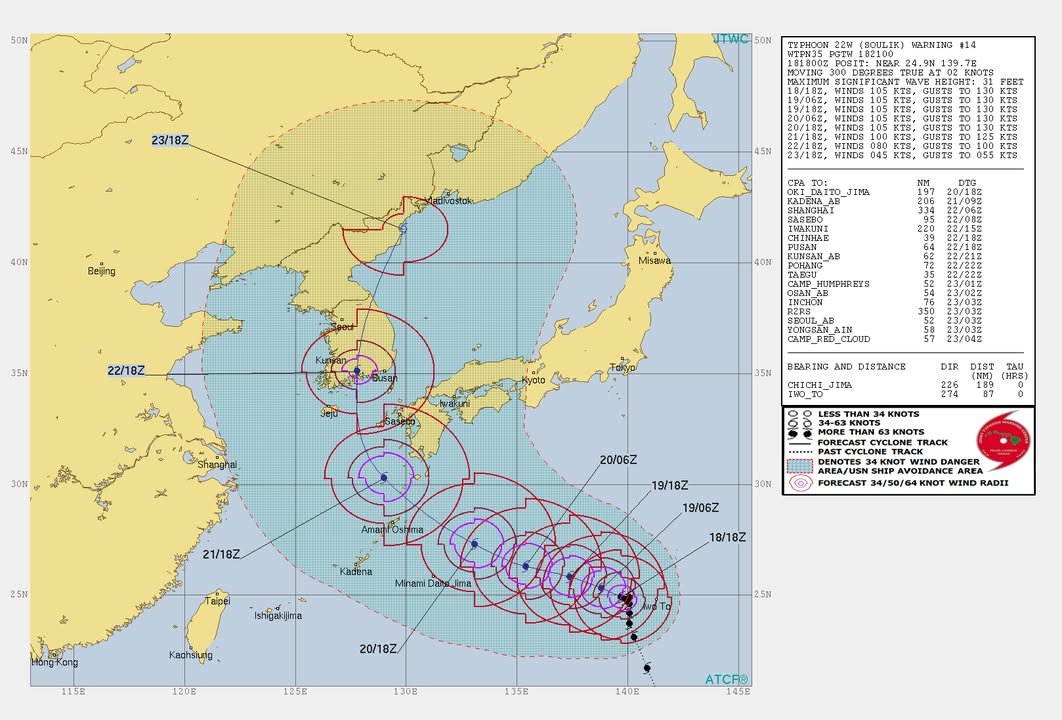
It looks like we'll get some wind and rain here in Kumamoto but, thankfully, we're not slated to get a direct hit. Still, it's a very strong storm system and rain can be unpredictable so you might want to think twice about staying in or traveling through places that a vulnerable to flooding and/or landslides when the storm is at its peak. Folks in the Amakusa area may want to exercise particular caution. The winds coming off of the water may be quite strong.
-- Kirk
P.S. One more on the way after this one. The second one probably won't be a direct hit either. More later.
http://www.tropicalstormrisk.com

2018-08-21 16:36 JST

This man is getting a lot of well-deserved praise in the media these days. He's from nearby Oita but was here in Kumamoto helping in Mashiki after the 2016 earthquake. Not only does he do heroic work, but he's humble too. After saving the life of the small boy, he refused to take even a meal from the grateful family. He makes it a rule to carry his own food and equipment and to sleep in his car so as not to be a burden on the people he is trying to help. What's more, at age 78, he's an inspiration to those of us who are getting on in years -- being near 80 doesn't have to mean that you are weak and frail.
Here's a related news article:
http://the-japan-news.com/news/article/0004664608
A lot of news (including, unfortunately, news that I share on this page) is negative but the news I've seen about this man, Haruo Obata, is truly inspirational.
-- Kirk
P.S. The Japan Times article has a Japanese language video about Mr. Obata.
https://www.japantimes.co.jp/news/2018/08/16/national/survival-japanese-toddler-found-lost-three-days-hailed-miracle/#.W3k2Mi2B364

Survival of Japanese toddler, found after being lost for three days, hailed as a miracle | The Japan Times
The 2-year-old boy was found barefoot sitting on a mossy stone in the middle of a mountain stream, after spending 68 hours alone in temperatures topping 30 degrees Celsius.

2018-08-19 21:39 JST

This article uses "technical intern" or "technical intern trainee" to refer to 技能実習生 (gino jisshusei). Abuse of this "training" system (in fact, the system has been used to circumvent prohibitions against bringing people to Japan to do low-skill jobs) has quite a history in Kumamoto. Here's a link to an article called "Chinese trainees in Japan win court battle for back pay":
http://www.zenroren.gr.jp/jp/english/2010/02/english100302_01.html
"Four people, including Chinese trainees aged 22-25, won a court battle demanding that two companies pay them unpaid wages in back pay as well as consolation money. They joined the Local Union in Kumamoto Prefecture affiliated with the National Confederation of Trade Unions (Zenroren) and brought the case to court in 2007. The two companies in Amakusa City, Kumamoto Prefecture, were subcontractors of Wacoal, Japan's major women's underwear maker, but both went out of business."
In the following post, I point out that much of the increase in Kumamoto's foreign population in recent years (Kumamoto's non-Japanese population has been growing faster proportioinally than most other prefectures) can be attributed to trainees. I also provide links to news articles that relate to the abuse of the trainee system, including a 2010 article about the four Chinese interns (trainees):
https://www.facebook.com/Kumamotoi/posts/1869268536479903
Kirk
https://www.japantimes.co.jp/news/2018/08/18/national/foreign-interns-face-specter-abuse-labor-hungry-kumamoto-quake-sites/#.W3kq5S2B364

Foreign interns face specter of abuse at labor-hungry Kumamoto quake sites | The Japan Times
Kumamoto has seen so many foreign laborers lately that it is raising suspicions Japan’s internship recruits are again being exploited as cheap labor.

2018-08-19 18:13 JST

A note from the Kumamoto International Goldilocks Desk (merged with the Dodging Bullet and Typhoon Info Desks for obvious reasons): One goes a little south, one goes a little north, and we enjoy a gentle breeze. - William

2018-08-19 09:04 JST

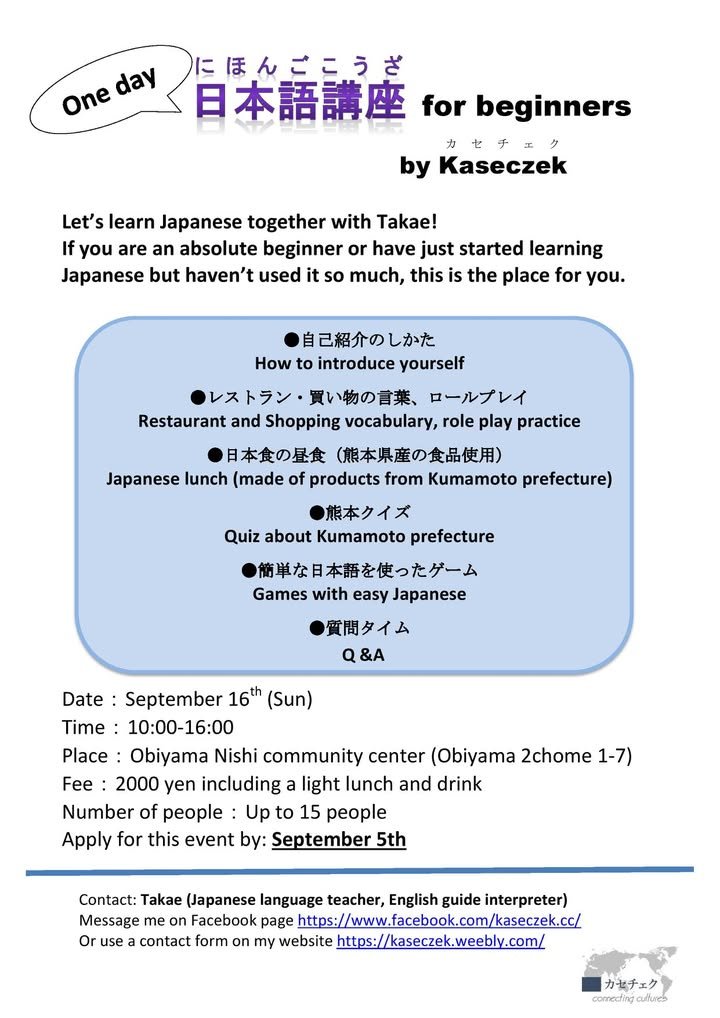
Joe Tomei here, here's an event notice from Takae Fuchigami that may be of interest. Please contact Takae directly, her facebook page is in the included flyer.
===
Hello everyone. I'm Takae Fuchigami, a freelance Japanese teacher and a newly-born English guide interpreter living in Kumamoto city.
I'm holding an event on September 16th (Sun.) for Japanese language beginners at Obiyama Nishi community center. In the event we will learn survival Japanese phrases in restaurants and for shopping, play games to practice very easy Japanese, and I'll introduce some of Kumamoto culture.
I'll do this kind of event once in a while in Kumamoto city and hopefully will do in other cities in Kumamoto prefecture, too. Yoroshiku onegai shimasu!
For details of the event in September please look at the flyer.
Also, here's my website where I post Japanese quiz and write about Kumamoto and Japan.
https://www.kaseczek.weebly.com/

2018-08-18 23:35 JST

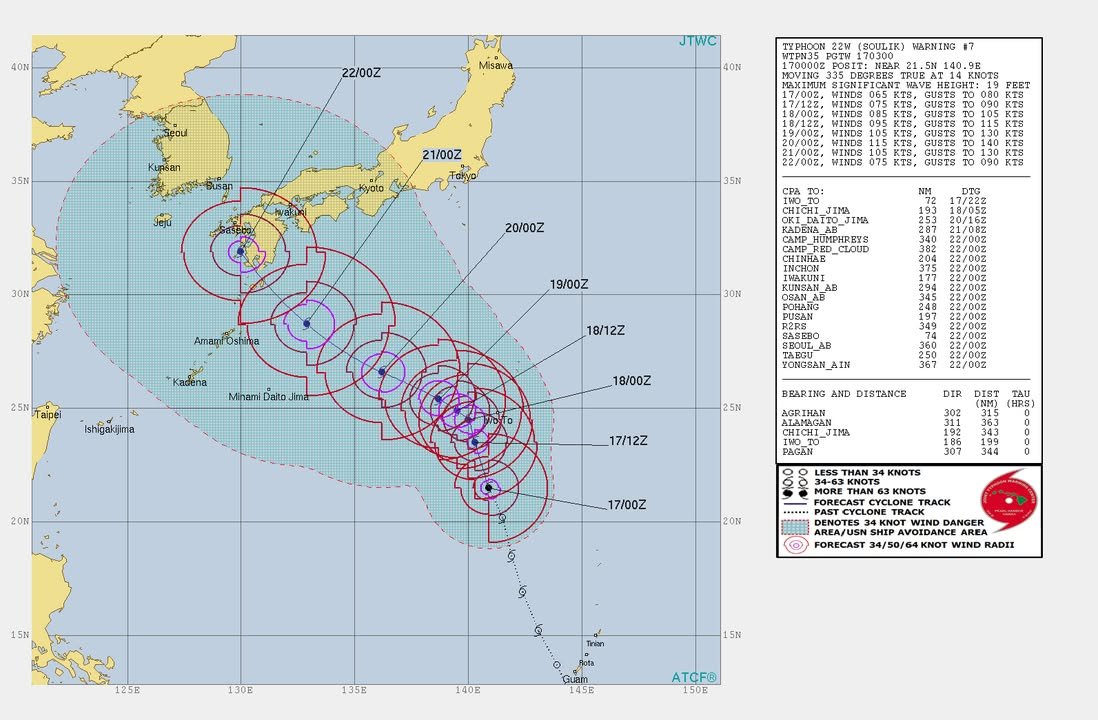
The course of this guy, Typhoon 19 by Japanese reckoning, deserves attention. It's slow-moving, basking over the warm waters in the Tropics for a bit to gain weight, and looks to be a biggie. - William

2018-08-17 12:00 JST

After a brief holiday, Friday Funky Places is back, this time with a bakery!
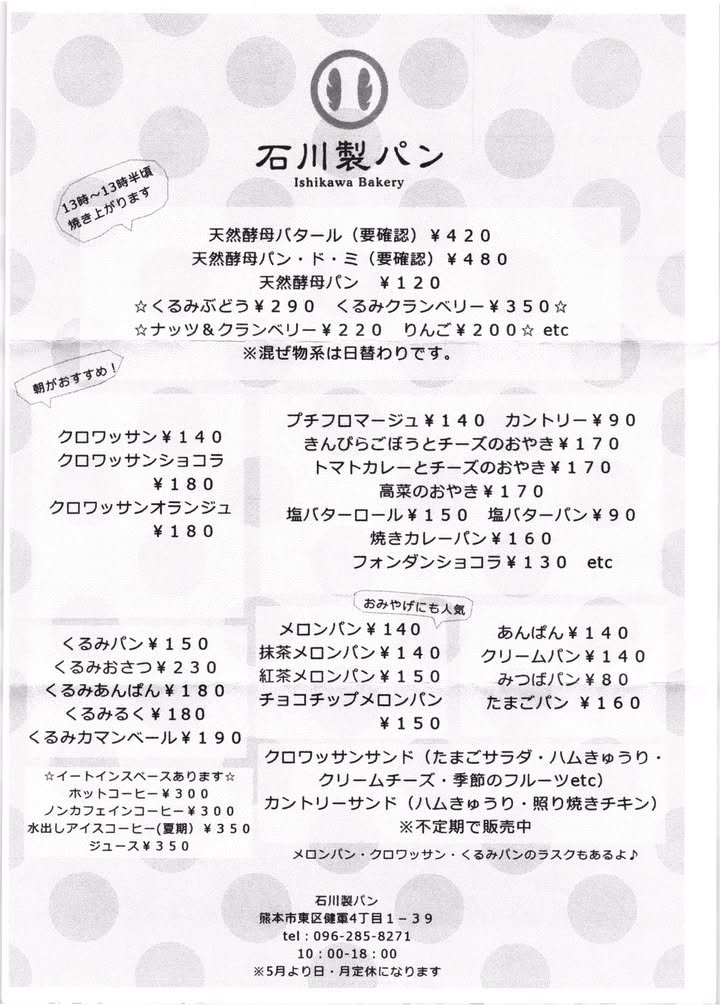
We here at FFP strongly believe that there can never be too many bakeries in town. (We also believe that there can't be too many places selling draft beer or too many ethnic restaurants, but that is another story). Today's FFP is a new bakery (yay!) that is right at the Kuwamizu Densha stop, Ishikawa Bakery. The croissants and shio-butter rolls are great. The Kuwamizu Densha stop is just a bit away from Baskin Robbins (and, as I'm sure as you all realize, called satee-wan (31) in Japanese( and a short walk from Ezu Lake, another undoubtably funky place (in a good sense, funky takes on a new meaning when talking about bodies of water). The zoo and botanical garden tram stop is two stops further (another place where the funky appellation might not be so good)
The FFP map is at
https://drive.google.com/open?id=1qUH94Bac7Hr939b7_8gtvebaJZffGRsX&usp=sharing
with the Baskin Robbins marked just in case.

2018-08-17 09:56 JST

For the geologically inclined, Kagoshima is Disneyland. It's best known for Sakurajima, a volcano which formed on the edge of the giant caldera today known as Kinkou Bay (錦江湾 - and if you haven't studied this, you should). Times are, when a volcano chamber collapses, enough debris clog the chamber to cause subsequent eruptions to occur along its edges. This did not happen with Aso, where activity is still concentrated amongst its central vent, but it is the cause of Sakurajima's existence.
An equally large caldera is far less known, and that is because it's under the sea so is less apparent unless you're aquatic. Like Sakurajima, the main vent has been blocked, and this has resulted in peripheral eruptions which have created many islands, the most famous of which is Yakushima (addendum¹: as Evan James Gowan notes below, Yakushima is a granitic batholith, not a volcano). It is called the Kikai caldera (鬼界カルデラ). Just next to Yakushima is a tongue-twister named island, Kuchinoerabujima (口永良部島), which was created by being a peripheral vent of the Kikai caldera.
Apparently, the volcano has started rumbling again, and the few hundred residents of this island are being evacuated. This is simply standard procedure. However, each caldera exists where a mountain once stood, and each mountain was rather abruptly shoved aside, resulting in our present, lovingly mountainous Kumamoto - but we'd rather not experience that process in our lifetimes (word as it that, after the eruptions of the Aira and Kikai volcanoes, life took about 13,000 years to reappear in Kyushu, way past my bedtime). (Addendum² - Anett Iwamoto pointed out the extra zero in my note about the average time life took to return to Kyushu following these mega eruptions - it should read 1,300 years. From what I've read, it was first regenerated by Miscanthus sinensis, or Asian pampas grass [in Japanese, 「ススキ」], seeds blowing over from the Chinese mainland.)
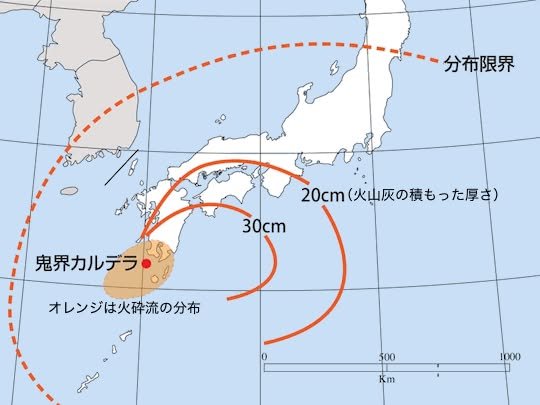
The image below is the extent of the Kikai caldera and possible ashfall in the extent of a worse-case eruption, which won't happen in our lifetimes, probably, so don't worry about it. Better use of time would be to learn how to pronounce Kuchinoerabujima and to think of its inhabitants' situation. - William

2018-08-15 21:58 JST

Those familiar with Kumamoto climate will have noticed this summer has been abnormally dry. Google sources inform that this is true but do not establish any long-term trends - that is, whether this is a "new normal" (a word I recently discovered is expressed in Japanese as 「ニュー・ノーマル」, inexplicably) remains unestablished by data.
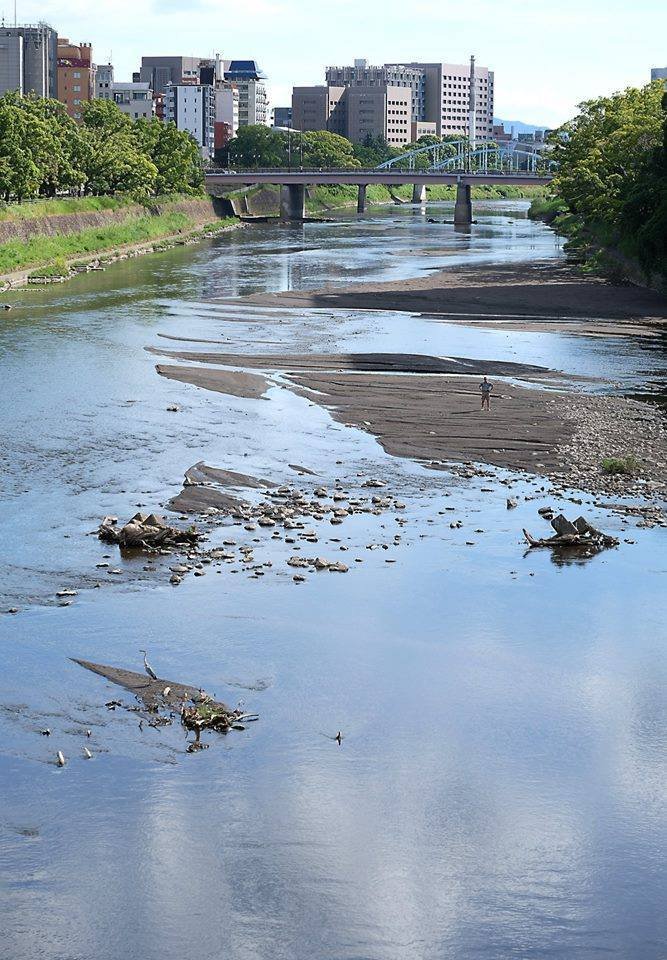
Shirakwa has an unusual watershed, shaped like a balloon on a string, being entirely dependent on the Aso caldera and then contained in its banks to the sea. The lack of rain means it now subsists entirely on whatever the seven main Aso springs are able to provide, a sparse diet that has left it shriveled to its bones.
Your intrepid correspondent and very talented but slightly less intrepid photographer, Liz Suenaga, recently ventured out to capture the river's ribs exposed. Though having originated from frigid springwater, by downtown, the temperature was eerily bathwater-warm; shoals of small fish darted about nervously as if aware of their peril (the egret footprints criss-crossing the exposed beach testify to their multiple concerns).
A tropical depression should bring some relief from the parch Wednesday. We can enjoy that, and hope that this drought is not the ニュー・ノーマル. Thanks to Liz for her kind help on a roasting day. - William

2018-08-14 12:39 JST

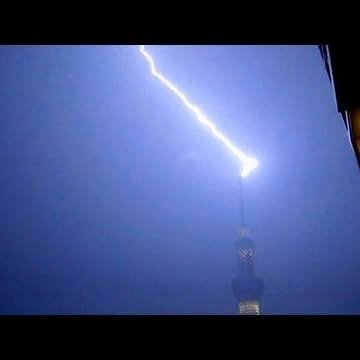
TV news has video of the intense lightning storms that moved through Tokyo, our neighbor to the north, today. Notable is the video disruption milliseconds before the lightning (if you watch the short video I've linked to below, you'll see the phenomenon). I suppose this is due to an electromagnetic pulse emitted by ionic disequilibrium breakdown which precedes and actually results in lightning and is more often the cause of blackouts than direct lightning strikes themselves by overloading transformers (and Tokyo had plenty of blackouts today. Disclaimer: My son lives there now, but he has a girlfriend, so I'm sure he is more than fine). You might notice your lights flicker milliseconds before you hear the thunder due to the same phenomenon.
I mention this as it reminds me a bit of the P-waves my dog would notice seconds before the S-waves discernible by humans arrived back when quakes were an everyday occurrence. What happens around humans that escapes our notice is interesting. - William

東京都墨田区周辺では8月21日午後10時前後から強い雨となり、雷が激しく鳴り響いた。雷は高さ634メートルの東京スカイツリーも直撃。塔の頂上に向けて、青白い稲光が何度も走った。

2018-08-13 22:20 JST

My neighbor, Horiguchi-san, would at first glance appear to be a typical neighbor: She pays her taxes regularly, separates her garbage properly and puts it out on the correct day, is unfailingly polite, and has been a close family friend for a period far preceding my appearance. By all accounts, she is a normal, upstanding Japanese citizen.
Until you get to know her better.
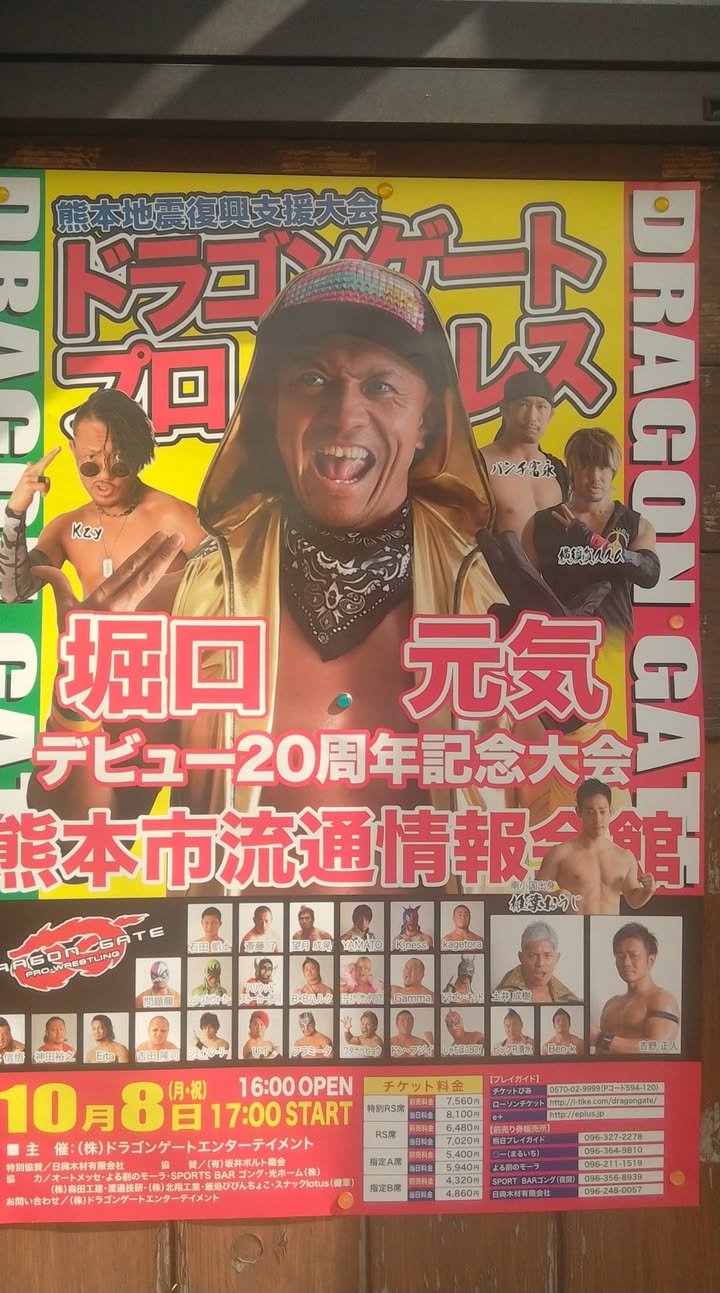
Her son, Genki, you see, is a professional wrestler. He trains in Mexico and is proficient in Spanish. I know little about the sport but imagine chairs and opponents' heads play a prominent part. In fact, while well into her 70s, I suspect that chairs and heads were also at one point (or several) no strangers to Horiguchi-san's life. My point is that you never know about your neighbors until you really get to know them.
Genki will appear in a Kumamoto match on October 8 to benefit Kumamoto earthquake victims and celebrate his 20th anniversary in the sport which I suspect none of our readership will attend, but Horiguchi-san is my friend and neighbor and Genki is her son, so here you are. - William

2018-08-11 15:59 JST

That Japan history seems to be a carousel of familiar names is not surprising if one considers 98% of society was peasant, bereft even of family monikers. The Hosokawa clan, a branch of the history-altering Minamoto clan through the Ashikaga clan, reached its pinnacle during the the Muromachi period (1336–1467), when it was one of three families occupying post of Kanrei (Shogun's deputy), due to its literary ability and willingness to play second-string to the more ambitious samurai. A succession struggle later almost spelled its doom, but it was saved by an ancillary branch before being plucked by Tokugawa Ieyasu to head Kumamoto in place of the less-trustworthy Kato clan.
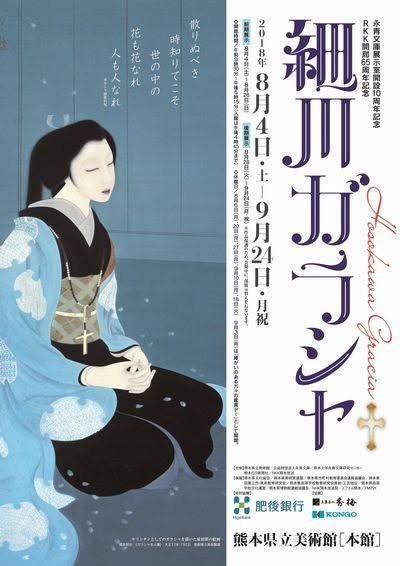
A fascinating incident regarding the clan occurred towards the end of the Sengoku period (1467–1600 - ironically, a period the Hosokawa were partially responsible for triggering - see the Onin War). As the Hosokawa were clawing their way back to power and Oda Nobunaga was on the cusp of reuniting Japan after a century of warfare, the daimyo and Oda's erstwhile ally, Akechi Mitsuhide, burned down a Kyoto pavilion with Oda in it. This didn't go over well for any involved, and it was "Get thee to a (Buddhist) nunnery!" for Akechi's daughter, Hosokawa Tama (細川玉). Her family name is due to the fact that she'd married the contemporary head of the Hosokawa clan, Tadaoki. Apparently, the two were genuinely in love and he was concerned over her safety due to the acts of her father. During her two years in exile, she became interested in spiritual stuff, and when she was finally permitted to return to Osaka, she became one of the most famous Catholic converts in Japanese history, adopting the name Gracia. Sadly, this did little to improve her fate: While her husband was off fighting, the warlord and rival to Tokugawa Ieyasu, Ishida Mitsunari, tried to take her hostage, so she committed suicide at the age of 27 in August, 1600. She and Tadaoki had had six children together.
The Hosokawa clan never forgot about this, and when the ultimately-victorious Ieyasu transferred the Kumamoto fife to them from the Kato clan, Gracia was disinterred and reburied at the former Hosokawa family temple on Tatsudayama. Next to her tomb is a stone basin into which she is said to have gazed while composing her death poem.
The Kumamoto Museum of Art is currently holding an exhibition of Gracia's artifacts. Information can be found at the link. - William
Addendum: I should have added her death poem to the above post - It's probably the most famous death poem in Japanese history and is written on the poster. Here it is, and my (probably totally lame) translation: 「散りぬべき 時知りてこそ 世の中の 花は花なれ 人は人なれ」- "It is that we are aware of time we are scattered, those in this world, flowers as flowers, humans as humans." She likely was not particularly enamored of humans at the moment.
http://www.museum.pref.kumamoto.jp/event_cal/pub/detail.aspx?c_id=10&id=131&trk_kbn=A

2018-08-10 09:59 JST

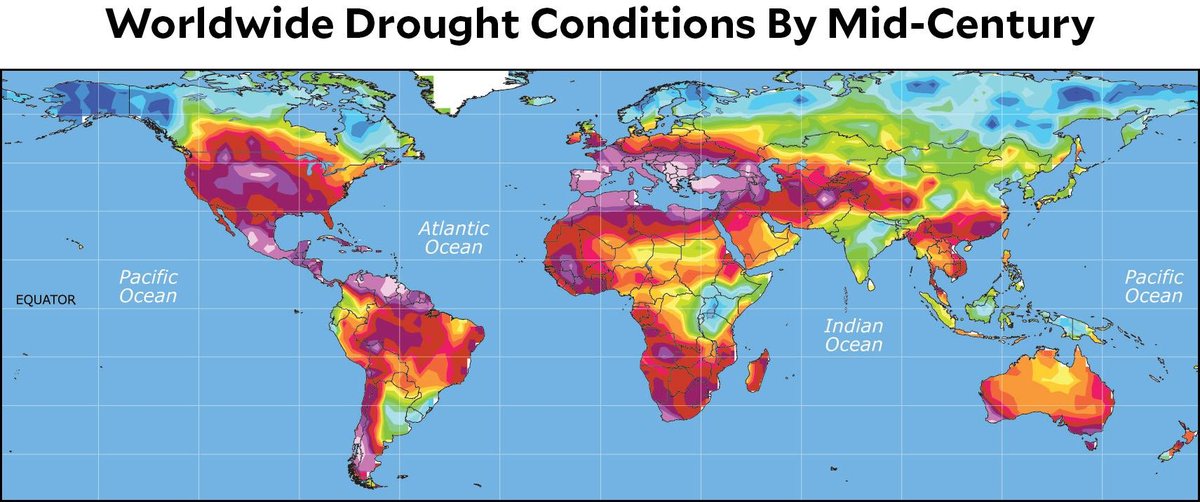
A note from the Kumamoto International Glad I'm Not my Kids Desk: This map showing how rainfall patterns are expected to change over the mid-term portrays Kyushu as yellow, which is better than purple but not as good as green, the color portraying the rest of Japan. I am not sure why Kyushu gets the short straw climate change-wise, but simply thinking of our recent weather, it's already here. - William

2018-08-08 09:10 JST

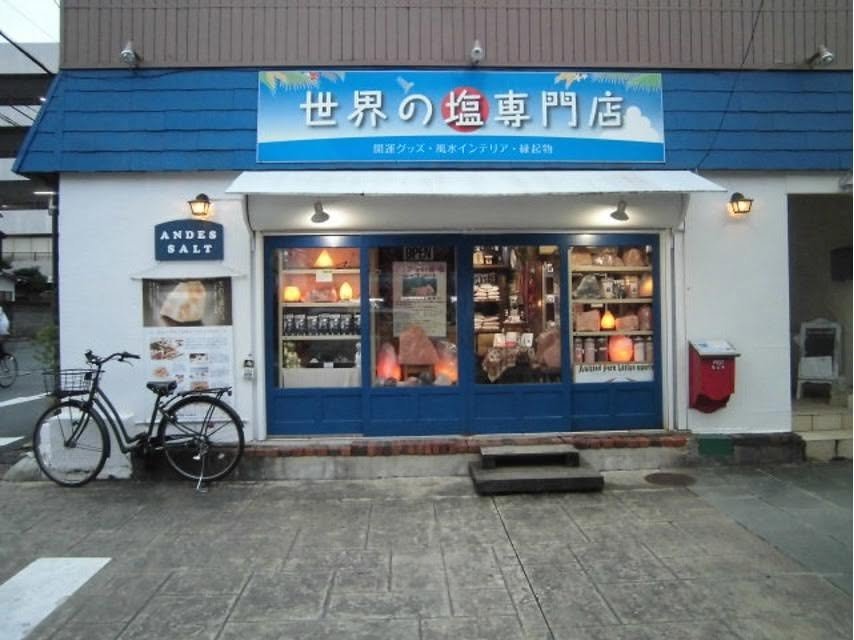
We had written yesterday about that salt shop, Andes Salt, located close to Route 3 on the right side of Fujisaki Shrine road (across from the shoe store which stocks a wide variety of geta - Japanese clogs - for low prices, if you're in the need). I had asked the proprietor, Honda-san, for this photo, which features on his name card. Suitably, the shop exudes a Mediterranean vibe. Do stop by. Honda-san is a polyglot, and that's his bicycle, which is there whenever he is. - William

2018-08-07 11:41 JST

My latest newspaper article out today, on another aspect of Japanese society that affects the safety of our everyday lives.
Kumamoto people: do you recognise where the photo was taken? It's a classic example of how pathetically narrow the bicycle lanes are here.
Thanks, Seán Michael Wilson

Japan's road system needs to be redesigned to make it safer for cyclists
In July 2015, a set of stricter rules came into place regarding bicycle use in Japan. One of the aspects of this is to disallow the use of bicycles on pedestrian sidewalks, apart from “exceptional circumstances.” Now, that may seem a good rule. We have all seen people riding carelessly…

2018-08-07 09:16 JST

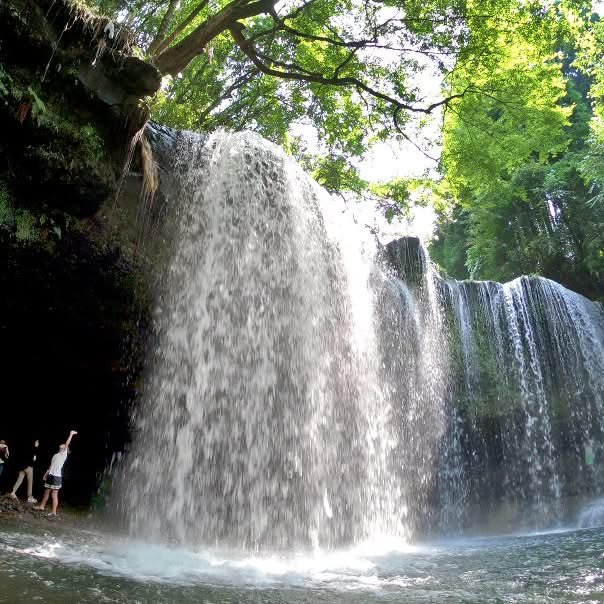
Nabegataki
Ah, Nabegataki
Nabegataki
(Not knowing how else to introduce this waterfall, I've attempted a cheap imitation of one of Matsu Basho's poems. -- Kirk)

Cool cascade: Visitors flock to waterfall in Kumamoto Pref. to beat the heat - The Mainichi
OGUNI, Kumamoto -- Nabegataki Falls, famous for its wide curtain of water, is attracting many visitors seeking to cool off amid the current heat wave.

2018-08-07 07:44 JST

A note from the Kumamoto International Desk of Bureaucratic Stuff One Learns Too Late (pay attention!): When my son went bye-bye to study in America, we duly severed him from our health insurance and left him to his own devices (Obamacare!). When the same happened with our daughter, we continued paying her premiums as we worried that her asthma might require medical treatment during her brief visits home.
Here is where it gets interesting.
When my daughter turned 20, demands for payment to the pension system began to arrive, while they never did for my son - it turns out that health insurance and pension are connected, you see. So my son is invisible to the system (ironic, as he now lives in Tokyo); meanwhile, my daughter has racked up $1,800 in pension fees despite having no job and living in the US. I continued to toss statements into the bin until the most recent, which gave me pause: It stated that they could resort to confiscation in lieu of collection.
This was totally fine with me. I mean, my daughter is an adult, so I have no legal responsibility for her, and if they want to confiscate stuff - look at her room! It's littered with unwanted underwear and whatnot. They'd be doing me a huge favor by confiscating as many of her assets as they could get their hands on.
But I'm a bit more responsible than that (the urge was there for a moment, though), so I visited the tax office, where I was politely informed that she would be exempt from pension payments until she's 23 (and this also cancelled the $1,800 they'd claimed, which means I'll have to clean her room by myself) - the age when one must choose a nationality under Japanese law.
So there you have it. If you are the parent of a dual-national child and remove them from health insurance, should they move abroad, they will not be automatically enrolled in the pension service. If they are enrolled, even if they are abroad, they will. (The insurance clerk told me we may receive continuing correspondence demanding payment or confiscation for some period, so perhaps there is still hope. Otherwise, I'll have to clean my daughter's room myself.)

2018-08-06 19:48 JST