Archive of the Kumamoto International Facebook group, 2011–present.

2004

Kirk here reporting that we just had an earthquake (21:48). Misato was "lower 5" (5-) on the Japanese shido scale, which is strong enough to cause damage -- hopefully minor is this case. The magnitude was 4.7. Interestingly, Misato is slightly north of the epicenter. Other points closer to the epicenter seem to have had less shaking. Of course, I guess that makes sense if one considers that geological factors (sandy soil vs. solid rock base, etc.) have a lot to do with how much shaking happens.
https://www.data.jma.go.jp/multi/quake/quake_detail.html?eventID=20220626214849&lang=en

2022-06-26 21:52 JST
3295

William Lil' info on that quake you just felt: epicenter Yatsushiro, depth 10km, magnitude 4.7, 5 weak on the Japanese scale.
The way it's lined up makes it appear to have occurred on the Hinagu fault, which you can play with here: https://gbank.gsj.jp/geonavi/geonavi.php#11,32.71327,130.77556

2022-06-26 21:52 JST
1512

William A bit more about springs and where to find them: Kakibaru (柿原) is a neighborhood on the eastern flank of Mt. Kimpo, whose weight causes water to gush out in lots of places, one of which is called お手水の森 (ochyōzu no mori). The strange pronunciation is due to a legend: apparently, Takeiwatatsu no Mikoto (the main god of Ichinomiya Aso Shrine, who I wrote about the other day) used the spring for ablutions (sacred washing of hands); both that action and its location are referred to as お手水, ochyōzu (most shrines have お手水 for washing hands or rinsing out one's mouth before prayers).
The location, now run by a restaurant, has a small trough-like pond stocked with nijimasu (虹鱒 - rainbow trout) which can be taken home or they'll cook 'em for you on the spot; a large pond not suitable for swimming; and, in the back corner, the spring, a waterfall which is the ochyōzu. The delicious, biting water tumbles down from fissures in a small cliff, and visitors are welcome to find a niche in which to chill.
The official Website: https://nijimasu.jp/spot/ochozu/

2022-06-26 17:10 JST
1000

Olivia here,
Just returned to Japan after being in Taiwan for a while 🤗
Sharing with you a volunteering opportunity, helping a friend.
Please contact the email address provided directly for more details ::
marialourdes.kase@gmail.
com
⭐️ Volunteers Needed ⭐️
⭐️ At least 5 foreign Volunteers needed for an overnight English event in Oguni, Aso here in Kumamoto sponsored by the board of education there.
🌟 It’s on Aug. 3rd & 4th. 🌟
⭐️ The accommodations & food are great! It’s in a traditional Japanese inn with onsen & it’s by the river which is so much refreshing.
⭐️ We have this event every year at the board of education premises but it stopped during the start of Covid-19 but now they want to resume.
1st day will be for 6th graders &
2nd day for 3rd year Junior high. Very easy tasks so no worries as the organizer will prepare everything & the volunteers just need to be there to facilitate the students.
The organizer needs at least 5 more foreign volunteers as she have already gathered some.
It’s a VOLUNTEER event but there’ll be a sort of honorarium which is about 8,000 yen or so at the end of the event which the board of education directly gives to each volunteer.
The place is really nice especially if you love rivers , onsen & Japanese food.
Transportation will definitely be provided from Kumamoto City’s International Center to Oguni & back.
✨✨✨✨✨✨✨✨✨✨✨✨

2022-06-25 08:30 JST
401

William In my post about Takamori Tunnel, a reader had commented on a phrase used in the accompanying article describing Takamori as "a town where God enjoyed his honeymoon.” There is a reason for this, and, searching for it, I found that translating the "Aso Daimyōjin no Hanashi " (阿蘇大明神の話) from Aso Shrine's (in Isehaya) Website would be the simplest method. Then it occurred to me that the Website lacks an English mirror site, so I thought I would send them my translation and offer to translate the rest of their site for free. The site address: http://www.asojinja.jp/kami.html
A favor I have to ask is for interested readers to read the original and give advice on my translation. When satisfied, I will send it to the shrine office. Thank you in advance. My translation is as follows:
The story of Aso Daimyojin
Once upon a time, the grandson of Amaterasu Omikami, Ninigi no Mikoto, descended upon a pinnacle in Takachiho, Hyuga to rule the country of Japan.
It was then that the third emperor, Jimmu, set sail from the port of Miyazaki to first reign over the Country of Japan in Yamato no Kuni (now Nara Prefecture).
Emperor Jimmu ordered his grandson, Takeiwatatsu no Mikoto, to rule the land of Kyushu. As the god who developed Aso, he is the central deity of Aso Shrine and is also called Aso Daimeijin.
The spirit of Emperor Jimmu was enshrined by Takeiwatatsu no Mikoto at the site where the Emperor, his grandfather, had lived in Miyazaki. That shrine is now Miyazaki Shrine, whose ancient records describe Takeiwatatsu no Mikoto.
Takeiwatatsu no Mikoto concluded that, to rule Kyushu, he must position himself at its central part. Heading north along the coast and following Gokasegawa River up from Nobeoka, he arrived at Takachiho and Kusakabe (now Takamori-cho, Aso-gun). Here dwelt the god Kusakabe Yoshimi, his uncle, who joyfully welcomed Takeiwatatsu no Mikoto, and here he married Aso Tsuhime, daughter of the god Yoshimi.
In the land of the mountain that spits fire, the land of Aso, they went in search of a new realm. Aso and Nangō valleys of Aso at that time were covered with sheens of a large lake. They vowed to flush the lake of water and cultivate it. They first tried to trample Futae Pass, but as it was double, it did not break. Then, when they kicked Sugaru in Tateno (now Tateno, Choyo-mura, Aso-gun), the mountain groaned and crumbled and the water of the lake rushed out. It is said that Sugaru is a contraction of "sukimagaaru", meaning both "there is a gap" and "thoroughly." Also, the soil which then flew is said to have created Oyama Toshima in Kumamoto City and Tsuchikure in Kikuyo Town. Sugarugataki waterfall is said to have been named as several deer hunted by Shimono were washed away.
Takeiwatatsu no Mikoto cultivated the now-dry Aso and Nango Valleys, growing crops and creating an abundant land. The tomb of Takeiwatatsu no Mikoto is said to be the "Ichinokami Mausoleum" and that of Aso Tsuhime "Ninokami Mausoleum, " both east of Aso Shrine's Sakura Gate.
Notes:
瓊瓊杵尊 Ninigi no Mikoto (Japanese deity; grandson of Amaterasu、great grandfather of Emperor Jimmu)
神武天皇
じんむてんのう
(個人名) Emperor Jimmu; Jimmu Tenno
健磐龍命 Takeiwa tatsuno-mikotoする According to "Kujihoongi" (Ancient Japanese History), Hayamikatama no mikoto, who was Takeiwa tatsuno-mikoto's child, was the first Asonokuni no miyat

2022-06-24 17:28 JST
320

Fiona here, starting a thread for those planning international travel this summer to ask questions and share advice. To kick things off, I'd like to ask if anyone has used the PCR test service offered at Kumamoto Airport and whether it's recommended for onward journeys overseas.
木下PCR検査センター 熊本空港店|阿蘇くまもと空港 オフィシャルサイト
阿蘇くまもと空港の公式サイトです。フライト情報、路線別時刻表、交通アクセス、施設サービスの情報などをご案内しています。

2022-06-24 15:24 JST
2032

Hi Atsuko.
It was hot day today too. I was excited to see blue skies and white irido-clouds because I am a summer lover.
Now guess, where am I?
This small field is full of sunflowers in full bloom. Kinpouzan (Mt. Kinpou) or Unzen (Mt. Unzen) can be seen in the back.
This small field of sunflowers is across the street from the Nishi Ward Office,西区役所. It is my way home every day. It is neither famous nor large, but it is a good place to get a head start on summer.
The ward office across the street has a library. Next to the ward office, there is a hot spring at West community center, 西部交流センター that uses the heat from a garbage incinerator, 西部環境工場. This center also has a small gymnasium, which can be used casually. I played table tennis with my family in GW and also enjoyed the hot spring (I went there to play badminton, but I did not have a reservation). You can rent badminton and table tennis equipment or bring your own. The gym courts are 200~500yen /hour, the equipment is about 100~ 200yen each, and they also sell fresh vegetables from the area.
I hope you also enjoy the summer flowers, exiting games, hot spring,,,,,,
Anyways HOT(๑˃ᴗ˂)و♡
West community center in Kumamoto city
http://seibu-koryu.com/info/

2022-06-23 22:14 JST
310

In a post near this one, I tried to reply to William Baerg on the subject of how Yatsushiro Museum translated its Japanese name. I could not post any images supporting my observations. I will now try again to upload the images here. If I do not succeed I will delete the post.
Looks like I finally succeeded! (Douglas)

2022-06-23 08:29 JST
1071

William A bit more about springs and where to find them: The photo below taken from Yakuinbaru (役犬原) is legible if enlarged enough (an aside: the kanji 原, usually "hara," is only pronounced "haru" in central/southern Kyushu). In a nutshell: ①There are many springs around Mt. Aso; ②This is due to Aso's unique geology; and ③They are useful for various purposes.
Of more interest (to me, at least) is the common use of the character "inu" (犬) in place names. I looked it up.
According to this explanation https://tinyurl.com/2r6zxny9, its use as a place name may derive from the kanji for golden eagle, "inuwashi" 「犬鷲」or 「狗鷲」, apparently so named either as they are inferior in beauty to mountain hawk-eagles (kumataka, 熊鷹); that their rapid, graceful movement is reminiscent of the goblin tengu; or that their short, high-pitched cry sounds like that of a puppy.
This all leads me to believe that places with (犬) in their names must once have been sites of golden eagle hunting. The updrafts common in the caldera (watch out for hang gliders!) would make hunting with birds there sensible. Thus, the place name 役犬原 would not have derived from "plain of useful dogs" but "plain of useful golden eagles."

2022-06-22 18:22 JST
3979

William with a bit more re: Kumamoto water. Takamori, a town in the southeast corner of Aso caldera (inasmuch as a round caldera can have a corner) is famous for its tunnel-to-nowhere.
In 1973, work on the Kyushu-Chubu Crossing Railway, which would have connected Kumamoto with Oita, was begun on what is now the Minamiaso Tetsudo Takamorisen (南阿蘇鉄道高森線), which entailed digging a tunnel from the caldera floor to emerge somewhere around Takachiho.
Things bogged down in 1975, when water began spouting out from tunnel walls in volume increasing as the tunnel progressed, and in 1980, with 2055m dug, the project was abandoned.
The tunnel continues to spout pure spring water of 32 tons per minute, and its first kilometer, known as Takamori Yusui Tunnel Park (高森湧水トンネル公園), is open to visitors. Narrow lanes on either side of the waterflow pass through the dimly-lit tunnel, with strobe lights causing streams of water droplets cascading from the walls to appear like strings of pearls. Its 17°C year-round temperature make it cool in summer and, ironically, warm in winter.
Several events are held to celebrate seasons, particularly Tanabata and Christmas. In July, colorful Tanabata decorations are hung the length of the tunnel, enhancing its sense of mystery.
Below photos nabbed from the Web: tunnel entrance; water droplets under strobe lights; Tanabata decorations; tunnel end. Also, while swimming in the stream outside the entrance may be discouraged, as in the final photo, bring your trunks just in case. Access easily by train; change lines at Tateno Station to the Minami-Aso railroad and disembark at its terminal, Takamori station. The tunnel is a short walk from there.
An English-language welcome:
http://takaramori.com/en/spot/leisure_detail.cgi?up_spofo1=1005

2022-06-21 21:18 JST
610

William An example of a "portmanteau" - an autological word, or word which describes itself - is, well, "portmanteau," which derives from porte, imperative of porter, "to carry," and manteau, or "cloak." (Today it's more commonly known as a "carry-on.") "Labradoodle" is also a portmanteau so well-accepted that my spell autocheck allows it.
A neologistic portmanteau is "glamp," combining "glamorous" and "camp." In my day, that meant you had a bucket to poop in (or "pooba," as we called it). Times have changed.
Kumanichi reports that "グランピング," as glamping is known in Japanese, is sweeping Japan. "Sky Terrace," whose roof overlooks Shirakawa, offers barbecue space, a kitchen, and a tent, while the restaurant "Little Garden" in Higashi-ku offers "two tents lined up in an area of about 200 square meters in a green garden with the image of a forest" and Sakuramachi announces their glamping spots are already fully reserved. Prices seem to start at around ¥4,500 yen including food. Kumanichi: https://kumanichi.com/articles/696679
Pictured below: a photo of glamping atop Sky Terrace and a labradoodle (not included).

2022-06-20 17:11 JST
3003

Kirk here with a Mainichi article on Yamaga's Yachiyoza. It's a traditional theatre well worth visiting.
One bit of information that was new to me: "The pit under the stage was flooded in the torrential rain disaster that struck the Kyushu region in July 2020, but the damage was repaired by late September the same year."
Retro Japan: Once shuttered theater in Kumamoto Pref. returned to life by elderly locals - The Mainichi
YAMAGA, Kumamoto -- A playhouse in this southwestern Japan city once deteriorated in the Showa era (1926-1989), but was saved by elderly locals.

2022-06-19 13:14 JST
1000

Carlton here. To all my fellow fathers out there, Happy Father’s Day!! May you all be well celebrated.

2022-06-19 10:00 JST
2843

William Tsuboigawa (坪井川), which drains the area from the east around the south of Mt. Kimpo, is the little river that could - do a lot of damage. Its flow meandered along with Shirakawa until Kato Kiyomasa disciplined them with banks and catchment areas, which anyone who lives near Tsuboigawa knows are barely enough during heavy rain. The Tsuboigawa Greenbelt (Tsuboigawa ryokuchi, 坪井川緑地) was thus created. The area is accessible via Kumamoto Dentetsu Kitakumamoto station.
Kumanichi reports that this is the season to view lotus blossoms.(hasunohana, 蓮の花 - the root is called renkon, 蓮根). Buddhists revere the flower as a symbol of the rise to Nirvana through the muck of life, and the lotus root as food is such a symbol of Kumamoto that the Hosokawa family crest is modeled on it.
Kumanichi: https://kumanichi.com/articles/692865

2022-06-17 17:13 JST
1161

Kirk here with an English-language article about the alleged hazing at Seiseiko. As I reported in my previous post, the judge found the school innocent:
https://mainichi.jp/english/articles/20220531/p2a/00m/0na/012000c
The Mainichi article ends with the following quotes from Ryo Uchida of Nagoya University:
"I'd hoped the court would look at how the student felt (about the incident) rather than looking at the case as a mere formality to see whether there was a violent act. It should've taken into consideration that the school song training and head-shaving were done under peer pressure, in an environment where underclassmen could not resist upperclassmen's demands. . . . The school should not try to justify these acts using tradition as an excuse, but review them in the context of changes in society and the circumstances that children face."
These comments strike me as very reasonable.
Japanese court dismisses man's claim he left school due to head-shaving 'tradition' - The Mainichi
KUMAMOTO -- A district court here on May 30 dismissed a damages suit against the Kumamoto Prefectural Government, in which a 20-year-old plaintiff cla

2022-06-16 18:06 JST
1101

Kirk here with a repost of a job offering from early April. The original post was here:
https://www.facebook.com/Kumamotoi/posts/7120640338009337
And here's the main text of the announcement:
--- start quote ---
Freedom English School, located in Kamitori and Suizenji in Kumamoto City, is seeking an English teacher for a full-time position starting in July.
Applicants should be comfortable teaching children of all ages, ranging from kindergarten age through to Junior High School students. Experience is preferred, but not essential for the correct candidate. Pre-employment and on-the-job training will be provided.
We offer a competitive financial package - details of which will be provided on request - and an excellent working environment. If you are interested in joining our growing teaching team and would like to find out more information, please contact Greg Howes at [email protected] or 096-322-7100.
--- end quote ---
The photo is from the schools website, which is here:
https://www.freedomenglishschool.com

2022-06-16 09:13 JST
4392

Kirk with some news that is clearly appropriate for this page: the planned expansion of Kumamoto International School.
The image I've added to this post is from the following news video:
https://www.tku.co.jp/news/?news_id=20220615-00000003
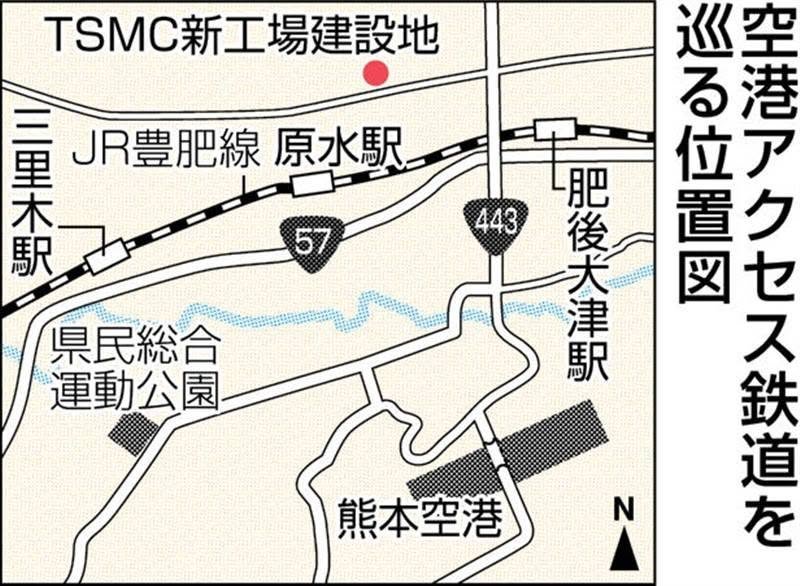
The news report briefly reviews the history of the school, explaining that it began in 2003 as a preschool and that it established a primary school in 2018. Currently, 76 children attend the school, which is located in Nishibaru (close to where a fork in the road takes drivers on the Higashi [East] Bypass to the Kita [North] Bypass). They are planning to start construction this year on a new, much larger, school in Toshimanishi (or Toshima Nishi?). The new location will be closer to the planned TSMC plant and it is expected that many of the 300 or so employees from Taiwan who come to work at the plant will send their children to the school. The school will also hire teachers from Taiwan, so it seems that Chinese will be part of the curriculum, in addition to instruction in English. The new school will have a junior high school and the eventual addition of a high school is also planned. The report says that they expect about 420 students to be enrolled by the time that all grade levels are up and running.
The following FNN report is similar but, unlike the first report, it features an interview with Matthew Ohm, the principal of the school:
https://www.fnn.jp/articles/-/375959
I think I'd heard him speak Japanese in the past but I'd forgotten just how good his Japanese is. Truly excellent!
Speaking of Japanese, the school has an excellent Japanese-language website but information in English is harder to find. Here's the address of the Japanese-language website:
https://kumamotointer.jp
I couldn't find an equivalent site in English, but the Japanese site seems to have some blog entries in English. Here's an article about KIS officially becoming an IB World School for the Primary Years Program (PYP):
https://kumamotointer.jp/blog/kis-is-now-an-ib-world-school/
Congratulations!
And here's an external site with some information about the school in English:
https://www.ibo.org/en/school/061056
Perhaps that's enough for today. I'm getting tired of typing and you're probably tired of reading. ;)

2022-06-15 21:47 JST
1833

William Another in our series of water bodies in which to dabble: "じゃぶじゃぶ池," or "splash about pond." The Hosokawa family once had a large summer house with an immense spring; the house is gone (though much of the land remains property of the clan), replaced by a wedding venue; the voluminous amounts of water flow under various gates through two streams into Lake Ezu. Of particular fun for tots is a small waterfall, on the right of the photo, where the crystalline, chill water drops to lake level. Older kids will enjoy exploring the waterways as they cut through thick vegetation. Peek over walls to admire spring-fed gardens of private houses. Lake Ezu parking is free, but the entrance from Denshadori is hard to find so scouting on foot beforehand is recommended; it fills up quickly, so arrive early with a picnic, shoes for walking in water, and a collection bucket. As there is a vast area to explore, the area is suitable for all elementary school kids, while the pond is safe for infants.
(Photos from the Web.)
City Website: https://www.ezuko-park.com/blog/16380

2022-06-15 21:21 JST
22103

William Kumanichi reports on a lighthearted event for a rainy day: the "Love Ride" (こいのり) is a streetcar chartered by the Kengun Shopping Arcade Promotion Board which traveled between Kamikumamoto and Kengun full of some 50 lovelorn men and women in their 20s and 30s looking for matches.
Also aboard was a "marriage coordinator," Araki Naomi, who gave such advice as "Expressing interest is like a turn signal: it must be obvious."
Perhaps any effort to revitalized Kengun, which has rapidly declined to "shutter street" (シャター通り) status, is welcome. This may result in a new generation of patrons.
https://kumanichi.com/articles/689358

2022-06-14 14:53 JST
1623

William Another on our list of springs that entertain children: Hakenomiya (八景水谷), or "the ravine of eight views," was originally a teahouse founded by the third Kumamoto lord, Hosokawa Tsunatoshi, who also developed the area as a flood storage plain to regulate the flow of Tsuboi River, which serves as the moat of the castle. Three wells provide municipal drinking water. The springs adjoin a spring-themed museum, Mizunokagakukan (水の科学館), which is rather informative and also provides restrooms and free parking. Public transportation: a short walk from the Hakenomiya stop of Kumamoto Dentetsu, whose downtown station is in front of Fujisaki Shrine.
Link to the museum: https://www.mizunokagakukan.jp/
Link to City site with map: https://www.city.kumamoto.jp/kankyo/hpkiji/pub/detail.aspx?c_id=5&id=20627&pg=3

2022-06-13 15:00 JST