
A New Year's Primer (Please add additional ideas in the comments):
-
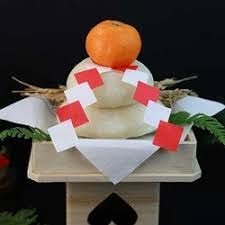
Kagami-mochi (鏡餅 ), literally "mirror mochi" due to their resemblance to ancient mirrors, are two- or three-stacked piles of mochi which symbolize continuation of generations.
-
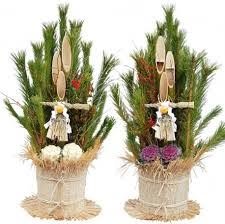
Kadomatsu (門松), literally "door pines", are generaly placed within a bamboo container on either side of the entrance way to welcome ancestral spirits or whatever other benevolent kami may be wandering by.
-
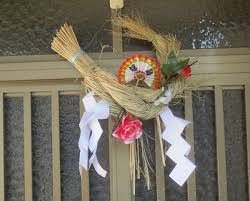
Shimekazari (しめ飾り or しめ縄) goes way back to a fight between Amatera Oomikami (天照大神), the mythical Sun Goddess, and one of her naughty disciples, whom she banished to the sea, which is why such ropes are often seen connecting two sea rocks together. They are hung at the entrances to shrines and houses as a barrier to evil.
-
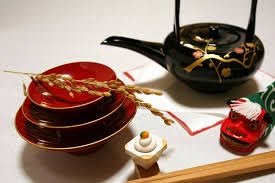
Otoso (お屠蘇) means to slaughter 'so' (蘇), a kind of demon; you might notice 蘇 is the same kanji as 阿蘇, which might be translated as "hidden demon."
-
Dondoya (どんど焼) is an event held usually around January 15 - but may be held quite earlier at your local shrine - at which religious artifacts are burnt. All of the above items are not simply tossed in the trash; they are brought personally to the dondoya or entrusted to a shrine, who will presumably conduct the rites.
Images of each are shown respectively below. - William