Hi friends.
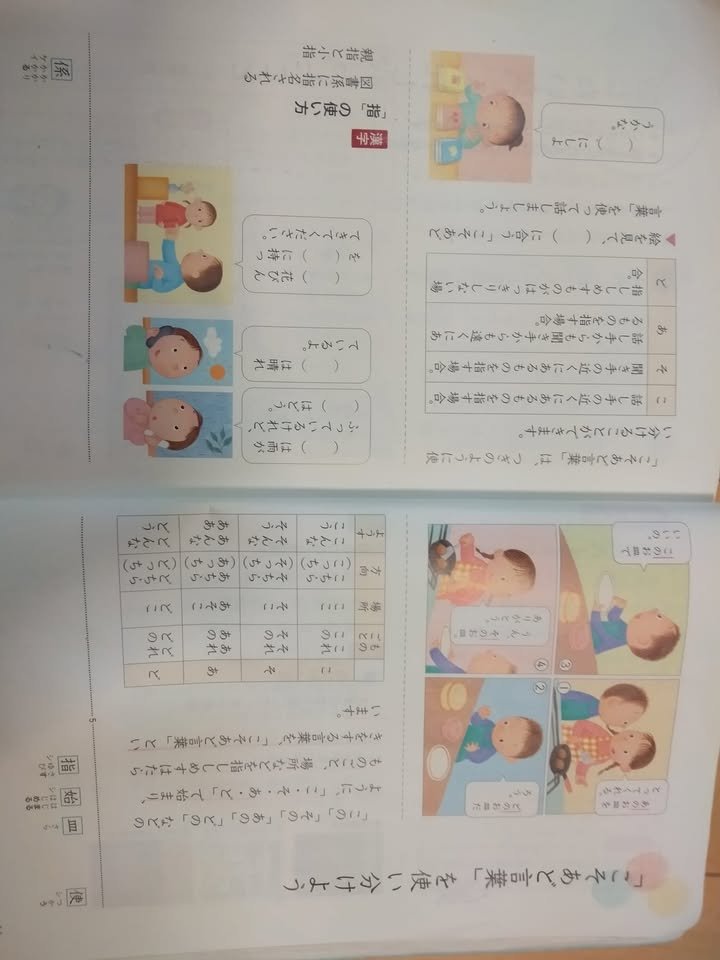
This photo is a Japanese text page of 3rd grade of elementary school. I taught students about this page yesterday. Some of you might know the words こそあど言葉 ko-so-a-do Kotoba.
こ~、(ここ、これ、こんな、この....)means the thing it's placed close to you, here.THIS.
そ~、(そこ、それ、そんな、その...)means the thing it's placed far from me but near from you, there. IT.
あ~、(あそこ、あれ、あんな、あの...)means the thing it's placed far from both of you and me, over there, THAT.
ど~、(どこ、どれ、どんな、どの...)means the speaker doesn't understand which, where it is. It's where, which, how, and who.
It's a simple rule.
Yeah,Kumamoto dialect is also adapted.
こぎゃん、そぎゃん、あぎゃん、どぎゃん。
It's very familiar Kumamoto dialect. If you want to hear the words, you just ask someone, like Kumamoto-jin the road to somewhere. Older is recommended, haha. Some taxi drivers also ask us どぎゃん 行(い)きますか?'' (Which way we should take?'' ) "' こぎゃんでよかですかね' ''Is it OK in this way.?''
Sometimes,
someone can explain the direction with on the map or with their finger.
They say without こそあどwords. "ぎゃん 行(い
)って、ぎゃん行(い)ったら着(つ)く''It means ''If you go .this, this, you can arrive''. With lots gestures and pointing.
You might also know about,
こっちさん、そっちさん、あっちさん、どっちさん。
It's said in middle of Kumamoto. It seems to be said these as little bit more polite words.It's like this, あっちさん 行きなはっとよかですよ。You should go that way, it's better for you. (行きなはっと、and よかですよ。 also include polite , honorific meaning)
In Addition,If you go to north of Kumamoto prefecture, like Arao, Nankan, Taimei, near to Fukuoka.
The words might be こげん、そげん、あげん、どげん。
For example, そげんこつ言いなすなyou should not say such things(it).
If you go to Fukuoka, the words become
こげな、そげな あげな、どげな。
I was born and brought up in north of Kumamoto so I only know about there. If someone knows about the these words in
Kumamoto dialect, Please post it here.ーAtsuko(Ü)