Ariake won yesterday! Oddly, nothing came into my feed in English. Here's a translation of the Japanese article I'm linking to. -- Kirk
--- start ChatGPT translation ---
They Don’t Need to Carry the Disaster-Stricken Area on Their Shoulders — The Earnest Play of Ariake, Kumamoto’s Representative, Is What Matters
August 13, 2026, 12:30 p.m.
Updated August 13, 2026, 3:42 p.m.
Shinjiro Omiya
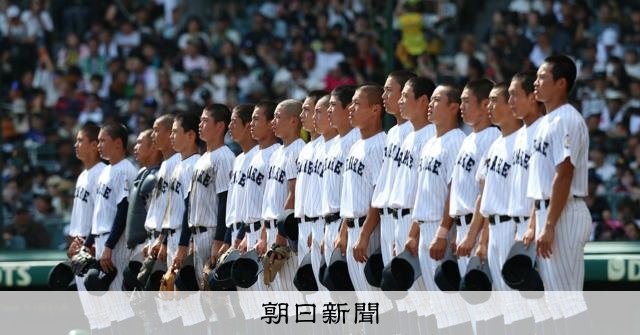
[Ariake players sing their school song after defeating Nagasaki Nichidai. Photo by Koichiro Yoshida]
(August 13, 108th National High School Baseball Championship, second round: Ariake 3, Nagasaki Nichidai 2)
When Ariake of Kumamoto came from behind with two outs in the ninth inning to win its first-round game on August 7, Haruki Nagata, who delivered the decisive hit, said in a postgame interview:
“We’re playing our hardest in the hope that we can give courage to the people affected by the Kumamoto earthquake in July.”
They were admirable words. News of the victory reached evacuation shelters in Kumamoto, and some people there reportedly shed tears.
Whenever a major disaster occurs, the school representing the affected area is expected to shoulder a larger “cause.”
About three years ago, I had an opportunity to ask Tomoya Saito, manager of Seiko Gakuin of Fukushima, about 2011, the year of the Great East Japan Earthquake.
About a month after the disaster, he said, he took his players by bus to the coastal area of Miyagi Prefecture. When he saw several large ships that had been swept inland by the tsunami, he realized something.
“There’s really no way we can carry something like this on our shoulders.”
Sometimes there is only so much that sports can do. Some people have had their peaceful everyday lives taken from them for no reason and are in no position even to think about baseball. I do not think high school students need to be made to feel such a strong sense of mission that they believe, “We have to give people courage.”
That day, Nagata of Ariake was repeatedly asked about his feelings for Kumamoto. He also said this:
“Of course, thinking about the people affected by the disaster is important, but first we need to play our own game, and then, as a result of that, hopefully we can give them courage. That’s what we talked about as a team.”
Even in the late innings, Ariake aggressively attempted stolen bases and fought its way out of difficult situations. It was exactly the kind of baseball the team had developed. Riding that momentum, Ariake went on to defeat Nagasaki Nichidai in the second round as well.
There is no need for them to tense up under the burden of playing “for the disaster-stricken area.” It is fine to play for the teammates they have spent the past two and a half years with, for their families, or simply for themselves because they love baseball.
Their wholehearted effort may, as a result, encourage someone else.
Nagata’s words reminded me of the importance of getting that order right.
--- end translation ---