Just reposting a tidbit I put on my private page - William
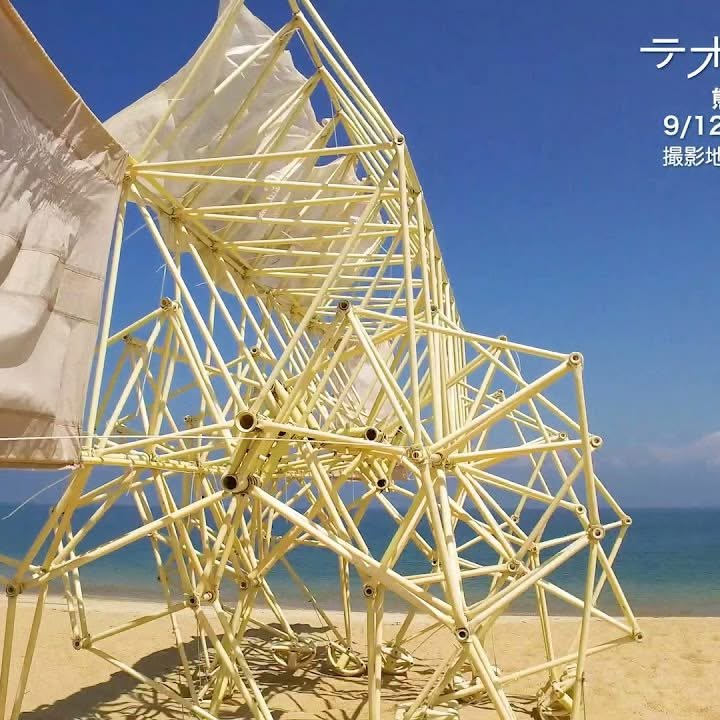
My adopted hometown of Higo (now Kumamoto) occupies a somewhat precarious position, sandwiched between Hakata (now Fukuoka), which was always closely controlled by Edo (now Tokyo), and Satsuma (now Kagoshima), which alone among all Japanese domains was never controlled by any one clan but the Shimazu (still the Shimazu) - they were always like, "Come and get us!" to the shogun, and the armies that trampled back and forth did so in my backyard, Higo (now Kumamoto). Even today, the Hakata and the Satsuma retain a mutual dislike, and nobody likes Kumamoto, us poor Higo-ko, as we're still known. But that Tom Cruise movie, the Last Samurai, (very) loosely based on history, took place in my hometown. (Pictured: it's like, "Sure, invade us! We have impassable mountains and caldera lakes and live volcanoes, and we know where all of them are, but you don't!").

2021-05-29 20:27 JST

My wife reads the 今日の料理 (Kyo no Ryori) magazine and watches its associated TV show like it's some kind of religion. I flip through the magazine as a guide to what will show up on my table sometime during the week. But their was an interesting ad on the rear this week for pure-cane sugar (きびさと、きび砂糖 - there seems to be no kanji for きび). Sugar and salt are the elixirs of life. Once, in a remote corner of Kagoshima, I came across a small salt still - the owner told me she takes discarded wood from construction sites to boil the local water down to its solidities, and that the reason the salt is so good is due to the calcium that the coral in the water provides. She let me buy some with the warning that she normally does not sell to individual customers, only those in her network (high-end restaurants).
.

2021-05-29 19:17 JST

Other things about the corona virus we've likely not thought about: Kumamoto University students are for the most tossed out into the wild and told to forage for themselves, but foraging, consisting mostly as it does of restaurant work, has all but dried up. So a project, called the くまもと学生食料支援プロジェクト has been launched to provide free meals to Kumadai students. One is quoted as saying, 「夢みたいなありがたいことやってる。おまえも来い」- "I'm so thankful - it's like a dream! All of you guys, get out here!" - William
https://kumanichi.com/articles/248181

2021-05-29 16:29 JST

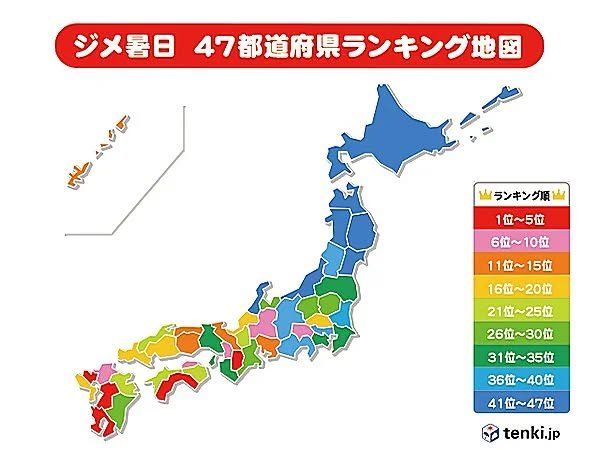
There seems to be some dispute about the etymological origins of 熊本. This is the most persuadable argument I've heard. The original kanji for Kumamoto didn't use 熊本 but 隈本ーthat is, "foot of a nook." And if you think about the city before the land reclaimers got to work, that was so - we were a small alluvial plain at the foot of the central Kyushu mountains. It was also (and still is) known as "Higo" (肥後), as opposed to "Hizen," modern Fukuoka, across the mountains. https://ja.wikipedia.org/wiki/%E8%82%A5%E5%89%8D%E5%9B%BDBut The eventual powers that chose our name chose to somehow imbue us with a glory that us Higokko naturally avoid so changed the 隈 to 熊, and thus, Kumamoto became associated with bears (see: Kumamon) despite the fact that no bears have ever lived here. Pictured are Hizen and Higo. - William

2021-05-29 15:35 JST

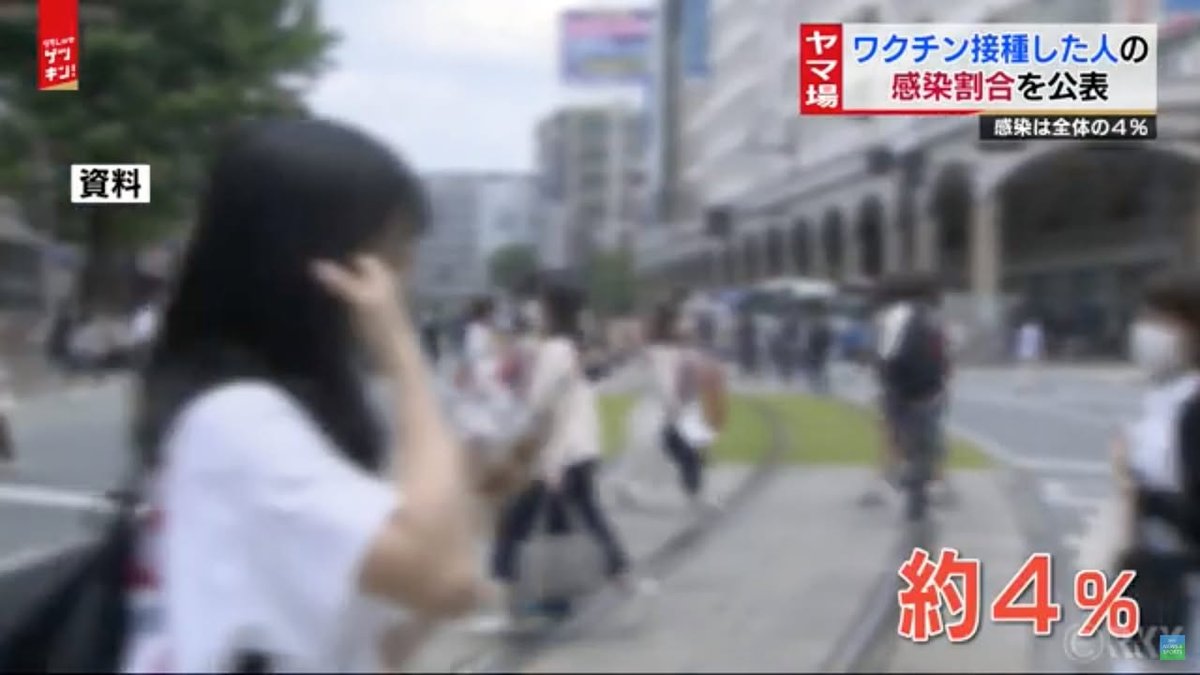
Introduction of the corona virus vaccine has begun in Kumamoto, with Kumanichi describing it as 混乱する中 - "confusion amidst" - who can get it where, when, and how many times seems unclear. As an aged society, many in Japan are susceptible to the virus; it is hoped that they can quickly and easily get the vaccination. But as an etymologist, I'd like to point out that the first vaccines were used on cows for hoof-and-mouth disease (not clear what that is, but it appears to refer to cows who say something really stupid); etymonline notes "(vaccine is) from Latin vaccina, fem. of vaccinus "pertaining to a cow" - which is a bit redundant, as cows are always female (males are bulls or, if unlucky and shod of their testicles, steers).-William
高齢者ワクチン接種、小規模自治体で順調 「孫に会いたい」 | 熊本日日新聞社
 一般高齢者を対象にした新型コロナウイルスのワクチン接種をめぐり、熊本市などで予約受け付けが混乱する中、小規模自治体では接種が順調に進み、五木村などでは2回目の接種が始まっている。人口が少なく効率的な...

2021-05-29 14:28 JST

Our friend, Stuart Iles from Hakata, provided this fine photo of a statue of Kato Kiyomasa. If you live in Kumamoto, he's a must-know-about guy. A few facts that you can drop in casual conversation:
- He lived from 1562 to 1611;
- He's not from Kumamoto but Nagoya;
- His life spanned the Azuchi–Momoyama and Edo periods (the former being a stepchild of Japanese eras, when all the warlords were still in the process of outdoing each other);
- It's either a very bad or very good idea to live when eras change;
- He was one of the "Seven Spears of Shizugatake" (賤ヶ岳の七本槍, Shizugatake no shichi-hon-yari), mounted bodyguards for Toyotomi Hideyoshi at the battle of Shizugatake in 1583, crucial in Hideyoshi's rise to power;
- Hideyoshi was clearly terrified of Kato, so sent him off to invade Korea, evidently hoping that he wouldn't return, but he did;
- Hideyoshi made Kato the lord of the Higo fief in way, way south Kyushu as a way to contain him;
- Higo was not united at the time, and there was an epic feud between Kato and the lord of southern Higo, https://en.wikipedia.org/wiki/Konishi_Yukinaga. Guess who prevailed.
- He almost invaded Satsuma, unusual among Japanese fiefs as it wasn't actually a fief: it was the ancestral domain of the Shimazu clan, but was called off (good call: if you've ever been to Kagoshima, you'll quickly learn it is not a good place to invade);
- He is buried at Honmyō-ji temple;
- His son, Katō Tadahiro, seceded him but was quickly deposed by the Shogun Hideyoshi, likely as Higo was earned by his clan, not dispensed, and thus the clan had no obligatory allegiance to the Shogun;
- His family crest was a simple circle, shown below, which is still the symbol of Kumamoto City;
- His successors, the Hosokawa clan, has a family crest which, ironically, means "defend Kato";
- He was famous for his really tall hat, also pictured below;
- When he built Kumamoto Castle, he had it planted with ginko trees as the leaves could be used for horse fodder and the wood for fuel in the case of siege; even today, the castle is known as the "銀杏城” (Ginnanjyo);
- He died en-route from Edo to Higo, whether from natural causes or poisoning - the latter is suspected, again, due to the threat that his position posed to the emerging powers in Edo.
So that's about all I've got. If I've made mistakes or omissions, please add them to the comments below. - William

2021-05-29 12:34 JST

There are a few food trucks in Kumamoto which cruise around selling things like 石焼き芋 (Ishiyaki imo! Imo! Imo!) and ramen, but their number has fallen dramatically, perhaps due to the burgeoning convenience store culture. This is too bad, I think, as their "cuisine" is, by necessity, unique. It makes me miss my hometown of Los Angeles, where taco trucks are ubiquitous in numbers that Adam Smith's "invisible hand" pares down to only the best. Let's hope they reappear. - William

2021-05-29 11:41 JST

I can't find a proprosed chedule for when Japan expects to start giving vaccine shots to people younger than 65. Has anyone else seen a tentative timetable?
PS It's great that Carlton has received his first vaccine shot and is scheduled for his second.

2021-05-29 11:33 JST

Kumamoto boasts about a zillion (I think - I stopped counting after quadrillion) small businesses, and we here at KI want to support them, complementing Joe's "Funky Friday" series. Please PM us your favorite local business and we will post it. Here is one: the bakery ぐちょきぱん - get it? - it's a pun on "rock, scissors, paper" - in Oe-machi, just across from the library. Ohno-san, the owner, bakes their bread all on-site, and it sells out quickly, so you should get there early. Their telephone number is at the photo. If you have any special order, it can be fulfilled. (I gave him sourdough starter from San Francisco). Again, please let us know of your favorite local shop so that we can do a write-up - and visit ぐちょきぱん (early). - William

2021-05-29 11:02 JST

I recently posted about the US telling citizens to avoid travel to Japan. That may be a reasonable policy but, just to put it in perspective, take a look at the COVID-19 cases per million in this graph. The US is finally getting close to Japan's level. Of course, an important difference now is that vaccination levels are much lower here. Still, in terms of numbers, the gap between the two countries has only recently closed.
-- Kirk
https://ourworldindata.org/covid-cases

2021-05-29 00:01 JST

Kumanichi mentions something I'd not thought about: how the closure of retail and leisure facilities due to corona virus is affecting college students. I was a seasonal worker in LA while in college, working at Disneyland when attendance soared during the summer, so I'm aware how important that income is (you can't ask your parents for everything) - and also the work experience. This is tragic for modern youth. - William
バイトない、食費ない…コロナ禍で生活切り詰め 熊本県内の大学生  | 熊本日日新聞社
 新型コロナウイルスによる度重なる飲食店の時間短縮要請や外出自粛要請。アルバイトで生活や学費を賄っていた熊本県内の大学生たちも、感染を警戒されたり、バイト先が閉店したりして、追い詰められている。

2021-05-28 16:47 JST

There's a lil' fish that lives in the pond at Suizenji called the tanago (タナゴ) - kinda cute but nothing spectacular. (Reference: me.) Its importance, aside from its own purposes, is to monitor water quality of Suizenji and its downstream, Ezuko. Apparently, it hasn't been doing so well. - William
https://kumanichi.com/articles/245107

2021-05-28 14:53 JST

Japanese retail differs from that in America in that most each city has their own, individual department store. In Kumamoto, that would be Tsuruya. In an interview, the company president, Fukuoka Tetsuo (福岡哲生) sounded upbeat, touting this time of corona as an opportunity to revamp the store and increase online sales. Kumamoto really cannot afford to lose such an anchor retailer. Plus, they have a beer garden on the roof which is now open. Those with local knowledge will recall the Taiyou Department Store fire of 1973, which killed 104 and injured another 124 and drastically altered Shimotori, where it was located (the space is now occupied by Cocosa, which my wife says people are afraid of entering, such is its horrid history). - William
https://kumanichi.com/articles/245332

2021-05-28 09:02 JST

There was another mass shooting in my sister's town of San Jose. That guns are extremely tightly regulated in Japan (pistols are basically illegal; long guns for hunting require proof of training and strict licensing) is a relief. This attitude goes far back in Japanese history to periods called "sword hunt," when authorities newly-empowered after a period of anarchy would gather and destroy swords that had proliferated. You can read about it here. - William
https://en.wikipedia.org/wiki/Sword_hunt

2021-05-28 07:26 JST

Hello friends.
I've post about Drive through kitchen before.
https://www.facebook.com/123734781033296/posts/5370921802981208/
This is its movie.
It will be held till , June.
Hoping you can enjoy lots tastesーAtsuko(๑˃ᴗ˂)و♡

2021-05-27 21:27 JST

The local TV news station I watch has been reporting on this everyday. Today they were saying that it looks like a group have people must have been involved. I've seen reports on the national news as well. I hope the police can get to the bottom of it. -- Kirk
Ex-town councillor found strangled in Kumamoto
Kumamoto Prefectural Police have launched a murder investigation after a former town councillor was found dead in Kumamoto City

2021-05-27 21:15 JST

Waiting for a train at Yatsushiro Station, the stationmaster came down to announce in person that a special train was about to pass, the はやとの風 (Hayato no Kaze) - "hayato" refers to people who live in southern Kyushu. Apparently, it was a practice run for a new driver (only locomotive - no passenger cars; the Fukuoka-Kagoshima line is all electrified, but the Kumamoto-Oita line uses diesel engines). I asked if I could give driving it a try, but the answer was predictable. It was a cool train. There are many cool trains on the Fukuoka-Kagoshima line - they're rather expensive, but perhaps worth it for train buffs. Information is available at local stations. Cool photos at the link: https://www.tabirai.net/sightseeing/article/feature33/

2021-05-27 20:20 JST

I'm pretty sure that the bird you hear in the video is an uguisu, a Japanese bush warbler. I haven't gotten a good look at it yet but it has decided to hang around our house lately. If I could speak uguisu, I would say "you're welcome to stay here as long as you like. Keep making that pretty music." The cat seems to like the bird's singing too, although this cat's interest may not be purely aesthetic. -- Kirk
https://en.wikipedia.org/wiki/Japanese_bush_warbler

2021-05-27 18:39 JST

Cats make great pets. Unlike dogs, who need you so much that they'll hump your leg, cats will disappear for most of the day (whether indoor or out) and then reappear when hungry with a reproving look. But they also can be very affectionate and loyal; most of this depends on the amount and quality of food you supply and how you scratch them at that certain place at the base of their tail. (They like graham crackers but not s'mores. I don't know why. And don't pick them up. That they hate.) Anyway, if you'd like to challenge living with a cat, our friend Jeremey has a kitten for free. PM us for more. - William

2021-05-27 18:38 JST

Cruising through southern Kumamoto on the incredibly rapid, on-time train, I enjoy observing the countryside homes. They have heavy tile roofs which tell them, "Stay down!" (good idea for a house in typhoons but not when there's an earthquake, during which the opposite command is appropriate). They are often decorated at the eaves with shachihoko (鯱鉾) – or simply shachi (鯱) – an animal in Japanese folklore with the head of a tiger and the body of a carp, supposed to ward off fire (I guess if I were a tiger-carp, I wouldn't like fire unless I wanted to eat myself - biomorphology gets complicated). Did you know 90% of Japanese igusa, the reed used to make tatami, comes from Yatsushiro? Now you do. Impress your friends. - William

2021-05-27 14:53 JST