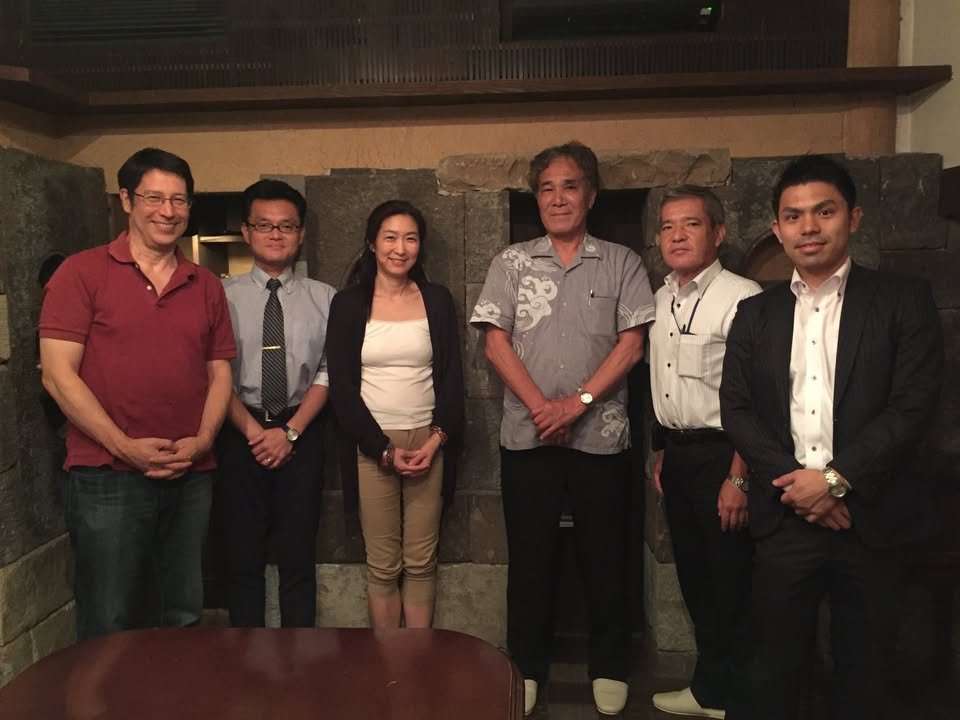
"Tokuda Ryūnosuke, operator of an animal hospital in the city of Kumamoto, opened an evacuation shelter for pets and their owners when the Kumamoto Earthquakes struck in April 2016. Convinced that helping pets helps their owners too, he took to social media immediately after the quakes to inform the public about his shelter and eventually provided care for a total of 1,500 people and 1,000 pets."
Dr. Tokuda's work extends beyond Japan's borders: He "has promoted TNR (trap, neuter, return) to reduce culling of stray cats in Japan and participated in a rabies eradication campaign in Bali, Indonesia."
If you'd like to have Dr. Tokuda take care of your pet, you can find his clinic here:
http://ryunosuke.co.jp/information/access.html
-- Kirk
https://www.nippon.com/en/people/e00133/
Veterinarian Tokuda Ryūnosuke: Postdisaster Help for Pets and Owners Alike
Veterinarian Tokuda Ryūnosuke has worked tirelessly to improve postdisaster quality of life for both humans and animals. In addition to opening an evacuation shelter for pets and their owners after the Kumamoto Earthquakes, he has promoted TNR (trap, neuter, return) to reduce culling of stray cats ...

2018-02-02 11:20 JST

This is about an event to be held in sister-city San Antonio. The pianist is Tomoko Sonoda, of Kumamoto. I found the following YouTube video of her playing in Kumamoto with a guitarist. I particularly enjoyed the guitarist but don't know his name:
https://www.youtube.com/watch?v=82vZ29x9weg
-- Kirk
https://musicalbridges.org/events/international-sister-city-jazz-ensemble/
INTERNATIONAL SISTER CITY JAZZ ENSEMBLE
The creation of a Sister

2018-02-01 15:06 JST

Kirk had written about Kimono Month, and I had added a note below suggesting buying used kimono, which are unbelievably cheap. Here, I provide a comprehensive list of things you will need if you desire to be fully kimonoed out. Photos attached to this post correspond to each item.
- Kimono underwear, known as hadajiban (top) and susoyoke (bottom) (肌襦袢と裾除け, pictured).
- A few small towels to help the kimono fit your stature.
- Nagajuban (長襦袢, pictured), which is an under-kimono, though really, you can choose either the kimono underwear or the under-kimono; you don't really need both unless you're, like, really serious.
- Eri shin (collar core, 襟芯, pictured): this is designed to keep the collar of your kimono fashionably away from the back of your neck, a view of which is considered attractive. (Also optional.)
- Just like a horse dons a blanket between itself and the saddle, a datejime (伊達締め, pictured) will spare you the cinching pain from the next item.
- A few waist cords (koshihimo, 腰紐, pictured). These are necessary. The obi is mostly decorative, and these slender strips of cloth do the work of keeping your kimono from bursting open. They are cheap; you can even make your own.
- An obiban (帯板, pictured) is a stiff piece of material placed against your lower back designed to hold the obi in place. They're cheap and kinda useful.
- A kasune eri (layered collar, 重ね衿, pictured) is a scarf-like decorative piece of cloth that peeks out between the nagajuban and the kimono. They are cheap and rather stylish.
- An obiage is (帯揚げ, pictured) a stretchy piece of cloth that covers the koshihimo and peeks out a bit from under the obi.
- Obijime (帯締め, pictured) are decorative cords worn over the obi.They're pretty much required.
- Socks with a split between the big toe and all the other piggies worn with sandals are called tabi (足袋, pictured). DEFINITELY a requirement; one never wears zouri barefoot (though geta often are when worn with yukata in the summer). Get a couple of pairs just in case.
- Footwear. Wearing sneakers is inadvisable. Two types are available: zouri (草履, vinyl slippers) and geta (下駄,wooden clogs, both pictured). These are a must.
- A kinchaku (巾着, pictured), a traditional satchel, is an option to a purse.
- If you're going out in the cold, a haori (羽織, pictured) is useful - it's a 3/4 sleeve longish coat worn over a kimono. They're fun to wear with jeans, too.
- Then, of course, the kimono and obi.
Most of these items can be bought very inexpensively at a used kimono shop. Please reference the photographs for visual representations of each item, and best wishes for an enjoyable Kimono Month! - William

2018-02-01 13:53 JST

February is kimono month at Suizenji Park:
* If you're wearing a kimono you get in free.
* Each Tuesday and Saturday at 10:30 AM free classes on how to put a kimono on (kitsuke kyoushitsu) will be held. I assume you should bring your own kimono for this, if you have one.
* You can rent a kimono (and, presumably, have them help you put it on) for 2,600 yen.
* A photo contest is being for photos of kimono-clad folks in the park
* There will be a kimono fashion show on the 24th and the park will be open into the evening on that day.
-- Kirk
http://www.suizenji.or.jp/kimonogekkan201802.html

2018-02-01 11:26 JST

There are two spring agricultural festivals in Kumamoto, one at the Agricultural Park in Koshi Machi (which is is intended more for major landscapers) and the other (intended more for casual gardeners) originally held on the left bank of Shirakawa near Kumamoto Station but which had wandered around a bit among very unpopular places due to river construction and bureaucratic inertia. However, this year sees the festival returned to its home for the first time in 12 years!. This festival is a required breath of spring in the most depressing month of February. Do not miss the piping hot bowls of horumon or skewers of oden and a bottle of beer in the prefabs next to the river, where you can watch the seagulls piping back and forth, avoiding the rough winter sea weather. There are long, surprisingly warm greenhouses full of seedlings, bonsai, flowers and other items that will get your sap flowing.
The festival starts tomorrow, February 1st. One 76-year old farmer who has exhibited at the festival for 45 years was quoted as saying, "I'm happy to have the atmosphere of Shirakawa back at the festival." Definitely make it a plan to visit. Parking is available, but the tram is just as convenient. - William
白川河川敷で12年ぶり植木市復活 2月1日開幕 - 熊本日日新聞
12年ぶりとなった白川河川敷での植木市を前に、準備に追われる業者=熊本市中央区 熊本市の春の風物詩「くまもと春の植木市」が2月1日、開幕する。12年ぶりに白川河川敷左岸(中央区本山)が会場となり、白い...

2018-01-31 17:58 JST

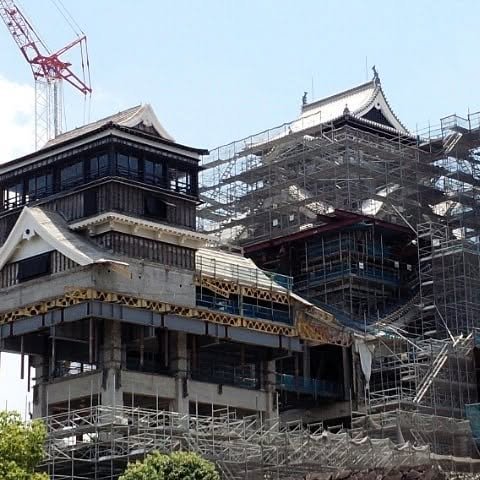
"Kawai began offering good luck charms that consisted of pieces of the rock in small kimono cloth bags. The bags were made by elderly residents of the area.
The charms have racked up sales of some ¥500,000. They have also been paired with locally grown rice as gift sets for people giving to the Mifune town government under the furusato nozei donation system for tax deductions."
-- Kirk
P.S. The picture is from a video that can be found at
http://www.kkt.jp/matome/kumamotojisin/011627.html
https://www.japantimes.co.jp/news/2018/01/26/national/fallen-rock-proves-blessing-disguise-quake-hit-kumamoto/
Fallen rock proves to be blessing in disguise for quake-hit Kumamoto | The Japan Times
Masuki Iwamoto had to stop harvesting chestnuts for a time, after one of the April 2016 earthquakes that jolted Kumamoto Prefecture left a fallen boulder b

2018-01-31 11:13 JST

An article in Japan Today regarding a woman who is suing the government over being forcibly sterilized under the now-defunct eugenic protection law for mental disability (see link below) briefly mentioned Kumamoto in the context of similar forcible sterilization conducted under the Leprosy Prevention law.
Leprosy is known in Japanese as Hansen byo (ハンセン病), named after the German physician Gerhard Hansen who first identified its cause, the bacterium Mycobacterium leprae. Though it had existed in Japan since time immemorial (see Ghibili's "Mononoke Hime," in which those who make Lady Eboshi's guns are lepers), the first laws which eventually led to required isolation and what came to be considered severe human rights abuses were promulgated in 1907.
Kumamoto was the site of one of five leprosariums opened in Japan, in this case by Hannah Riddell, who was selected by the Church Missionary Society in England to come to Kumamoto in 1895. The multitude of lepers who gathered to collect alms along the steps leading up to Honmyoji Temple were required to quarantine themselves in Kikuchi Keifuen hospital in Koshi Town, which still exists today (it is surrounded by a huge, beautiful park which is lovely for walks, by the way). Kikuchi Keifuen eventually became the largest sanatorium in Japan, with 2,200 beds. It wasn't until In 1996 that the Leprosy Prevention Law was abolished.
The article linked to below is rather academic in tone but might be of interest to those curious about this era in Japanese history. For convenience, I have copy-pasted the section regarding sterilization as follows. - William
The notion that leprosy patients should be prevented from having children had been accepted by not only Japanese leprologists but by foreign missionaries involved in the care of leprosy patients. However, they considered very different approaches. Hanna Riddell, an English missionary who opened a private leprosarium Kaishun Hospital in Kumamoto, insisted sex segregation, an idea to hospitalize female and male patients separately. However, leprologist Kensuke Mitsuda argued against her approach pointing out that sex segregation was unrealistic. He wrote, "It will be natural for desperate persons to live only for the pleasure of the moment. But the pleasure they could obtain in leprosaria is no more than gambling or adultery. ... Here emerged a moral anarchism which resulted in more than a dozen of babies that should not have been born". Mitsuda concluded that sex segregation was impracticable in national leprosaria, and that sterilization of patients was more realistic and contribute patient's welfare by permitting them to marry. Furthermore, he believed that sterilization would contribute to patient's welfare and to leprosaria's peace, because physicians could allow patients to marry without letting them to have children.
Mitsuda began to vasectomize male patients who wished to cohabit with female patients in 1915. In the book he published in 1950, Mitsuda wrote the first vasectomy was performed with a voluntary patient, but many patients later blamed that sterilization was conducted against their wishes and that it impaired their dignity severely. Furthermore, pregnant female patients were often forced to have abortions. Former patient Shige Tamaki described regretfully her abortion. When she was found to be seven-month pregnant, leprosarium officers scolded her and strongly suggested to undergo abortion. According to Tamaki, it was a painful experience to describe. She was then seven months pregnant, and it was a female ophthalmologist who performed the abortion --- or an infanticide. She clearly remembers the infant waving hands and legs on a surgical plate, a nurse covered the nose and the mouth of the infant with a piece of gauze to terminate its breathing, saying to Tamaki "it is a cute girl, and looks very much like you."
During Japanese colonization of the Korean peninsula, officials of Shorokuto Kousei-en, a Japanese-run leprosarium on Sorokdo Island near the Korean peninsula's southwestern tip, committed patient's sterilization as a punishment. A Korean former patient testified in a lawsuit against Japanese government in 2004, that he was vasectomize when he refused to worship a Japanese Shinto shrine in the leprosarium. He was placed in the confinement room, and forced to undergo sterilization without any explanation why he must undergo it.
The vasectomy and abortion of leprosy patients had been conducted with out legal base, but both were legalized by the Eugenic Law (Yusei Hogo Hou) enacted in 1948.
http://www.clg.niigata-u.ac.jp/~miyasaka/id-5/id/
https://japantoday.com/category/national/woman-sues-japan-gov't-over-forced-sterilization-under-eugenics-law
LEPROSY CONTROL POLICY IN JAPAN | 宮坂道夫研究室 Michio Miyasaka Lab
This manuscript was revised and published as an article on the official journal of Asian Bioethics Association, which can be downloaded at the journal site. Please find Michio Miyasaka: Punishing Paternalism: An Ethical Analysis of Japan's Leprosy Control Policy, Eubios Journal of Asian and Internat...

2018-01-30 21:33 JST

-Reposting-
Future Global Language Services
is seeking to hire part-time teachers for children's classes (年少 ~ 小6) from Monday to Friday.
The terms are as follows:
Type: Part Time
Employer Type: Direct Hire
Location: Kumamoto City, Kumamoto Prefecture
Salary: ¥1,500
Salary Type: per hour
Visa Sponsorship Available: No
English Language Requirement: Native or Fluent
Japanese Language Requirement: Not necessary
If you are interested in these positions, please submit your resume and photo to [email protected]

2018-01-30 20:49 JST

Japan is often sited as having relatively few lawyers in comparison to the more litigious USA. However, as this letter to the editor in the New York Times explains, straight comparisons between the numbers of "lawyers" in the U.S. and the numbers of "bengoshi" in Japan are misleading because japan has other legal professionals that do work often done by "lawyers" in the U.S.:
"Japan's legal professionals consist of many licensed nonlawyer legal specialists. These include tax agents (zeirishi), patent agents (benrishi), judicial scriveners (shiho shoshi) and administrative scriveners (gyosei shoshi), who perform work generally done in the United States by lawyers."
http://www.nytimes.com/1991/08/23/opinion/l-what-statistics-on-japan-s-lawyers-mean-245091.html
See also http://www.sumikawa.net/about-lawyer-in-japan/
I point this out because I received an inquiry about hiring a "lawyer" to draft a will. Japanese lawyers ("bengoshi") are most certainly qualified to help you make a will (or to prepare other legal documents) but, depending on your situation, you may be better off hiring another kind of legal professional.
I've had some interactions with "judicial scriveners" (shiho shoshi) in Kumamoto and they explained to me that they are able to prepare most legal documents (including wills) but that they are not allowed to argue cases in court. Even if you need to go to court eventually, a lawyer will be able to build a case upon the paper work done by a competent judicial scrivener. If a judicial scrivener would be good enough for your purposes, you could save a good deal of money. The following website (in Japanese) indicates that "lawyers" can charge up to about 10 times what a legal scrivener would for the preparations of a will:
http://www.souzoku-mado.jp/yuigon-iraisaki2
By the way, lawyer jokes are not a "thing" in Japan, but I got a great reaction from a group of judicial scriveners when I introduced my Japanese translations of lawyer jokes, such as this one:
http://www.lawlaughs.com/animals/whatami.html
I think the judicial scriveners were particularly happy to hear the lawyer jokes because they are continually forced play second fiddle to high-status lawyers. They took obvious delight in the put downs (even if they didn't dare repeat them to their lawyer friends ;) ).
-- Kirk
What Statistics on Japan's Lawyers Mean
To the Editor: The comparison by the Agenda for Civil Justice Reform in America of the per capita number of lawyers in the United States (281 per 100,000 population) to Japan (11 per 100,000), shown in the chart accompanying your Aug. 14 article on Vice President Dan Quayle's speech to the American....

2018-01-30 16:49 JST

This article is one of several we have posted on this topic. Personally, this one helped me see that illegal use of Kumamon's image is being cited as a reason for opening the system up. The rationale strikes me as similar to that for the legalization of pot in the U.S. -- people are going to do it regardless so the government may as well try to regulate it and earn some revenue in the process.
"Many fake items based on the mascot have been reported outside Japan. A bath facility in Shanghai even used a Kumamon look-alike to promote itself without permission.
The prefectural government has raised a protest for each violation uncovered.
In the Jan. 15 meeting, a prefectural government official told the companies that there is no option but to enable Kumamon’s overseas use and collect fees to protect the brand image of the mascot."
-- Kirk
Firms roaring mad over lifting of overseas ban on Kumamon:The Asahi Shimbun
KUMAMOTO--Kumamoto Prefecture has lifted the ban on overseas use of the Kumamon mascot design, spark

2018-01-30 10:36 JST

Following is a request from a Filipino friend whose Japanese grandfather was from Ozu. If anyone recognizes the name, please PM us. - William
Our great grandfather was a former veteran Japanese soldier who died in World war II. His name is Masumi Konishi. His address is Kumamoto ken, Kikuchi Gun, Ootsu Cho, Ooaza OObayashi, 455-Banchi.. We have no contacts and knowledge about his family there. All we have is just his family registry. We just wanted to inform our relatives there that there are still living descendants of Masumi here in the Philippines. Maybe they're looking for us also for a long time. Maybe this is just the only way to find and communicate with them.
This is the only way I have thought to in order to find our living relatives there if there is still any. We just want to inform them that our great grandfather Masumi got married here in the Philippines and have three children, namely Modesto, Solidad and Rizaldo. Modesto and Rizaldo are already dead and Solidad is the only one living alive. I am one of the 8 children of Modesto. I'm Modesto Jr Konishi.

2018-01-29 23:02 JST

For those who like snowboarding and skiing, we went to Gokase Ski resort last weekend.
Weather was bright and sunny.
Snow was not much, the ground was hard.
I wonder if anyone experienced lots of snow over there before.
We brought kids there to experience the sport and have fun.
Another option for ski resort will be at Kuju side, but I am a bit worried how to reach there without taking any tour buses.
Anyone has ever been to Kuju ski resort before?
We used this tour operator for our trip this time. (the site is in Japanese)
http://www.whitedolphin.jp
They have pick up location at Kotsu Center.
And this is the resort website,
http://www.gokase.co.jp/ski/
-Olivia-

2018-01-29 22:52 JST

A message (request for volunteers with debate event) from the Consortium of Universities in Kumamoto (relayed by Kirk):
---- begin quote ----
Dear international students in Kumamoto.
This is consortium Office.
We'd like to inform you a volunteer opportunity.
If you are interested in it ,please let us know. Thank you!!
----Looking for volunteers! ----
Let's join and help high school students with Parliamentary Debate!!
Are you interested in interacting with high school students in Kumamoto?
They hold the seminar for the Parliamentary Debate.
Why don't you join it and support students with your English skill?
Date :Feb 4(Sun)  10:20-16:10
Place: Shinwa High School in Kumamoto City  
MAP : https://goo.gl/fjQhbo 
*Please access the application form, fill it up and send it back by Jan.31st!!
Japanese skill is not required. If you have higher English skill, big welcome to join!!
*Please bring a lunch with you!!
Application form URL: https://goo.gl/Kciovq
---- end quote ----
Shinwachugaku Koto School
3 Chome-1-1 Kuhonji, Chūō-ku, Kumamoto-shi, Kumamoto-ken 862-0976, Japan

2018-01-29 21:58 JST

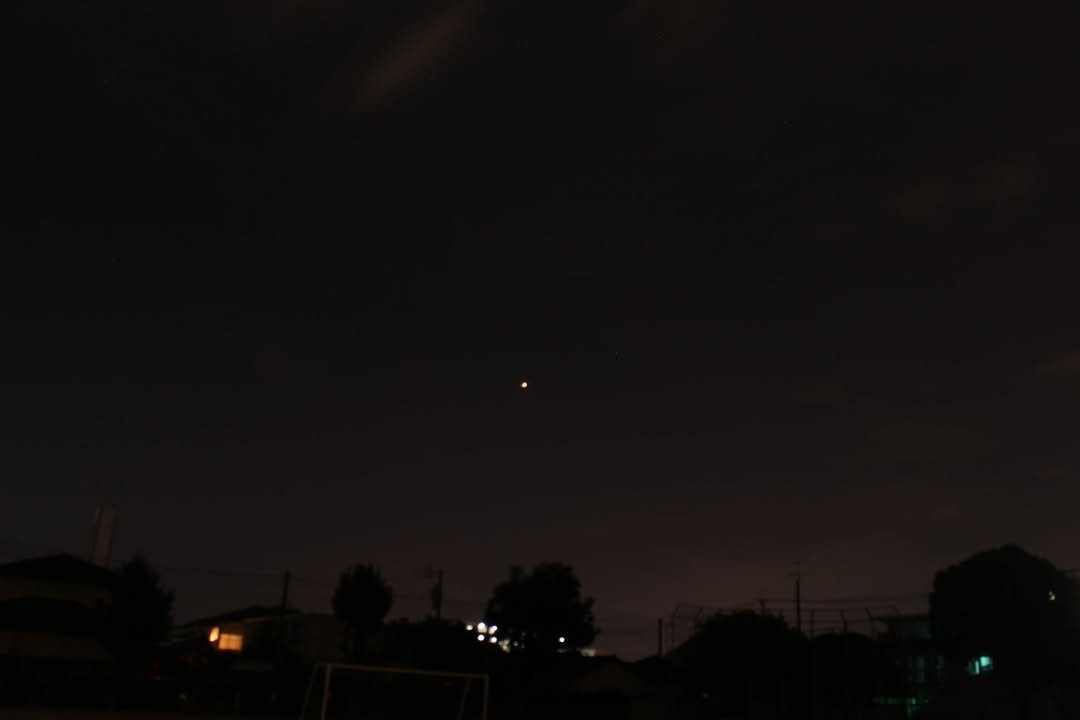
More on the lunar eclipse. Vox quite poetically explains the blood-red color which the moon casts off when in Earth's shadow:
"A total lunar eclipse is like projecting all the sunsets and sunrises onto the moon."
This is because the atmosphere at the edges of Earth’s shadow (i.e., sunsets on one side, sunrises on the other) scatters spectum blue light, allowing only red, orange, and yellow wavelengths to pass through. The resulting filtered light bends and subsequently is reflected from the moon.
This is an informative article for selenophilic Kumamotoites. - William
https://www.vox.com/science-and-health/2018/1/23/16911140/total-lunar-eclipse-2018-blue-moon-supermoon-blood-explained

2018-01-29 15:22 JST

Selenophiles take note. Let us first define our terms.
→ Super moon: when the moon is at perigee and about 14% brighter than usual.
→ Blue moon: the second full moon in a calendar month.
→ Blood moon: the moment during a lunar eclipse when the moon, in the Earth’s shadow, takes on a reddish tint.
Now, I know what you're saying: "William, I'm a busy person。 I don't have time to wait, neck craned, for each of these events to occur separately。Also, I like to use Japanese-style periods as they look like tiny moons。" Well, you're in luck! (and no need for thanks as I had nothing to do with it), for on Wednesday, we'll have a “super blue blood moon” - yes, the full trifecta at once! Even if you cannot read Japanese, the link has an informative video, and the charts will tell you what is happening, when (in North America, they'll have to get up early; here, we can view it just before nighty-night time), and where (hint: sky). The last time this trifecta happened was 1866.
Bad news: Weather is forecast to be cloudy. Cross your fingers that we may see the super blue blood moon, selenophilic Kumamotoites! - William
https://www.nao.ac.jp/astro/feature/lunar-eclipse20180131/

2018-01-28 18:31 JST

Japan Today wrote about the influenza epidemic raging across Japan, uh, today, and noted that it particularly centers on Kyushu: "By prefecture, Kagoshima had the highest number of flu patients per clinic at 86.53, followed by Miyazaki at 84.97, Fukuoka at 83.99, Oita at 82.40 and Saga at 69.64. They all are in the Kyushu region located in southwestern Japan." The article continues, "The remaining Kyushu prefecture, Kumamoto, is not on the list as its inhabitants are far too stubborn to get sick."
(Okay, I made that last part up. It's probably true, though. Still, take care, Kumamotoites.) Pictured below: Not a Kumamotoite. - William
Flu epidemic rages in Japan with record-high number of cases reported in one week
A flu epidemic is raging in Japan with the number of patients in one week estimated to have reached a record-high of 2.83 million, the health ministry said Friday. The average number of patients per medical institution reported in a week through last Sunday stood at 51.93, the highest since…

2018-01-27 11:24 JST

A note on mikan (tangerines). Now is peak mikan season. Go to any yaoyasan (greengrocer) and you'll see multi-kilogram bags for crazily low prices. You'll also notice that price is proportionate to size. A burning question I know you all have is how they keep the prices so darn low.
Answer: mechanization! Picking is done by hand, after which the mikan are whisked down the mountain by a mikan monorail (ミカンを運ぶモノレール) to a size sorting machine (自動選果機、jidōsenkaki), deposited directly into boxes, and sent to market. Both devices are shown below.
The monorail looks like an ill-advised amusement park attraction designed by sadistic dwarves, serpentining up and down impossible slopes and hairpin curves. The sorting machine works by sending the fruit by conveyor over a series of holes of increasing size, allowing the 70-old farmers to sit around all day chatting and occasionally shifting a box ("Taro, your turn!") but still able to complain to their wives when they get home about how hard they'd worked (note: the wives know but let it slide).
The best place to see this is the terraces on the far side of Mt. Kimpo. Choose a sunny day, pack some food, beverages, and a camera (zero stores), and get yourself lost in the mikan labrynth. And feel free to sample from the trees - the farmers don't mind. - William

2018-01-26 20:44 JST

If you ever want to try Hormon dish in Kumamoto, we went to this place last week.
My husband is a fan of Hormon dish, and this place is famous among local people of Kumamoto. I heard that sumo wrestlers went there too. The place has strong smell of Hormon (pig offals)
This place serves a decent (inexpensive) price of Basashi (Horse Meat) set meal too.
I did not order that, so I didn't know if it was good. But other guests ordered that. It may be good.
Name: Katsumi Shokudo
Address:
7-11-18 Nagaminehigashi, Higashi-ku, Kumamoto-shi, Kumamoto
Tel.: +81-96-380-2987
Business Hours; 11:00-21:00
Close on Sunday
-Olivia-

2018-01-23 18:29 JST

A quick reminder to people that we'll be holding our annual Kumifest international festival at the 100th Anniversary Hall, Kurokami South Campus, Kumamoto University, from 2pm (door open 1:30pm).
So far we have around fifteen performances from around the world, a collection of photos submitted by foreign residents showing Kumamoto through their lenses, and a number of contestants for the Mr & Ms Kumisa event.
Entry is free, hope to see you there :) -- Andrew

2018-01-23 11:23 JST

I'm sharing this announcement about a teaching opportunity to help more people see it.
-- Kirk
P.S. I should have shared it sooner but didn't notice it until this morning. Sorry Marvin.

2018-01-23 09:52 JST