3474

Hi! I teach a university course in which I ask students to submit newspaper articles that are relevant to understanding cultural differences, discrimination, and other topics. Going through some of those submissions I found a Dec 22 Kumanichi article that introduces a local organization called "Kumaniji" (or "Kumamoto Rainbow"). The web sites is bilingual and the English side is asking people to fill out a questionnaire. Here's the explanation that on the web site:
--- start quote ---
Kumaniji Survey
Unfortunately, Kumamoto has not taken much action on LGBTQ issues yet.
Now we're conducting a survey to collect the real voices of LGBTQ community in Kumamoto to present to Kumamoto Prefecture and municipalities within the prefecture, and demand to promote LGBTQ friendly policy in Kumamoto.
if you consider yourself as part of LGBT community and live in Kumamoto, or have lived in Kumamoto before, please participate in this survey in order to change Kumamoto into a place where each individual is respected and be able to live who we are even for LGBTQ people, and where nobody has to move out due to their sexuality.
--- end quote ---
-- Kirk
https://kumaniji.jimdo.com/english/
P.S. Here's an article on a related topic that I posted last year:
Bilingual guidebook to help LGBT community in natural disasters
https://www.japantimes.co.jp/news/2016/07/20/national/bilingual-guidebook-help-lgbt-community-natural-disasters/
Let’s change Kumamoto into an LGBTQ friendly prefecture!
Unfortunately, Kumamoto has not taken much action on LGBTQ issues yet. Now we're conducting a survey to collect the real voices of LGBTQ community in Kumamoto to present to Kumamoto Prefecture and municipalities within the prefecture, and demand to promote LGBTQ friendly policy in Kumamoto. if you c...

2018-01-11 17:13 JST
800

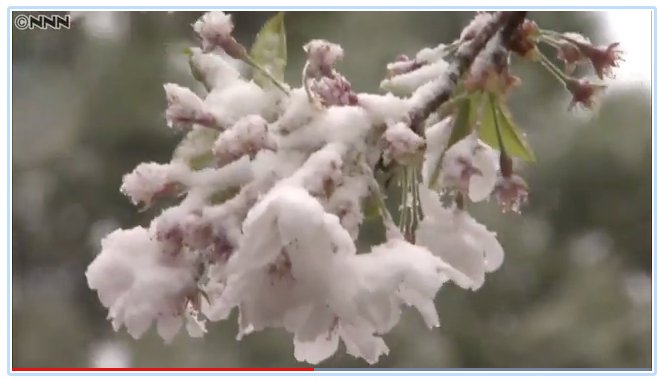
Vocabulary is an indicator of cultural importance of an object - look at the multiple words in Japanese for the singular English "rice," or the multiple English words for the Japanese singular 牛 ("cow" being most common). "Snow" is another example. Growing up in Los Angeles, snow was not of particularly importance, but at my Maine college, it was. Such words are commonly divided into falling-type and accumulated-type.
Tonight, downtown, we have graupel (arare, あられ、霰 ), which occurs when freezing fog condenses on a snowflake - conditions which occur when it's cold enough to snow above but not quite below. It is also known as snow pellets or soft hail.
Another useful word is slush (mizuyuki, みずゆき、水雪), a half-melted form of snow on the ground. Tomorrow will likely be very slushy; fortunately, I don't have to travel.
Other English words for different snow types can be found here. Enjoy! - William
Types of snow - Wikipedia
Types of snow can be designated by the shape of its flakes, description of how it is falling, and by how it collects on the ground. A blizzard and snow storm indicate heavy snowfalls over a large area, snow squalls give heavy snowfalls over narrow bands, while flurries are used for the lightest snow...

2018-01-10 22:44 JST
1801

Long ago, Japan, Korea, and China (Oxford comma) were sorting out who was who, and that sorting often resulted in men with pointy metal things sent to settle arguments. So castles were built as counterarguments. One such counterargument was built in today's Kikuchi, called "Kikuchijyou" or "Kikuchinoki" (both in Japanese 「鞠智城」, but the latter reflecting that it was a wooden fort rather than an actual castle). It was built around 670, according to the Syokunihonki (「続日本紀」, the go-to written in the Heian Era - around 700 - for everything that happened before) and is a predecessor kanji to today's 菊池, which refers both to the clan that dominated the region before the Edo Era and the region itself. The combination of a robust counterargument and a bunch of determined men with pointy metal things who called themselves 「和」(peace - yeah, irony, but you try to combine "peace" and "survival" in that era ) were instrumental in making Japan Japan, particularly as the capital at the time was in Fukuoka's Daizaifu, not so far away.
Anyway, remnants of the fort are long gone, but a building in the contemporary Tang Dynasty style has been erected, which few people visit, so they created a signature character, ころうくん (probably a disassociated form of 古老, meaning "ancient wisdom"), which was enough to draw our friend Michiko-san. The location is a desolate windswept plain barely worth visiting, but if you do go, remember that it is the birthplace of Japan. - William

2018-01-08 19:22 JST
601

Kumanichi has a disturbing article about illegal cell phone surveillance. Kumamoto police in Omuta recently arrested a 33-year old man for installing software to the phone of a woman in her 20s which allowed him to monitor her calls and mails, take photographs and videos remotely, ascertain her location via GPS, and access her phone records. Apparently, several such cases have occurred in Japan, and police warn these cases represent just the tip of the iceberg (hyouzan no ikkaku, 氷山の一角).
Police recommend:
- Do not leave your cell phone unattended;
- Be aware of the camera shutter sound;
- Monitor your phone records for unusual activity.
The story with a diagram is at the link. - William
スマホ監視、知らぬ間に 遠隔操作アプリ悪用で - 熊本日日新聞
遠隔操作アプリを使い、パソコンの画面に映し出されたスマホの位置情報=県警本部 かつて交際していた女性のスマートフォンに無断で遠隔操作アプリを仕組んだとして、熊本県警が11月末に大牟田市の男(33)を不...

2018-01-08 13:01 JST
920

Kirk had written about that cute polar bear at the zoo, and I thought to add a thought. Polar bears are good at three things: being white, floating well, and surviving cold. All of these are due to an aspect of their fur: it is hollow, unlike the solid strands of other mammals. The fur is actually translucent, and the scattered reflection makes them appear white; the fur's hollowness also traps air, which both aids the bear in floating and acts as insulation so that they're like a giant down jacket.
A problem with this is that, in more temperate climates (such as Kumamoto's), algae often grows within the hair tubes. This does no harm to the bear but makes it turn green, and zoo-goers are oft put off by green polar bears. A solution is to add chemicals to their water, but this would in fact harm the animal. Kumamoto zoo had a problem with this a while back (photo below), but I do not know how they have dealt with it. (I suppose you could shampoo them periodically - volunteers?) - William

2018-01-07 23:15 JST
810

Kumamon may be Kumamoto's most famous bear but Maruru (the polar bear in the video; Marle?) may be even more fun to watch. As the Japanese title on the YouTube video indicates, Maruru's corner of the Kumamoto Zoo recently reopened after a hiatus of over year and a half (due to the earthquake). In the interim, Maruru has learned a new way to play with one of his toys -- throwing it into the air and diving in after it. Humans may have provided the toy and taught Maruru the game but it's pretty obvious that he plays for his own enjoyment.
Not all parts of the zoo have reopened but, if you visit, you should be able to see Maruru.
-- Kirk
さびしさで一人遊び習得? 熊本の人気ホッキョクグマ「マルル」 熊本地震から約1年8カ月ぶり公開
熊本地震で被災した熊本市動植物園のメスのホッキョクグマ「マルル」が12月23日夜、約1年8カ月ぶりに一般公開された。非公開だった間に覚えたおもちゃの「浮き」を壁に投げつける壁当てのような遊びを披露し、...

2018-01-07 22:01 JST
1431

A note from the Kumamoto International religion desk (merged with other various desks for obvious reasons): Some shinto religious omamori (お守り、amulet) manage to retain their protective powers over an entire year, at which time they must be replaced by others which are identical in appearance but renewed, while some peter out protectively in a few weeks. But in neither case may you casually huck them out with the garbage.
Omamori of the former type are generally disposed of at a shrine around New Years (where, conveniently, new are available for purchase), but the New Years decorations (shimenawa, しめ縄, are most common) miss this boat. Consequently, an event to dispose of these is held in most neighborhoods, usually on the second Saturday of January, called "dondoya" - kind of an interesting word. It is a portmanteau of「尊や尊」(tou ya tou - respect and respect)、the phrase for "speedily" (どんどんと - referring to the rapid burning), and an onomatopoeia of the sound the bamboo traditionally used as the combustible material makes as the gas in each of its separate chambers expands and explodes. Participants often roast mochi over the embers, though I usually brought enough marshmellows for all the neighborhood kids (I was a popular dad).
Check around your neighborhood for the location and date it will be held. It's actually quite fun - and convenient for relieving oneself of amulets. - William

2018-01-06 15:31 JST
2962

"Kumamoto Gov. Ikuo Kabashima announced at a press conference on Jan. 4 that the ban on foreign companies selling products bearing the popular black bear character would be lifted. Kumamon is also set to star in his very own anime as well for both domestic and foreign audiences."
-- Kirk
P.S. The Japan Times also covered this story:
"Domestic and overseas sales of Kumamon-related products, including stuffed toys and stationery, increased 27 percent in 2016 from the previous year to some ¥128 billion, according to the prefectural government."
https://www.japantimes.co.jp/news/2018/01/04/business/kumamoto-prefecture-decides-allow-foreign-firms-use-kumamon-bear-brand/
https://mainichi.jp/english/articles/20180105/p2a/00m/0na/002000c
Foreign licensing ban for Kumamoto mascot 'Kumamon' lifted, anime in the works - The Mainichi
Popular Kumamoto Prefecture promotional character

2018-01-06 08:56 JST
740

Though not specific to Kumamoto, a previous post on this topic
https://www.facebook.com/Kumamotoi/posts/1565907143482712
got a big reaction so I thought I'd share this as a kind of update.
-- Kirk
https://www.japantimes.co.jp/news/2017/11/11/national/media-national/lawsuit-over-students-dyed-hair-confronts-outdated-thinking-in-japan/
Lawsuit over student's dyed hair confronts outdated thinking in Japan | The Japan Times
A Japanese public high school has come under fire for its strict policy regarding the color of its students' hair. An 18-year-old teen filed a lawsuit in l

2018-01-05 19:08 JST
210

Joe Tomei here. A nice BBC Travel article about Kumamoto castle here
The Japanese castle that defied history
Kumamoto has seen its fair share of drama over the centuries – but perhaps most famously, it was the site of the final battle between 20,000 samurai and the ruling Meiji government.

2018-01-05 17:33 JST
3118

This BBC article discusses the colorful history of Kumamoto Castle.
-- Kirk
The Japanese castle that defied history
Kumamoto has seen its fair share of drama over the centuries – but perhaps most famously, it was the site of the final battle between 20,000 samurai and the ruling Meiji government.

2018-01-05 15:56 JST
4014

Kumanichi reports that the opening of the Oyano bypass in Amakusa, intended to reduce travel time between downtown Kumamoto and Amakusa City to 90 minutes, is now scheduled for May of this year. The original March opening was postponed due to the difficulty of securing construction workers after the quakes (priorities). A beautiful photo of the new bridge, which connects to a more direct route carved through the Uto peninsula to circumvent the windy coastal route and is part of the Minami bypass starting from Ueki interchange, is below, and a map at the link. - William
新天草1号橋、5月開通 大矢野バイパス3・7キロ区間 - 熊本日日新聞
上天草市大矢野町(左)と宇城市三角町を結ぶ天草1号橋(下・天門橋)。上は建設中の新1号橋=2017年10月、上天草市(上杉勇太) 熊本県は4日、上天草市大矢野町と宇城市三角町を結ぶ国道266号「大矢野...

2018-01-05 14:30 JST
400

"Tokyo Reporter" is not my favorite news source but it seems to be the only one to write in English about this issue. Here's a URL for a Japanese report:
https://www.tku.co.jp/news/熊本市西区の殺人事件%E3%80%80次男を送検/
-- Kirk
https://www.tokyoreporter.com/2018/01/03/kumamoto-man-47-stabs-father-to-death/
Kumamoto: Man, 47, stabs father to death | The Tokyo Reporter
Victim was found with stab wounds to the neck and several other locations at the residence in Kagoshima City

2018-01-05 00:01 JST
1413

The venue of this light show is far from Kumamoto (closer to Nagoya) but the theme is close to home:
"The festival uses more than 8 million LED lights to depict intricate scenes from nature. In the past, the light show has recreated Mt. Fuji, the Swiss Alps, and the Aurora Borealis. But this year, festival organizers have themed the show around Kumamoto, a city in Japan that was struck by a series of earthquakes in 2016."
-- Kirk
This Dazzling Light Show in a Japanese Flower Garden Is One for the Bucket List
Book a ticket to Japan for the spring — stat.

2018-01-04 21:44 JST
1721

CNN notes that Nagashima-chō in Mie-ken, which is famous for its themed light displays, has themed this year's on Kumamoto. An organizer was quoted, "Our main theme of this year is 'Kumamon's hometown dream in Kumamoto. This year's theme features beautiful landmarks of Kumamoto, where Kumamon travels." (Likely the maximum usage of "theme" I've ever used in a paragraph.) - William
Japan's wildest light display is back
Nabana No Sato is one of Japan's premeire light shows. In 2018, the show will highlight quake-stricken Kumamoto Prefecture.

2018-01-02 13:57 JST
1010

Private note with a bit of useful information. My dog on New Years got a lil' doggie calendar and a lil' doggie amulet (they're called "eto" - 干支 - figurines representing the year of the Chinese zodiac) - along with a lil' doggie お祓い(oharai, that Shinto blessing they do with a stick and paper). He was not impressed and said, "Great. Can I go back to sleep now?"
Fun fact! There are 12 cycles in the Chinese zodiac, each represented by an animal - last year was the cock (hee hee!) and next year will be the pig, so as my dog is 11, this is the first and only time in his life he'll enjoy 戌年 (inu doshi - Year of the Dog).
If you look closely at the calendar, you'll notice it is now Heisei 30 (平成30年) - easy to forget what reign year it is (even Japanese often forget), and with the Emperor set to retire on April 30, 2019, this will be the last full Heisei year (unsure of how they'll handle that - it meshes with the fiscal year but not the calendar year).
(Also, Takara Pan bakery ー 宝パンー makes wonderful pizza crust upon which you can build your own pies. Contact info on the calendar.) - William

2018-01-02 10:59 JST
1220

Here's an article about the baby hatch issue that I neglected to share at the time. It's a detailed article that provides a good discussion of the rationale behind the system.
-- Kirk
Kumamoto’s “Baby Post” and the Right to Know One’s Parents
Since the “Stork’s Cradle” baby hatch was established at Jikei Hospital in Kumamoto 10 years ago, 130 children have been left there by parents who felt they could not raise the infants on their own. A journalist who has closely followed the story casts doubt on the claim that the hatch has bee...

2018-01-02 10:37 JST
2001

Our friend Jeff captured this magical moment of the year's first sunset from Mt. Kinpo over Ariake Sea with Nagasaki's Fugendake comprising the background. It's the second day of the year, and the Hakone Ekiden has started. Ohayo, everyone! (Thanks, Jeff) - William

2018-01-02 08:37 JST
2225

When the Bockscar - the B-29 bomber which dropped the Fat Man nuclear weapon over Nagasaki during World War II - headed out over Kyushu, the pilots had a list of sites, with weather conditions determining fate. Kitakyushu was first on the list but, lucky for them, was cloudy; Kumamoto was fortunately lower on the list than Nagasaki, which had clear weather that day.
Pope Francis recently made an unusual act of issuing official cards with a photo of a boy carrying the corpse of his sibling, a result of that tragedy, marked with "the fruit of war" ("il fruito della guerra") along with his signature "Franciscus."
This action from the Holy See is a bit unusual. Perhaps he sees something we do not (For those interested in Latin - useful) - William

2018-01-01 18:24 JST
600

Sea urchin roe (uni, ウニ) is a traditional dish on New Year's morning, perhaps a result of a felicitous combination of extravagant spending on food and cold weather allowing its transport. But - kanji time! The three kanji pairs representing uni each have a different nuance. (Note: all are pronounced "uni" and that the katakana is most commonly used in any case).
「海胆」- literally, "sea bile" - the roe. This is the part we eat. It is yummy.
「海栗」- literally, "sea chestnut" (kinda evocative!) This refers to the animal itself.
「雲丹」- literally, "vermilion cloud." In the Edo era, transporting fresh uni was impracticable, so it was often pickled, resulting in a vermilion-tinted cloud of Echinoidea roe.
"Uni don" 「うに丼」is a popular but barbarous combination of warmed uni atop a bed of rice. Avoid it. The best uni is plucked directly from the rocks and eaten with a slight bathing of sea water (that's how I do it).
Mention this the next time you visit your local fishmonger to elicit a startled reaction. - William

2018-01-01 14:38 JST