The Abe administration is moving to create new categories of foreign workers. Until Abe's most recent proposal, the "polite fiction" (tatemae) that Japan does not issue visas for low-skilled workers was maintained by carving out exceptions for people of Japanese ancestry and then by creating "training" or "intern" programs that are more about providing labor to certain industries than actually training people. Now, the government is poised to step farther away from the no-low-skilled-labor fiction by setting up new categories for foreign workers that are intended to satisfy the demand for manual labor in a number of industries. Unfortunately, the idea that foreigners are only temporary, disposable laborers is being maintained and Abe is asserting that this is NOT an "immigration" policy. To learn more the latest policy proposals, see the following article:
https://asia.nikkei.com/Spotlight/Japan-Immigration/Abe-bets-big-on-adding-foreign-workers
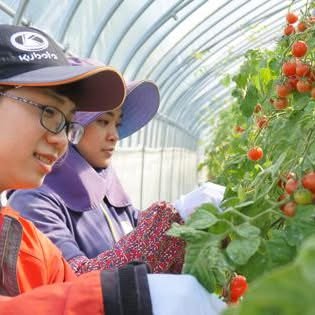
In regard to Kumamoto, the following article points to the heavy reliance on foreign labor in the agricultural sector here:
"Ikuo Kabashima, the 71-year-old governor of the southern prefecture of Kumamoto, agrees that the presence of foreigners is indispensable for the survival of the Japanese farming industry. 'Without foreign laborers, Japanese agriculture is unimaginable,' he said.
In October 2017, the Kumamoto Prefectural Government set a goal of establishing 'agriculture that links us with the world' and applied to be certified as a national strategic special zone. The concept entailed foreigners working at farms and fruit-sorting sites during the busy season, while gaining expert knowledge by studying Japanese language and agriculture at universities and other institutions."
-- Kirk
https://mainichi.jp/english/articles/20181116/p2a/00m/0na/002000c