William Translation is tricky. Generally, I term Kumamoto pre-1600 as "Higo fief" or "Higo domain" and post-1600 "Kumamoto," though I have seen examples otherwise. One reason I do so is that Kumamoto was not unified until the rivalry between two daimyo, Konishi Yukinaga and Kato Kiyomasa, was resolved.
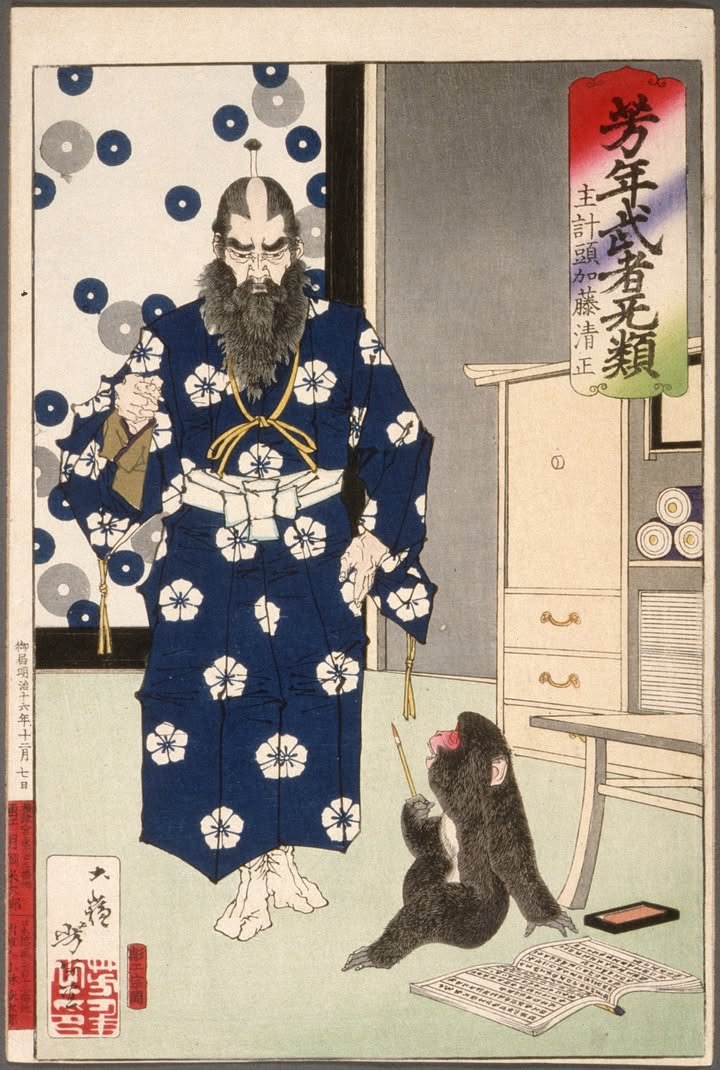
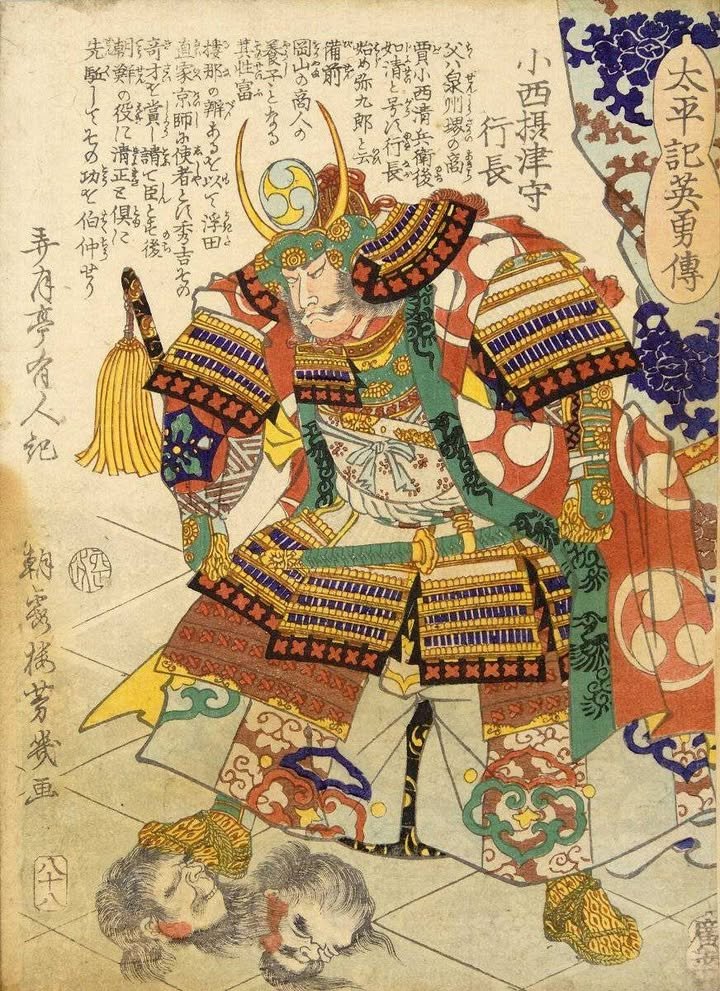
Both were born outside Kumamoto. Both received their fiefs - Konishi in the south, centered around Yatsushiro, and Kato in the north, centered around Kumamoto City - for their service in Hideyoshi Toyotomi's Kyushu Campaign to pacify the Shimazu Clan, which ruled over most of the island at the time. Both later served in Hideyoshi's two Korean invasions (during one of which Kato famously killed a tiger).
However, no love was lost between the two. Konishi was a devout Christian; Kato loathed Christians. Their rivalry ended in the decisive Sekigahara campaign of 1600, during which Konishi supported Ishida Mitsunari, while Kato supported Tokugawa Ieyasu. After Tokugawa's victory, Yukinaga was offered the privilege of committing seppuku but refused due to his Christian faith and was executed; Kato thereupon received Konishi's fief, and Kumamoto in its modern dimensions was created.
This is why I refer to pre-1600 Kumamoto as "Higo." What is your opinion?
Below: Kato (left) with his monkey (right) - the fusuma behind him is marked with his kamon (家紋, family crest), which is still the symbol of Kumamoto; and Konishi decked out for battle.