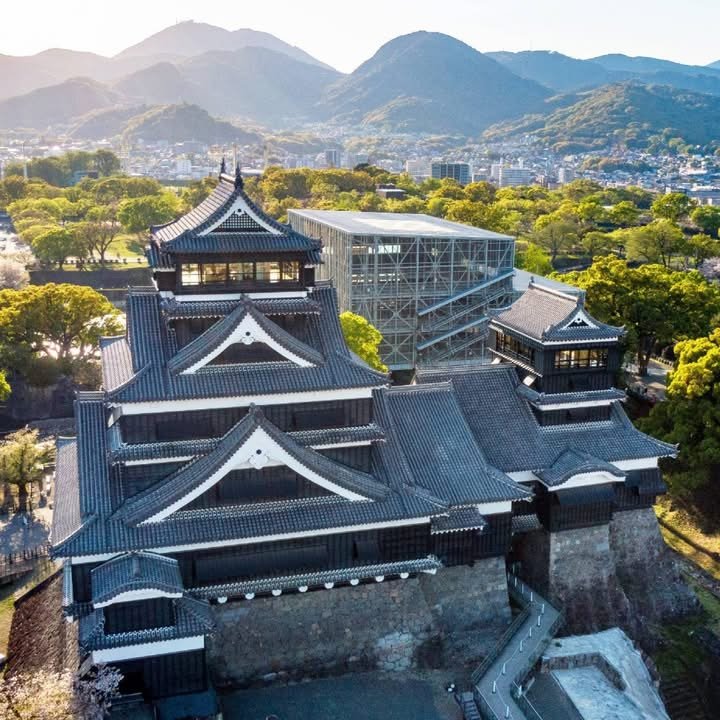
Kirk here with a Japan Times article about the restoration work on the castle.
I think the article is basically fine but I'd like to add a footnote to this sentence: "The stone walls are expected to take longer to restore. Recognized as a national special historic site, they are characterized by mushagaeshi steep inclines at the top that make it difficult for enemies to climb over them."
The word mushagaeshi (musha 武者 warrior; gaeshi [kaeshi] 返し causing to topple back) does imply that the walls were designed to be difficult to scale. However, as this quote from a very detailed webpage about the castle points out, the shape was primarily intended to make them more quake resistant.
--- start quote ---
This curved slope was designed by Kato Kiyomasa and, compared to vertical stone walls, has greater self-supporting strength and is also more resistant to earthquakes. In fact, during the 2016 Kumamoto earthquakes, while many stone walls collapsed, many of the stone walls dating from the Kato era remained intact. From atop the stone walls, visitors can overlook the entire castle, and the magnificent scenery captivates all who visit.
--- end quote ---
https://article.bespes-jt.com/en/article/kumamoto-castle/
https://www.japantimes.co.jp/news/2026/04/14/japan/society/japan-kumamoto-castle-restoration/